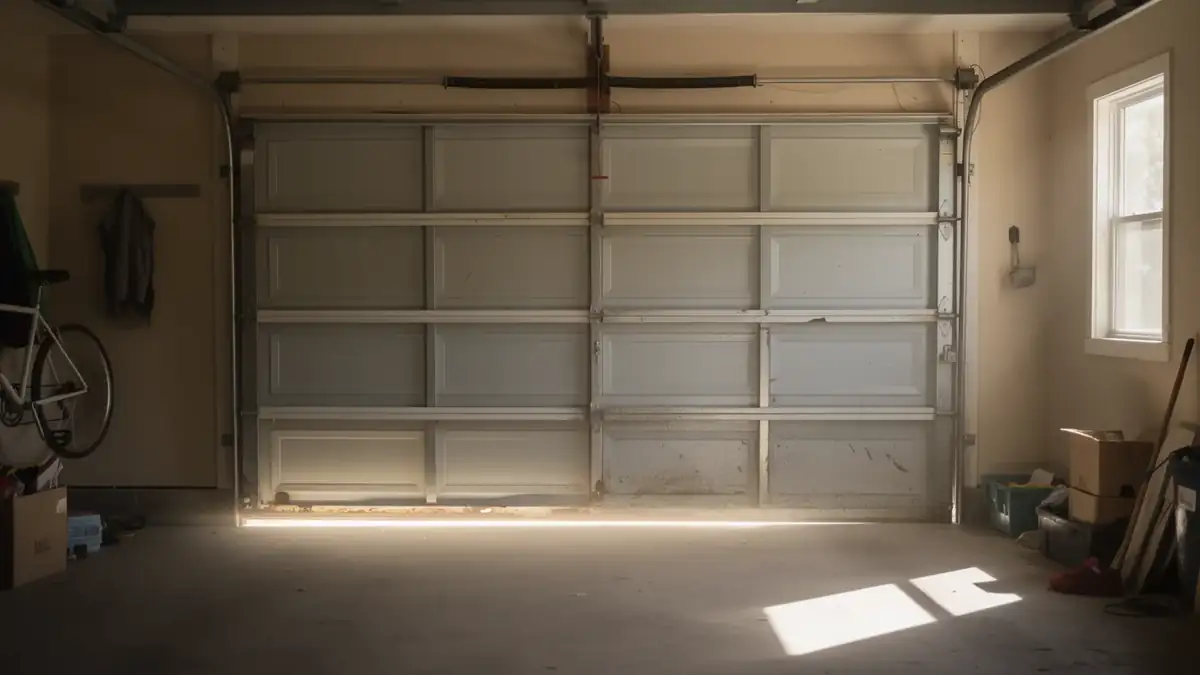
When to Call Someone
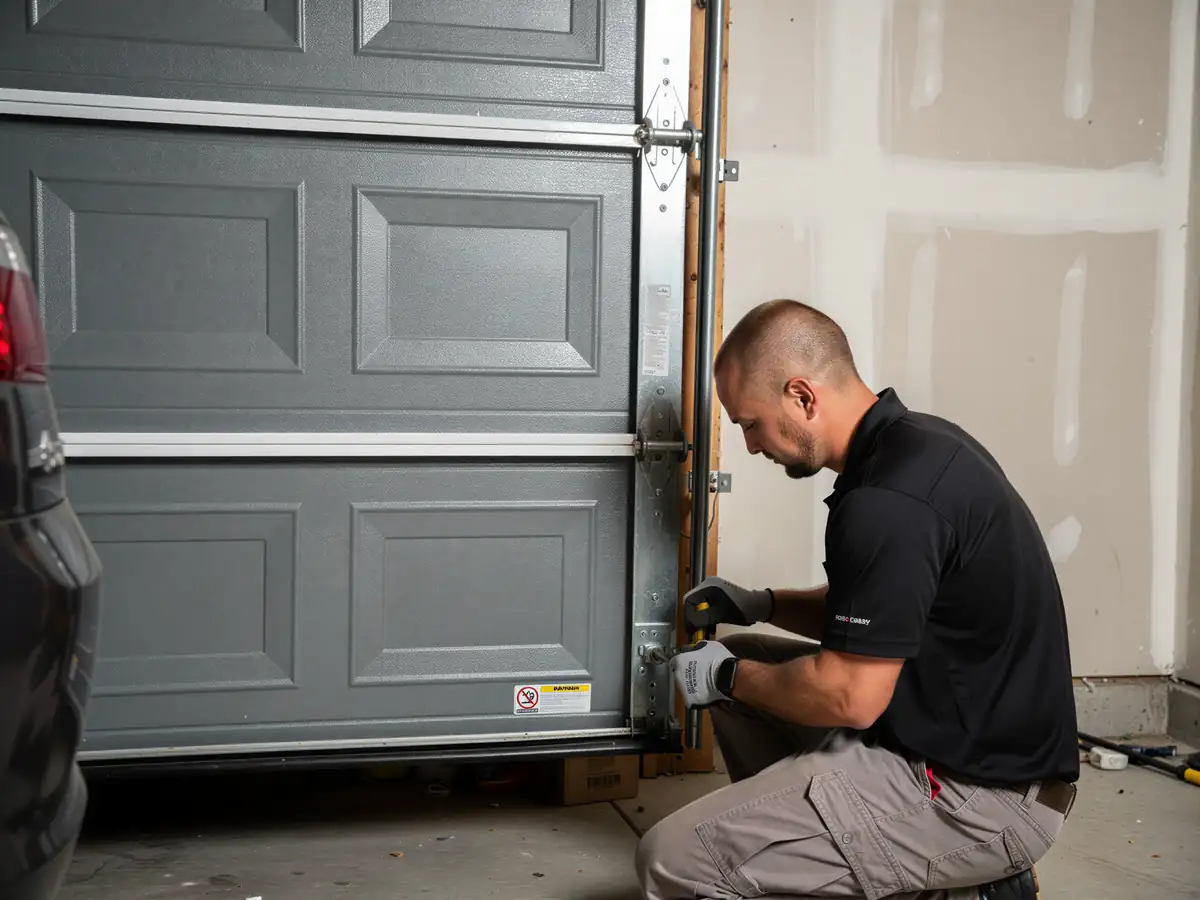
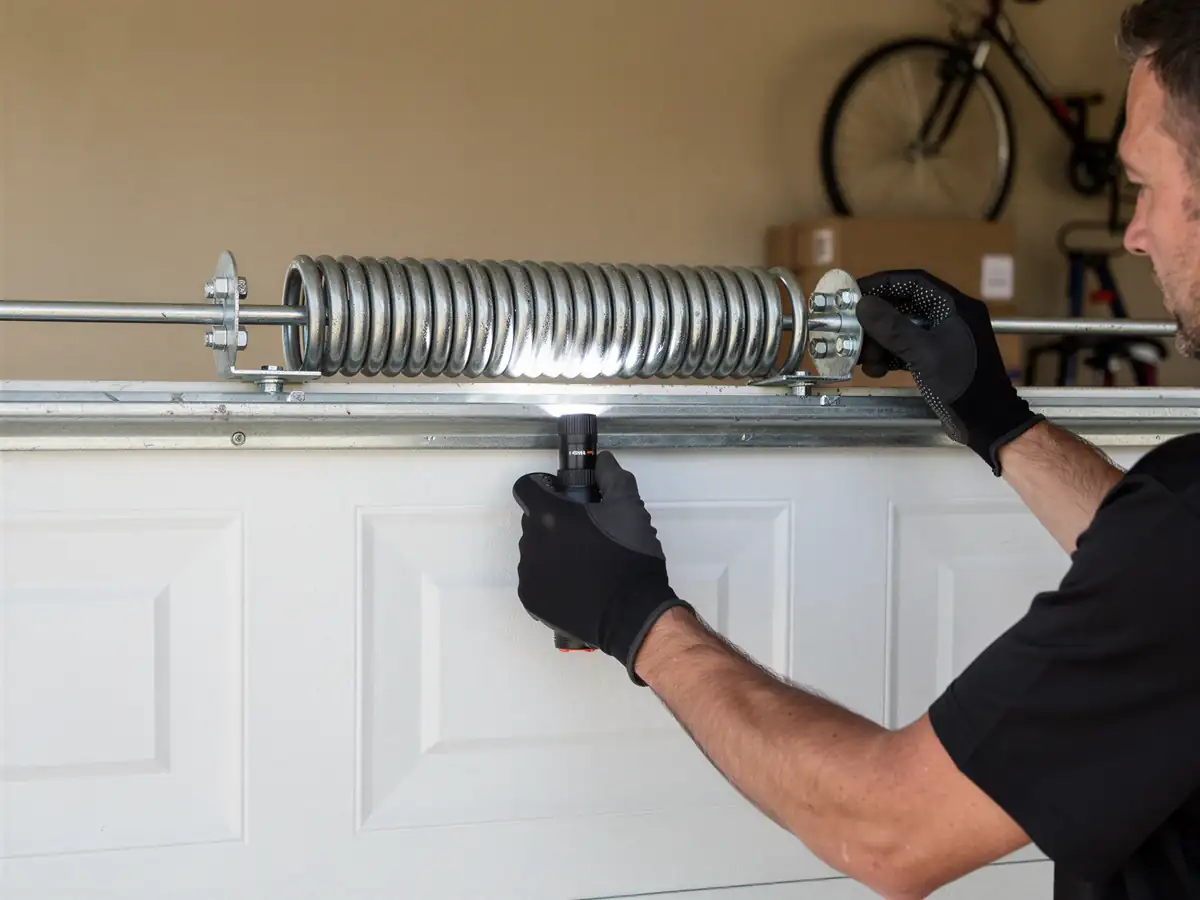
If your garage door is loud, slow, or sagging on one side, that's wear you can usually wait on a day or two to schedule. If it won't open at all, or the spring has snapped (you'll hear a bang and then the door won't budge), that's a same-day call - a broken torsion spring under tension is not something to work around.
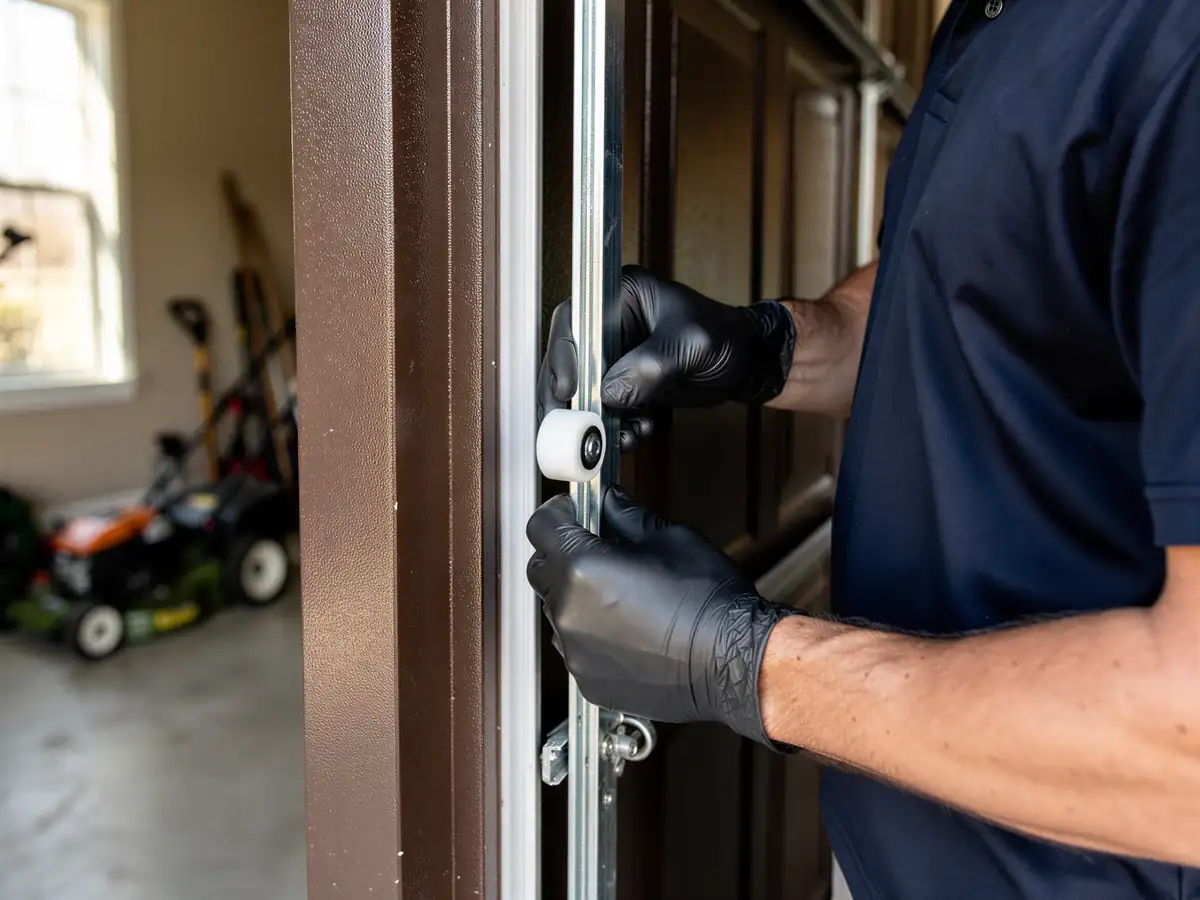
Fayetteville's housing stock runs from 1961 up through 2007, with the bulk of it going up in the 1980s and 90s across the area's named subdivisions. A lot of those doors are original. An original steel door from that era is a single layer of metal with no foam core, hung on hardware that was fine for 1988 but wasn't built with today's spring cycles or insulation standards in mind. When a door that age starts binding on the track or the opener strains to lift it, that's usually the door itself telling you it's done, not just a part that needs grease.
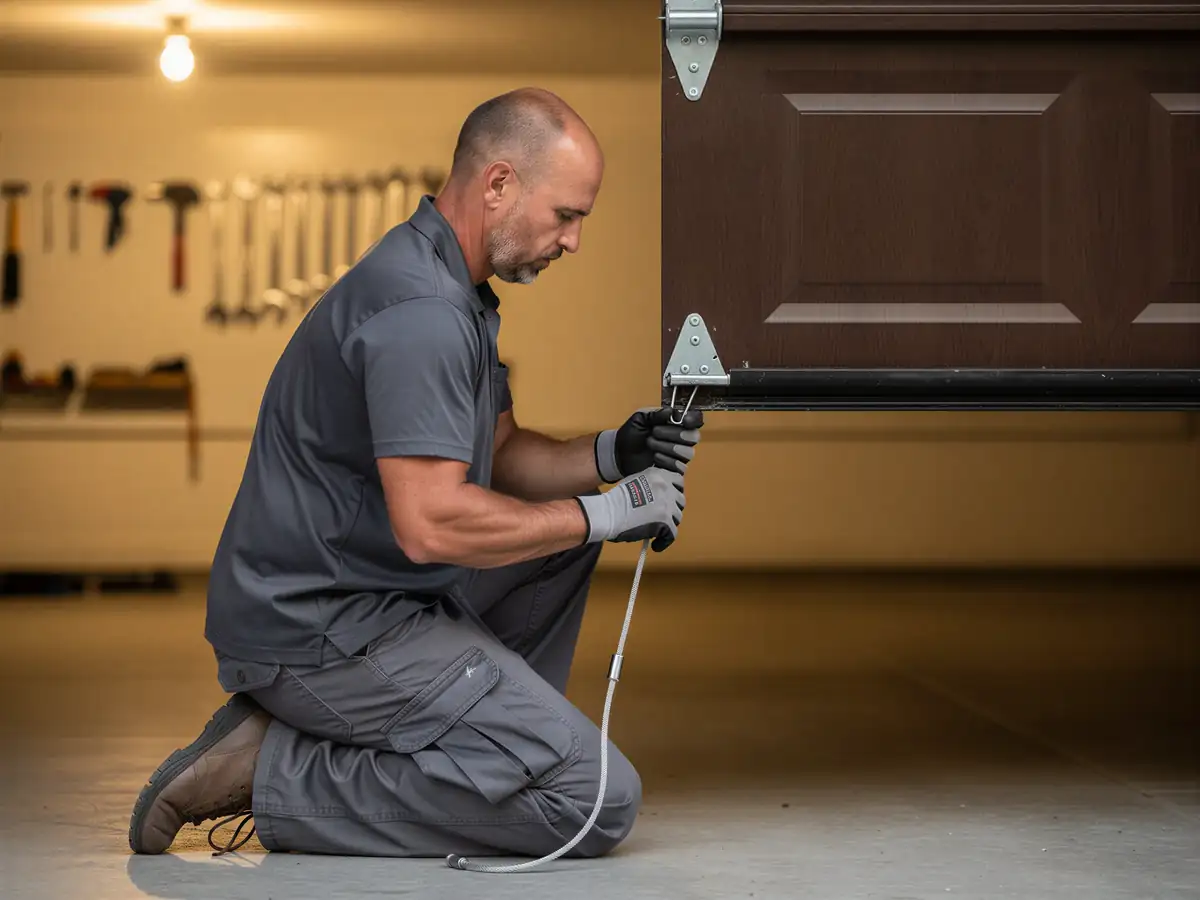
Call when the door won't hold position on its own, when a cable has frayed, or when the panels have started to separate at the seams. Those aren't maintenance items - they're safety items.
What the Weather Here Does to It
Fayetteville sits in a cold-moderate climate band
Not brutal winters, but enough freeze-thaw swing that steel contracts and expands through the season. On an insulated door with a foam core, that movement is dampened. On the single-skin steel doors common in homes built before the area tightened up its energy requirements, you feel it directly: the metal flexes, the weatherstripping at the bottom hardens and cracks faster, and the door transmits more cold straight into the garage.
That matters more if the garage is attached to living space
Which is common in the 1980s-90s stock that makes up most of the area's houses. An uninsulated door on an attached garage is a direct heat-loss path in January and a direct heat-gain path in July. It won't break the door, but it will show up as a drafty garage and a utility bill that doesn't make sense until you look at what's hanging between the garage and the driveway.
What Is Going On
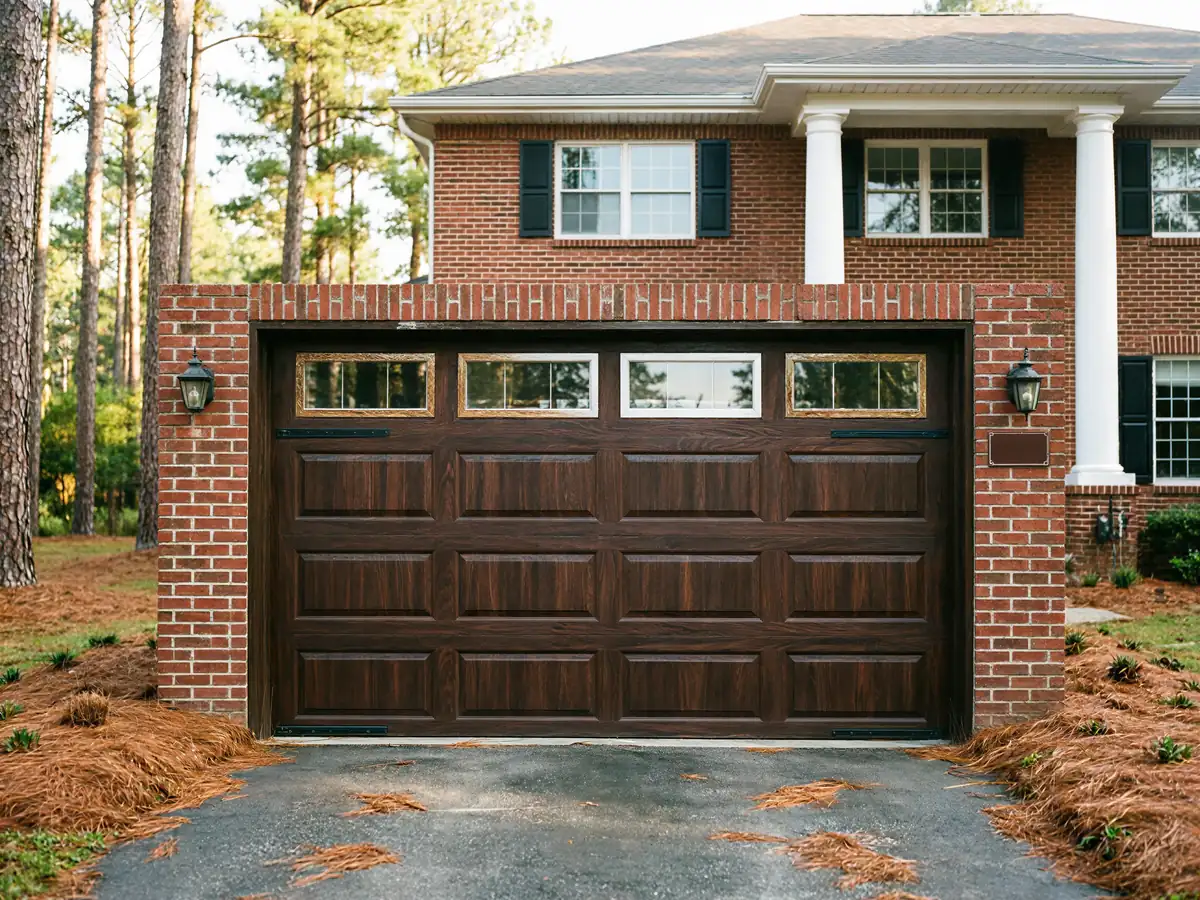
Here's the pattern we see on these calls: a door installed when the house was built, decades ago, still running on its original hardware, with no foam insulation between the steel skins. It worked fine for years because nobody asked more of it than opening and closing. Then a spring goes, or a panel dents, and the homeowner wants it matched or repaired rather than replaced - reasonable instinct, but often the wrong call.
Parts for doors from the 1960s through the 1980s are harder to source exact matches for every year, and even when a panel can be patched, the rest of the door is still uninsulated steel with no thermal break. Repairing one piece doesn't change that it's a door built to a standard from decades before current energy codes existed. Across the service area's roughly 40,897 households, with around 18,505 owner-occupied houses, this is one of the more common jobs: not a broken door exactly, but an old one that's reached the point where patching it doesn't solve what it's actually missing.
The Common Mistake
The mistake we see most is treating an insulation problem like a repair problem. A homeowner calls about a door that feels cold to the touch or rattles in a stiff wind, and the fix they ask for is tightening hardware or replacing weatherstripping. That helps a little. It doesn't add a foam core to a door that never had one.
We'll say plainly: if your door is original to a house built in the 1960s, 70s, or 80s and it's structurally sound, we're not going to tell you to tear it out just because it's old. A solid uninsulated door with tight hardware can still do its job. Where it falls apart is when people spend repair money chasing a comfort problem that only a different door solves. If the complaint is temperature, not operation, that's a different conversation than if a cable snapped. Know which one you're actually calling about before you spend money on it.