Serving Fayetteville, GA & nearby
(770) 230-5959
Fayetteville, GA

What a Fayetteville Service Call Actually Covers

See what a Fayetteville Garage Door Pros service call actually covers, from spring checks on 1980s-90s doors to track work built for cold-moderate winters.

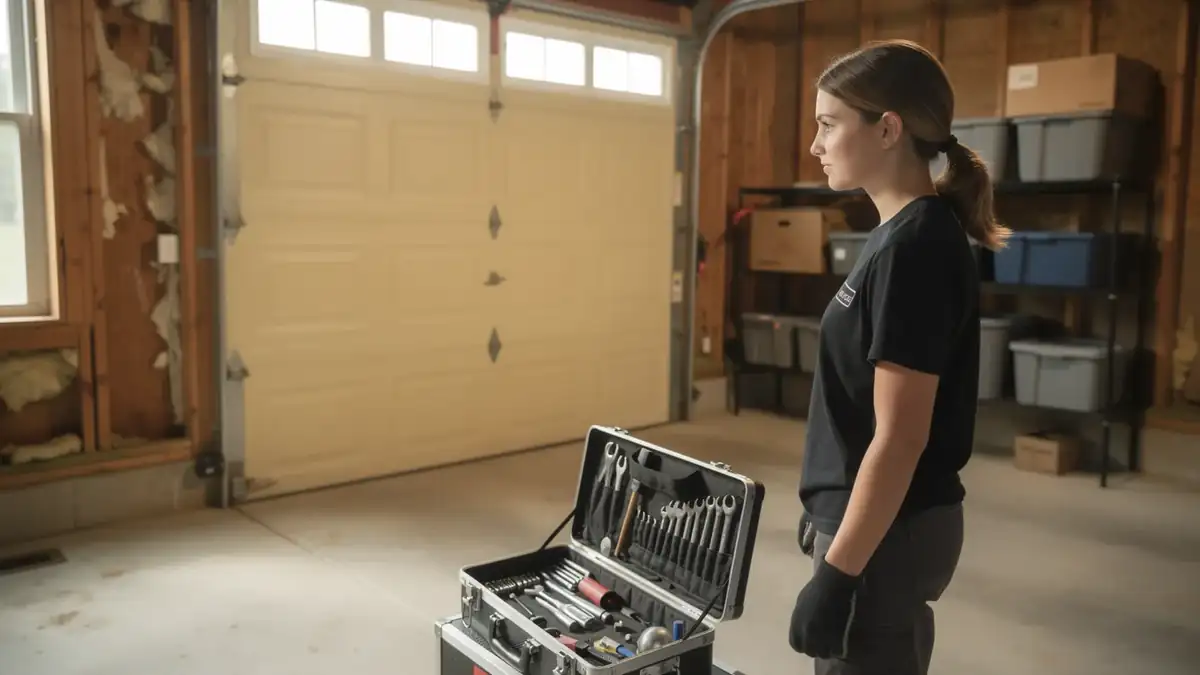
A technician stands next to an open toolbox in a garage with a closed door.

When to Call Someone

Most of the doors we open here went up somewhere between 1961 and 2007, with the bulk of that stock dating to the late 1980s. That's a long run of hardware, and it means a service call in this area is rarely one-size-fits-all. A door that won't open could be a snapped torsion spring, a stripped opener gear, a cable off its drum, or a sensor knocked out of alignment by a bump from a car bumper. If the door makes a bang and then sits dead on the floor, that's almost always a spring, and that's not a DIY fix - the spring is under enough tension to do real damage. If the door opens but reverses halfway down, check the photo-eye sensors first; that's often dust or a knock, not a motor problem. Grinding or popping on the way up usually points to rollers that have outlived their bearings. We don't charge to come look and tell you which one it is - the call covers the diagnosis, the parts needed for that specific door, and the labor to put it right. What it doesn't cover is guesswork over the phone. A door built in 1988 and a door built in 2005 can fail for completely different reasons even if they sound the same from the kitchen.

What the Weather Here Does to It

Fayetteville sits in a cold-moderate climate band, which doesn't sound dramatic, but it's enough to matter on steel hardware. Grease that moves fine in October gets stiff on a 28-degree morning, and a track that was never quite square shows it the first time metal contracts. Openers with aging capacitors are more likely to hesitate or stall on cold starts than on a mild afternoon. None of this is the kind of weather that tears a door off its hinges - we're not dealing with hurricane country here - but it is steady, repeated stress on hardware that's already 20 or 30 years old given the housing stock in this area. Condensation inside an unheated garage can also rust spring coils and cable ends faster than homeowners expect, especially on doors that sit on the shaded side of the house. The honest limitation: weather-proofing an old door only buys you time, it doesn't reset the clock. If the spring is already fatigued or the track is bowed, better lubricant won't fix it - it just delays the call. We'll tell you straight when a fix is a stopgap versus a real repair.

What Is Going On

A service call starts with figuring out what era of door and opener we're actually standing in front of. Because most of the area's housing dates from 1961 through 2007, with the heaviest concentration from the 1980s and 90s, we see a lot of the same torsion-spring setups and early chain-drive openers repeated across the nineteen communities we cover. That history helps us move fast once we're on site, because the failure patterns on a 1986 door are different from a 2004 one, even on the same street. We run calls out to Irondale and Tyrone, both about 7 miles from the shop, Bonanza and Jonesboro around 8, and farther out to places like Fairburn, Senoia, and Hampton near 10 to 11 miles - distance is part of what goes into scheduling and into the quote. With roughly 18,505 owner-occupied houses across this service area and a median household income around $61,454, we size parts and labor to what actually gets used here, not to a generic national price list. The call itself covers inspection, a clear explanation of what's failing, and a written number before any work starts.

The Common Mistake

The mistake we see most is treating the opener as the problem when the spring is the problem. If the door is heavy to lift by hand, or the opener motor strains and clicks without moving the door, that weight is coming from a spring that's lost its tension - replacing the opener won't touch it. On older homes in this area, that spring is often original to a house built sometime in the 1980s or 90s, which means it's been cycling for decades longer than it should. The second mistake is spraying any lubricant on hand, including WD-40, which is a solvent and actually strips the grease that should be on the rollers and hinges. A silicone-based garage door lubricant is the right call, but even that won't help a roller that's already cracked. We'll say plainly when a repair isn't worth doing - if the track is bent in more than one place or the door itself has panel rot, patching it costs nearly as much as replacing it, and we'd rather tell you that up front than bill you twice. You can read more about how we handle calls at the home page.
How it works

From “it’s stuck” to “it’s fixed”

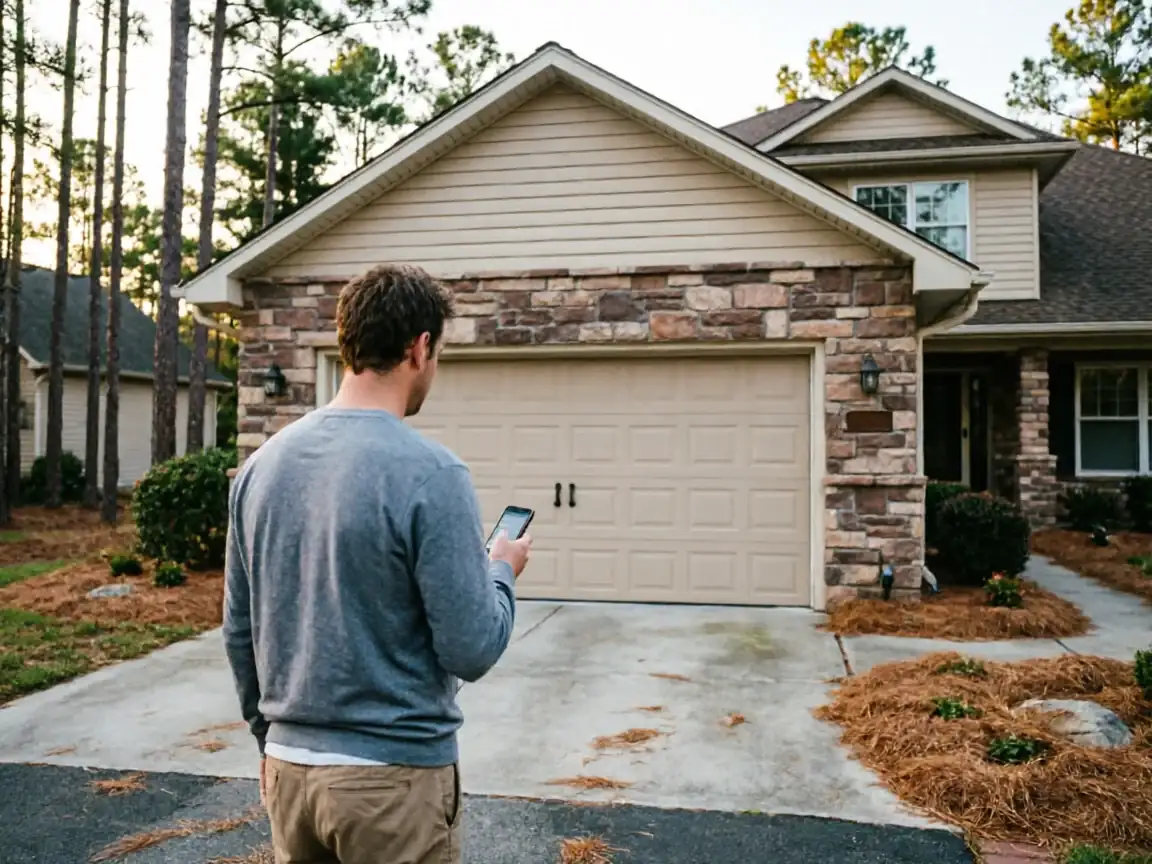
A man stands in a driveway, looking at his phone in front of a garage door.

Tell us what’s wrong

Describe the symptom - won’t open, loud bang, opener runs but the door won’t move.

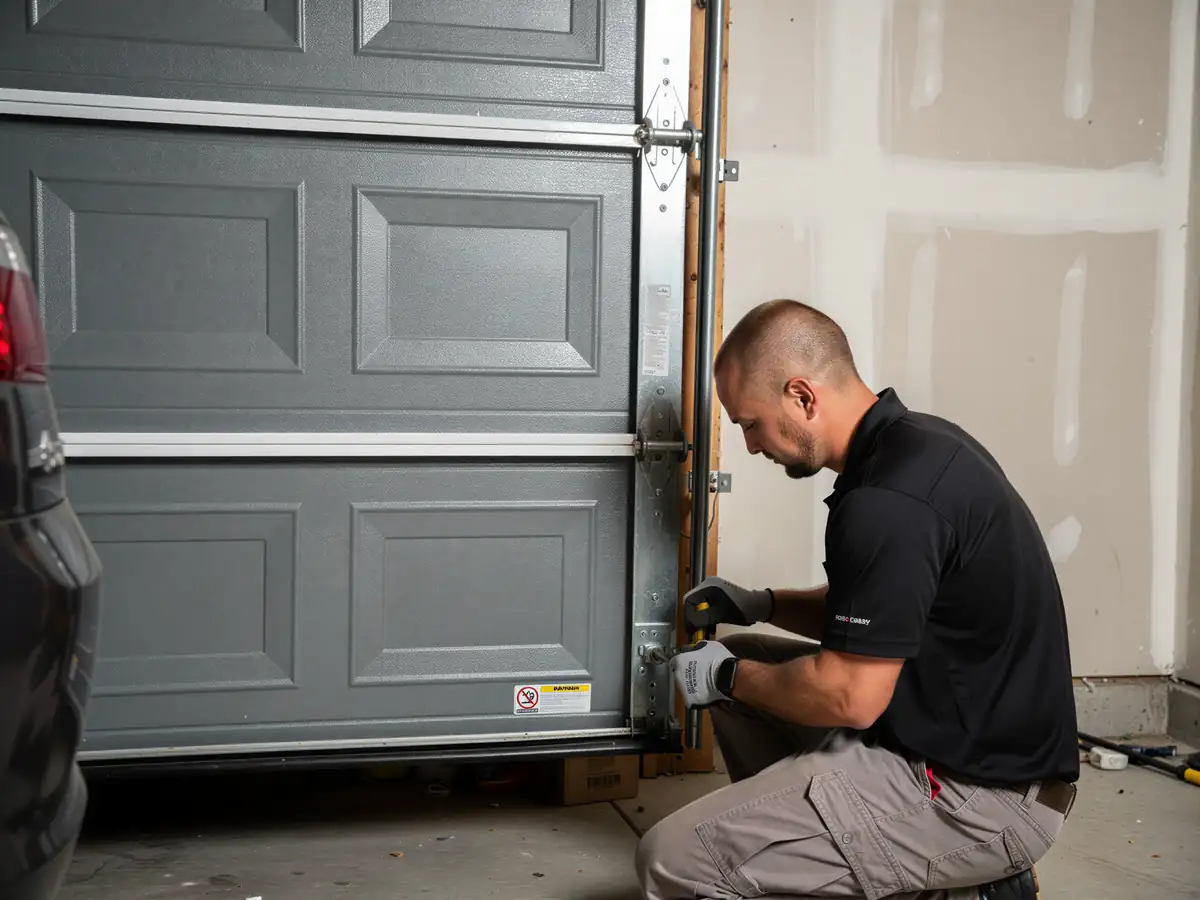
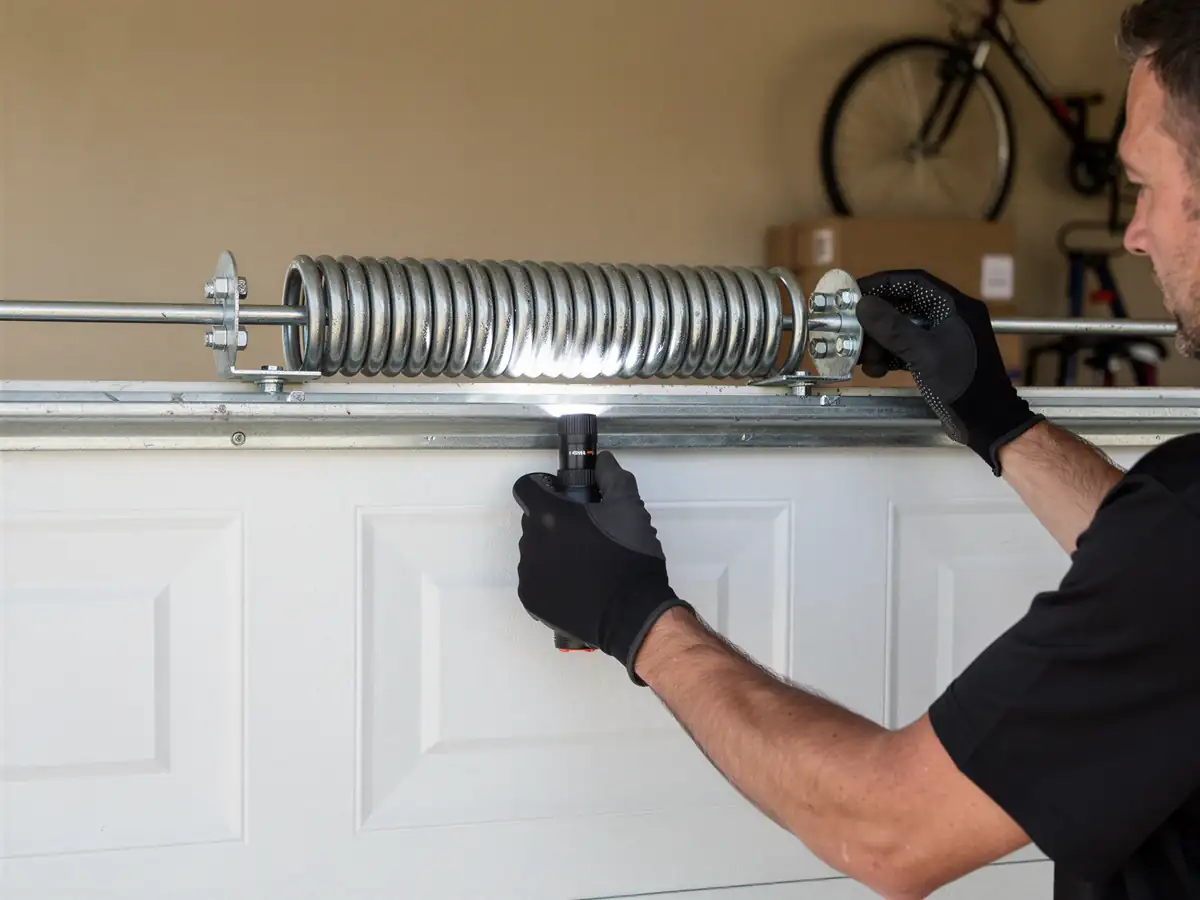
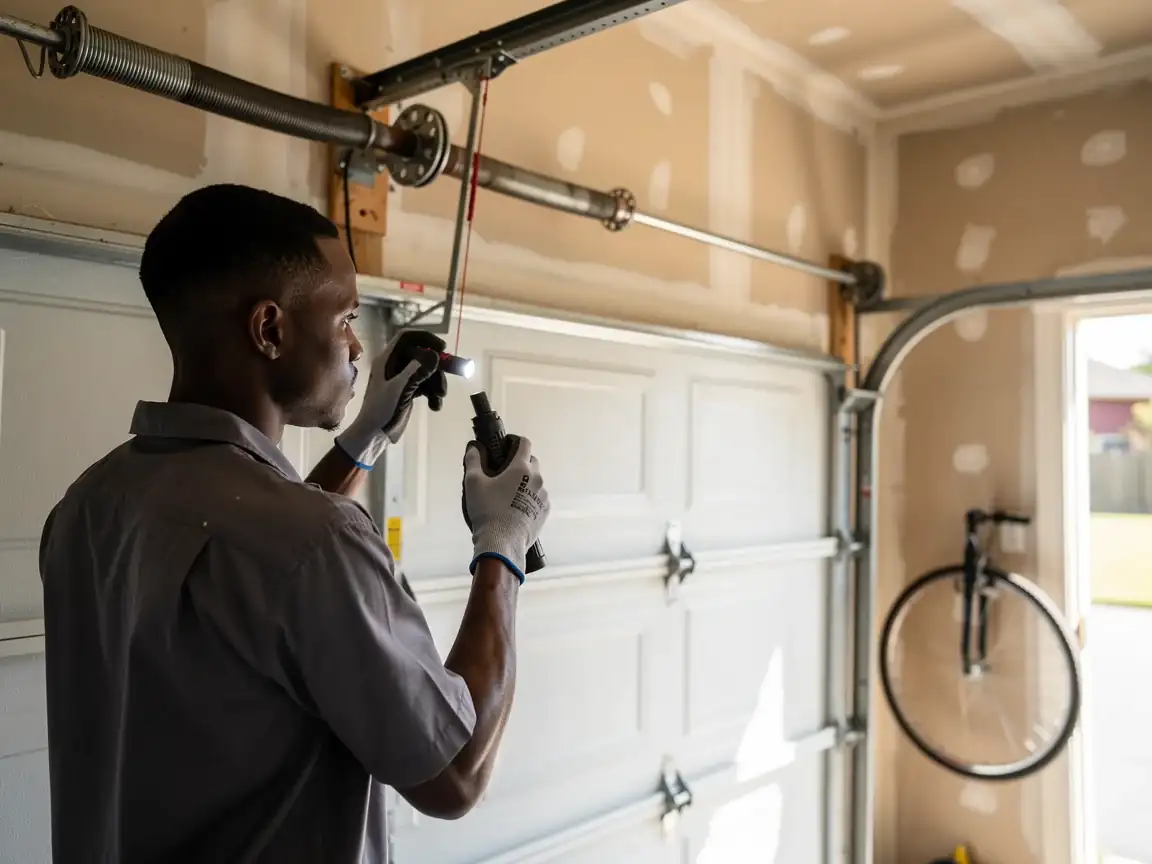
A technician shines a flashlight on a garage door torsion spring.

On-site diagnosis

A technician tests the door under power and by hand and finds what actually failed.

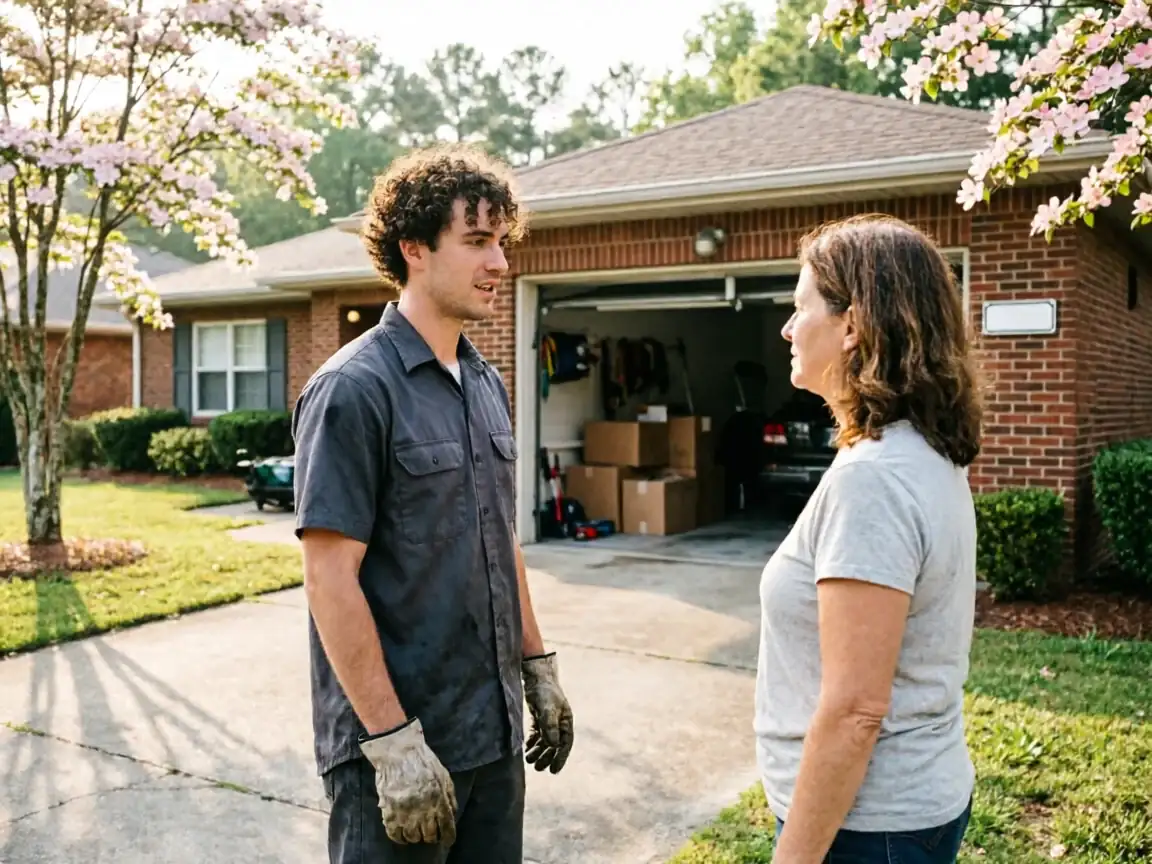
A technician in work gloves talks to a woman in front of a brick house.

Clear, up-front plan

You get the fix that’s needed and what drives the cost - before any work starts.

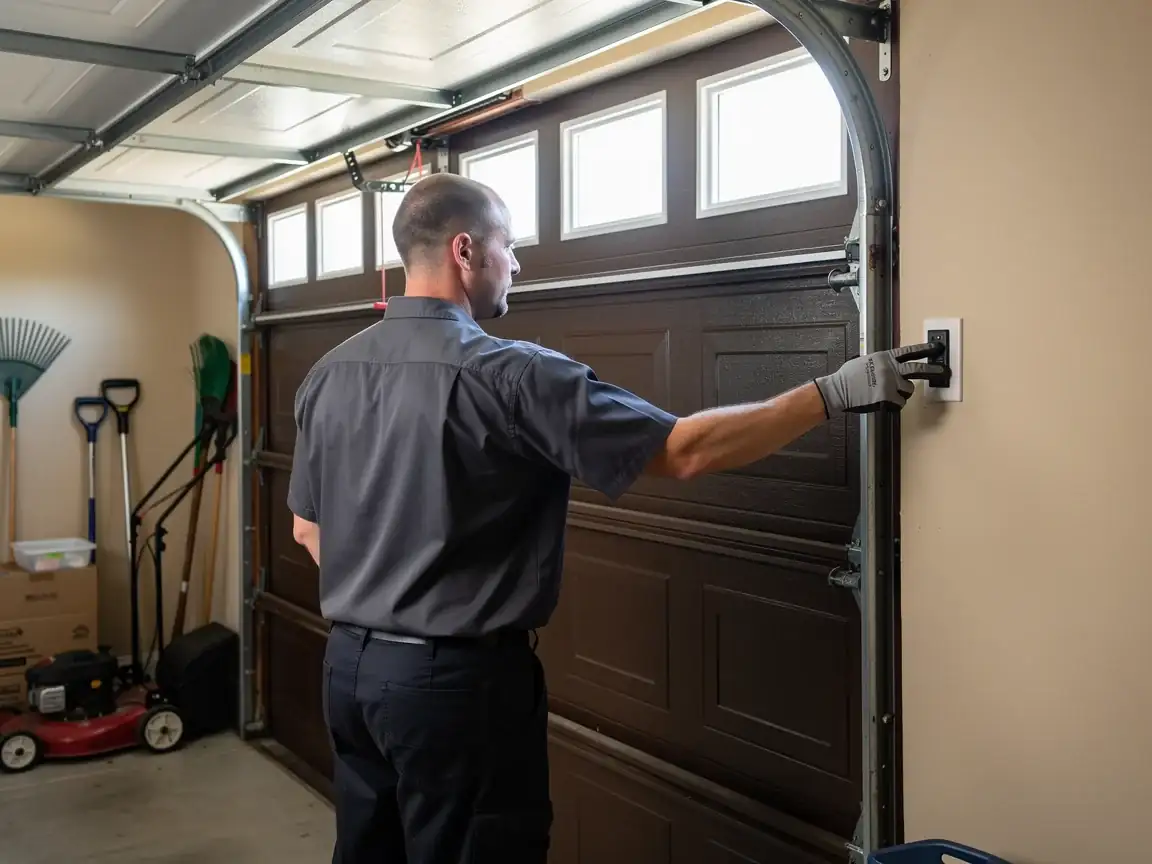
A technician in a gray shirt presses a button on a wall next to a brown garage door.

Repaired & tested

The repair is done, the door is set true and tested, and the work area left clean.

Not sure which repair your door needs in Fayetteville, GA? Describe what it’s doing - every job starts with a diagnosis.

How we work

What to expect

Diagnosis firstEvery visit starts by finding what actually failed - not a pre-written parts list.
The right part for the doorSprings and openers matched to the door’s weight and age, so the fix holds up.
Straight answersWhen a repair makes more sense than a replacement - or the reverse - you hear it plainly.
Clean, careful workTension released safely, hardware set true, the door tested under power before we leave.
What we do

Garage Door Services

Repair and installation work for Fayetteville homes and businesses.

Questions

Frequently asked

Straight answers about garage door repair in Fayetteville. Still unsure? Ask us directly.

How do I know if it's the spring or the opener?

Pull the release cord and lift the door by hand. If it's heavy, fights you, or won't stay up on its own, that's a spring issue, not the opener. A properly tensioned spring should let you lift most residential doors with one hand and have it hold position partway up.

Does cold weather actually affect garage doors in Fayetteville?

Yes, though not dramatically. Fayetteville's cold-moderate climate means steel tracks and opener gearing stiffen on cold mornings and lubricant thickens, which shows up as hesitation or grinding noise. It's gradual wear, not storm damage, but it adds up faster on hardware that's already decades old.

Why does my 1990s door fail differently than a newer one?

A lot of homes in this area were built from the 1980s through the 90s, and doors from that era often run original torsion springs and early chain-drive openers. Those parts have simply cycled more times than anything installed in the last ten years, so fatigue failures show up more often than electronic faults.

Do you charge extra to come look at the door before quoting a repair?

The service call covers the inspection and diagnosis along with the written quote before work starts. What changes the final number is the parts needed and the specific fix, which depends on the door's age and what's actually failing.

Ready to get your garage door sorted?

Tell us what it’s doing and where you are in Fayetteville - we’ll take it from there.

Request a QuoteCall