Serving Fayetteville, GA & nearby
(770) 230-5959
Fayetteville, GA

What an Older Door Is Worth Fixing in Fayetteville

Fayetteville homes built between 1961 and 2007 often have garage doors worth repairing instead of replacing. Here's how to tell which is which for yours.

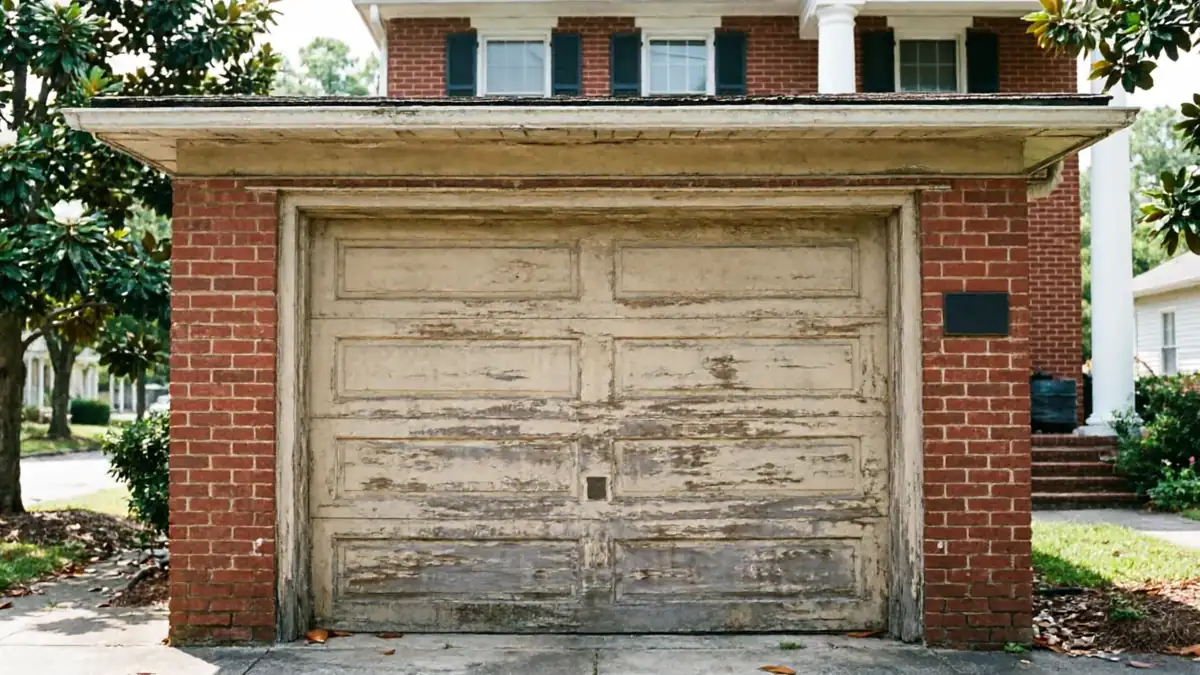
A peeling white garage door is set into a red brick garage.

When to Call Someone

Most houses across Fayetteville's service area went up between 1961 and 2007, with the typical build year sitting around 1988. That puts a lot of doors in a specific window: old enough that the opener and torsion spring are probably not original equipment, but the track and hardware might be. If your door is slow to open, drifts off-track, or the spring has already been swapped once, that's worth a call before anything snaps. If the panel is still straight and the opener runs quiet, you likely don't need us yet - that's the honest answer, not a sales pitch. A door that's merely loud or stiff in cold weather is usually a lube-and-adjust job, not a replacement. Where it gets worth calling is when a cable frays, a roller seizes, or the door comes down crooked - those are safety issues on a door carrying real spring tension, and they don't get better by waiting. Across the 19 named areas in this service territory, the housing stock runs mostly 1980s and 90s, which means a lot of owners are dealing with the second or third opener on a door that's never had the track itself replaced. That's usually fine. It's the spring and the opener that wear out first, not the steel.

What the Weather Here Does to It

Fayetteville sits in a cold-moderate climate band, which means the door hardware goes through a real seasonal swing rather than staying at one temperature year-round. Steel panels and torsion springs both contract in cold snaps and expand back in summer heat, and that cycle is what fatigues a spring over years, not any one bad day. On a 1980s or 90s door, that's a lot of expansion-and-contraction cycles already banked. Cold mornings are when a tired spring is most likely to let go, because the metal is stiffest and least forgiving right when the door gets asked to lift a cold, heavier panel. It's also when nylon rollers get brittle and start cracking at the edges instead of just wearing down evenly. None of this means you need a new door every decade - a moderate climate band is far easier on hardware than a true freeze-thaw region, and most of what we see is normal fatigue, not weather damage. But it does mean a spring with visible gaps between coils, or a roller that's gone from round to flat on one side, is worth replacing before the cold stretch rather than after it fails holding a door halfway up.

What Is Going On

With roughly 40,897 households and 18,505 owner-occupied houses in this service area, a big share of that housing dates to the same 1980s-to-90s build window. That matters because doors and openers from that era were built to a different standard than what's sold today - heavier steel, simpler openers, torsion springs rated for fewer cycles than current parts. When one of those doors starts acting up, the question isn't whether it's old, it's whether the problem is the spring, the opener, or the track, because those three fail on completely different timelines. A spring on a door that age has usually been cycled tens of thousands of times already; replacing just the spring on sound track and panel is often the right move. An opener from that same build era failing is a different story - the motor and logic board wear out well before the door itself does, and swapping the opener alone, leaving the original door and track in place, is common and sound. What's rare is the whole assembly failing at once. Usually it's one part, and figuring out which one saves you from paying for a full replacement you didn't need.

The Common Mistake

The mistake we see most is treating a stuck or noisy door as a sign the whole unit needs replacing, when it's one worn part on an otherwise sound door. At a median household income of $61,454 across this area, most owners are making that repair-or-replace call on a real budget, not an open one, and a full door replacement is a bigger expense than a spring or roller job. The flip side mistake is the opposite: patching a door that's actually failing structurally - a bent track, a warped panel, hardware that's been welded or jury-rigged by a previous repair - because patching looks cheaper up front. We won't tell you to replace a door that just needs a spring, and we won't tell you a spring job will fix a door whose track is bent past true. Here's the limitation worth saying plainly: we can't always tell which it is without seeing the door in person, because a door that looks fine from the inside can have a track pulling away from the jamb that you'd only catch by checking plumb. That's not a reason to guess - it's a reason to get it looked at before deciding which way to spend the money.
How it works

From “it’s stuck” to “it’s fixed”

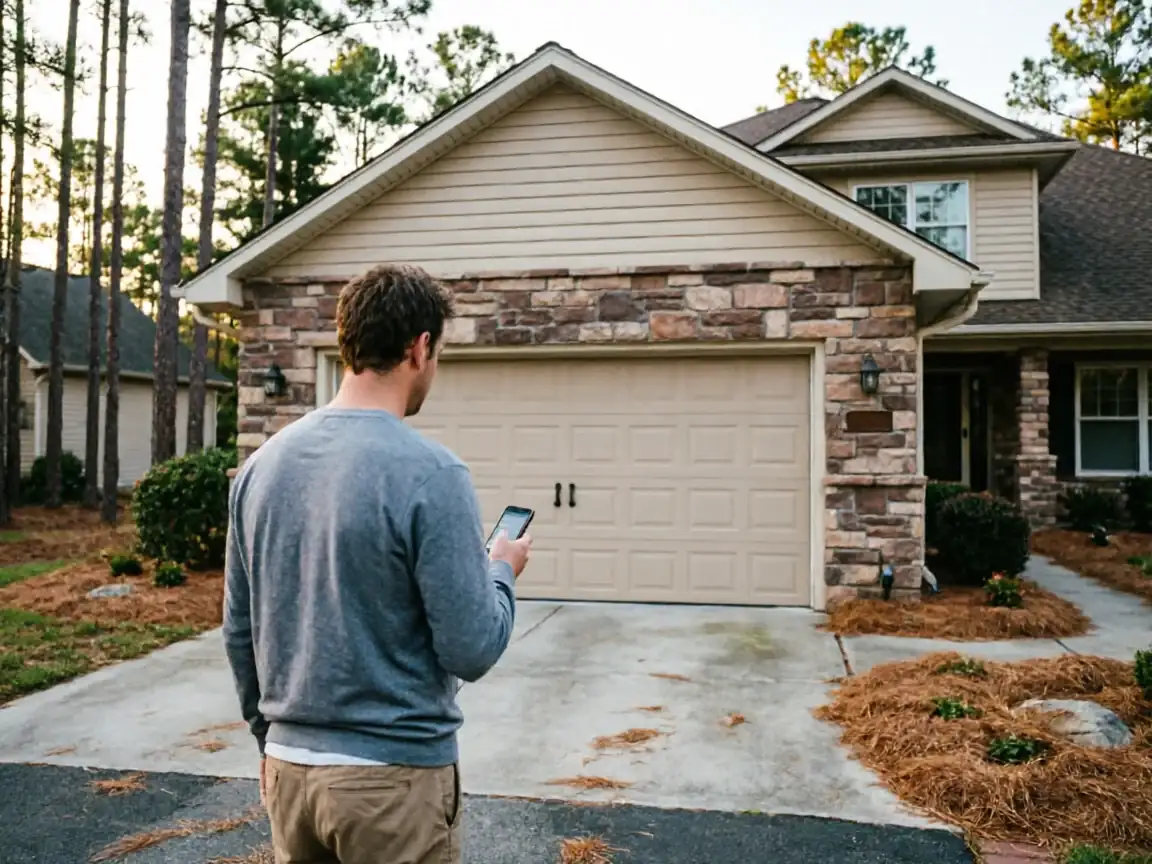
A man stands in a driveway, looking at his phone in front of a garage door.

Tell us what’s wrong

Describe the symptom - won’t open, loud bang, opener runs but the door won’t move.

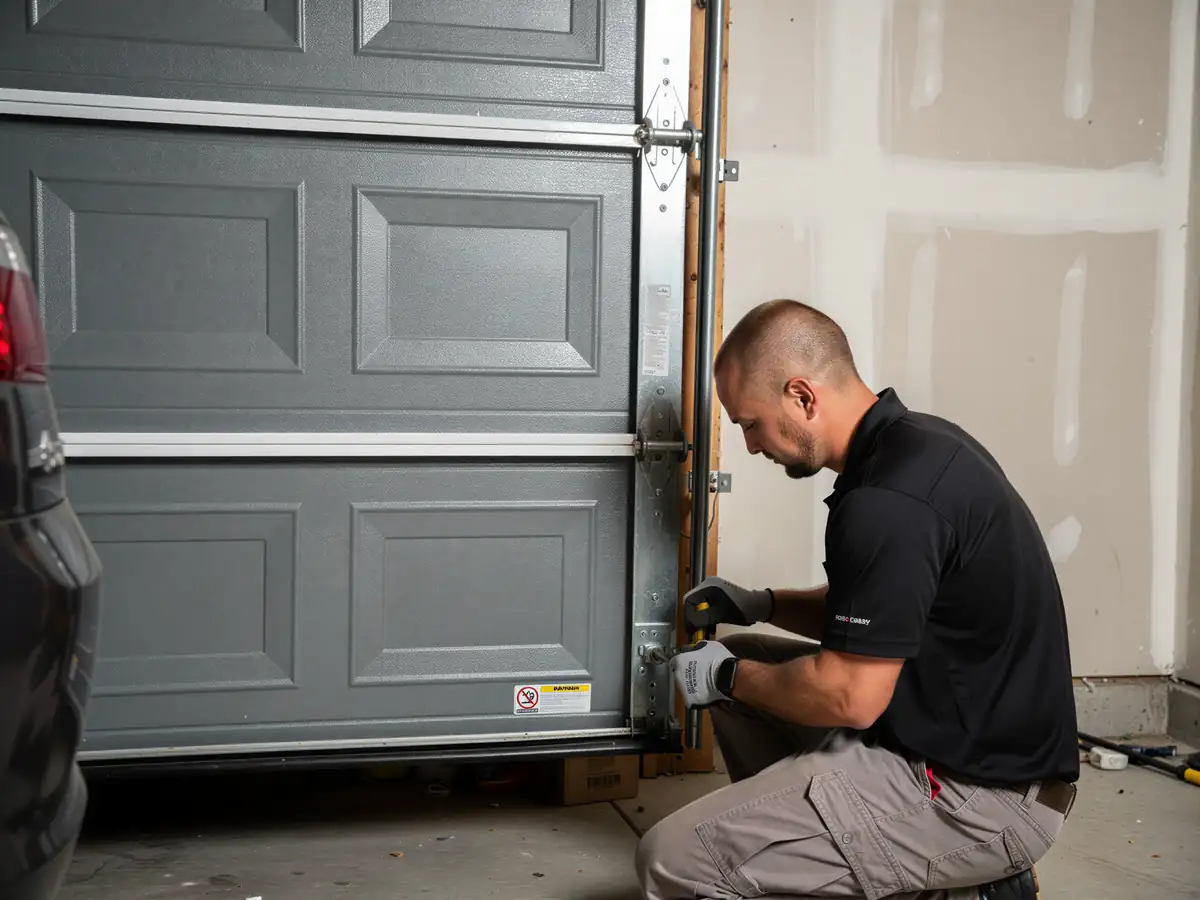
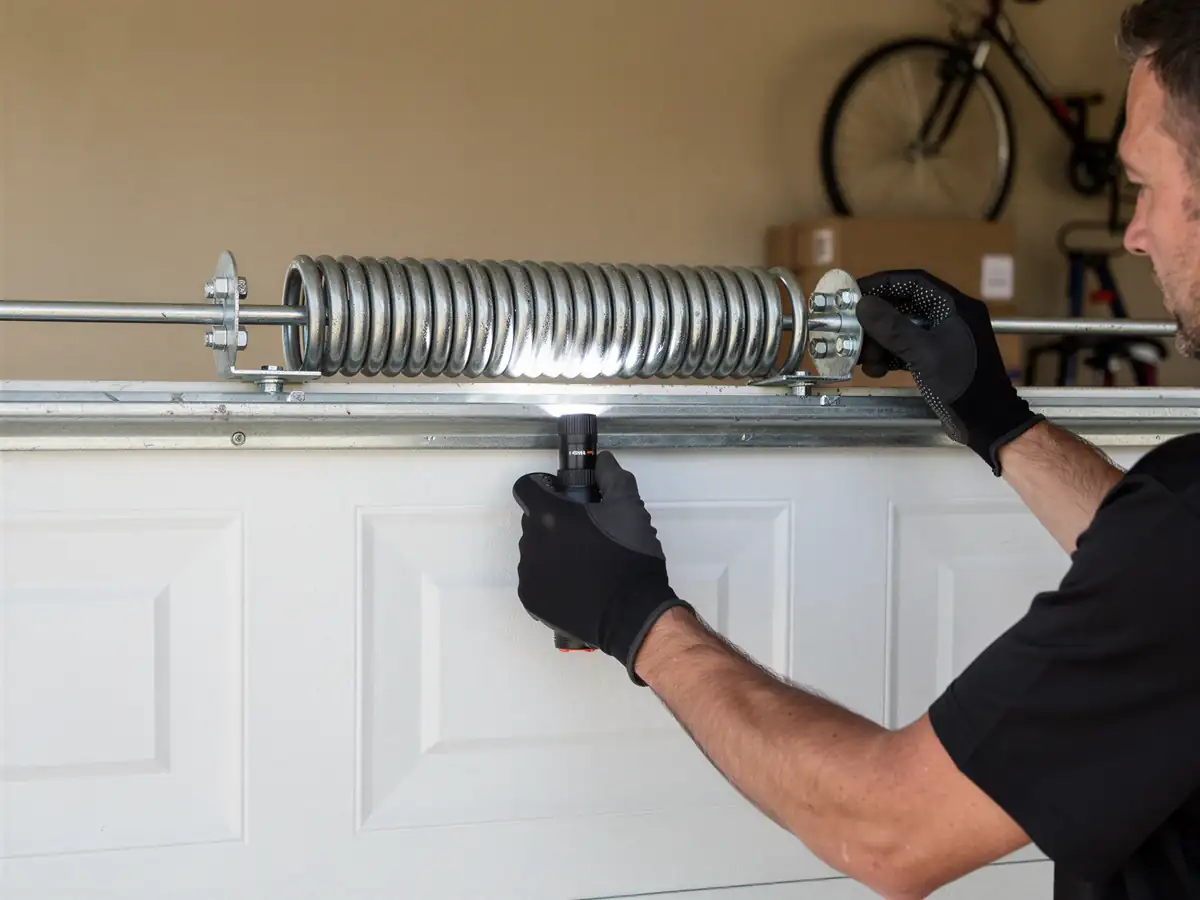
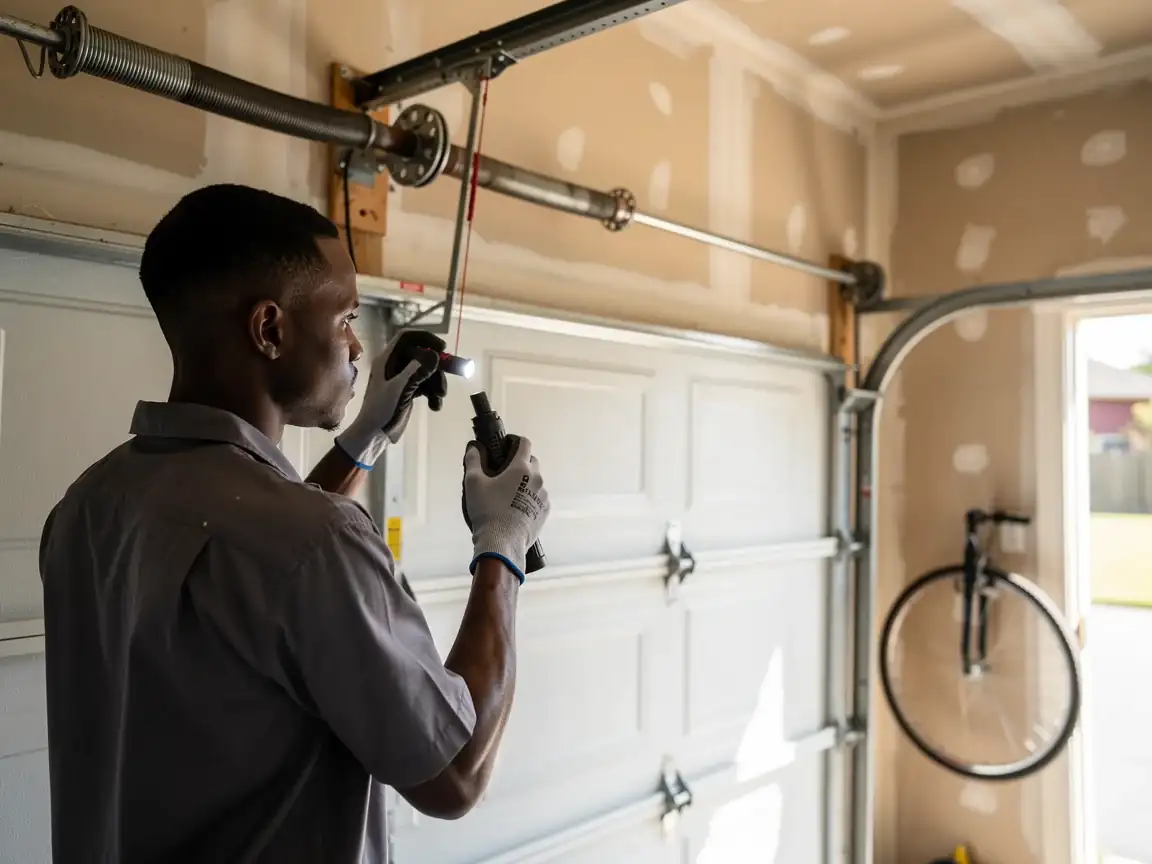
A technician shines a flashlight on a garage door torsion spring.

On-site diagnosis

A technician tests the door under power and by hand and finds what actually failed.

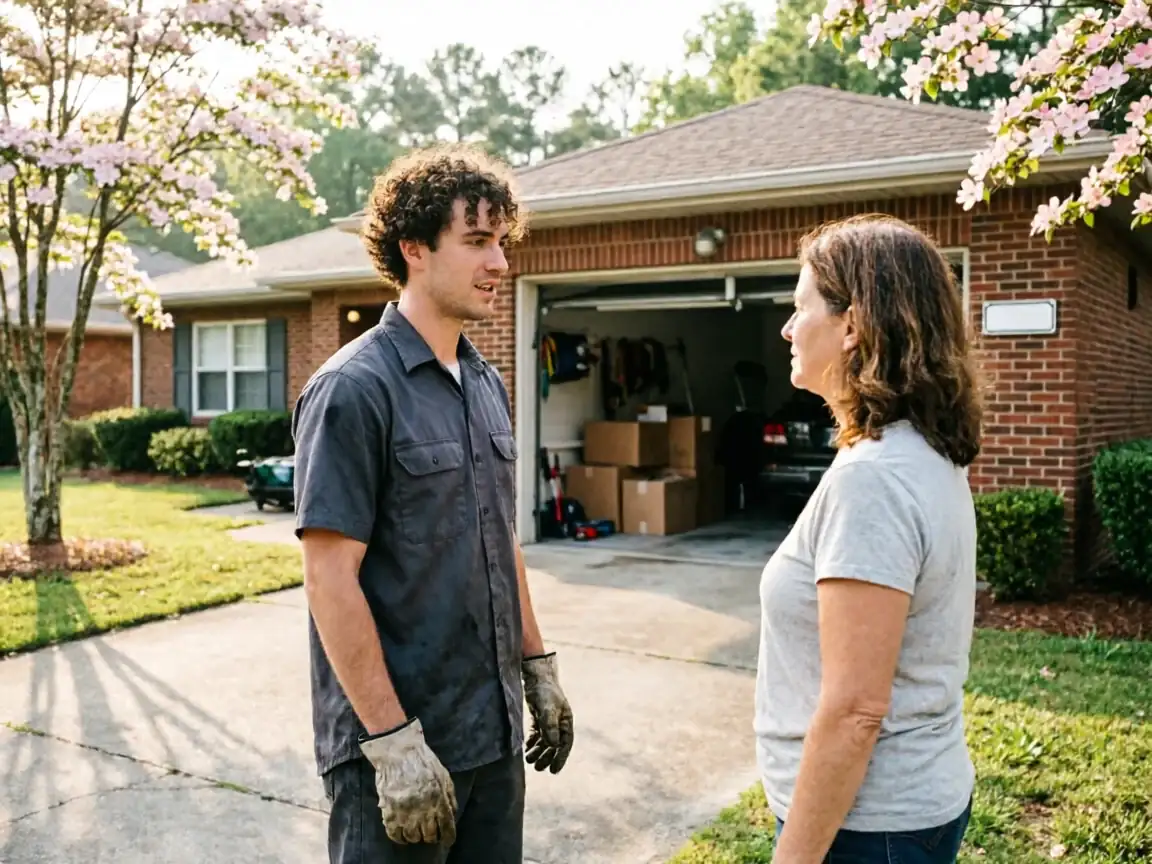
A technician in work gloves talks to a woman in front of a brick house.

Clear, up-front plan

You get the fix that’s needed and what drives the cost - before any work starts.

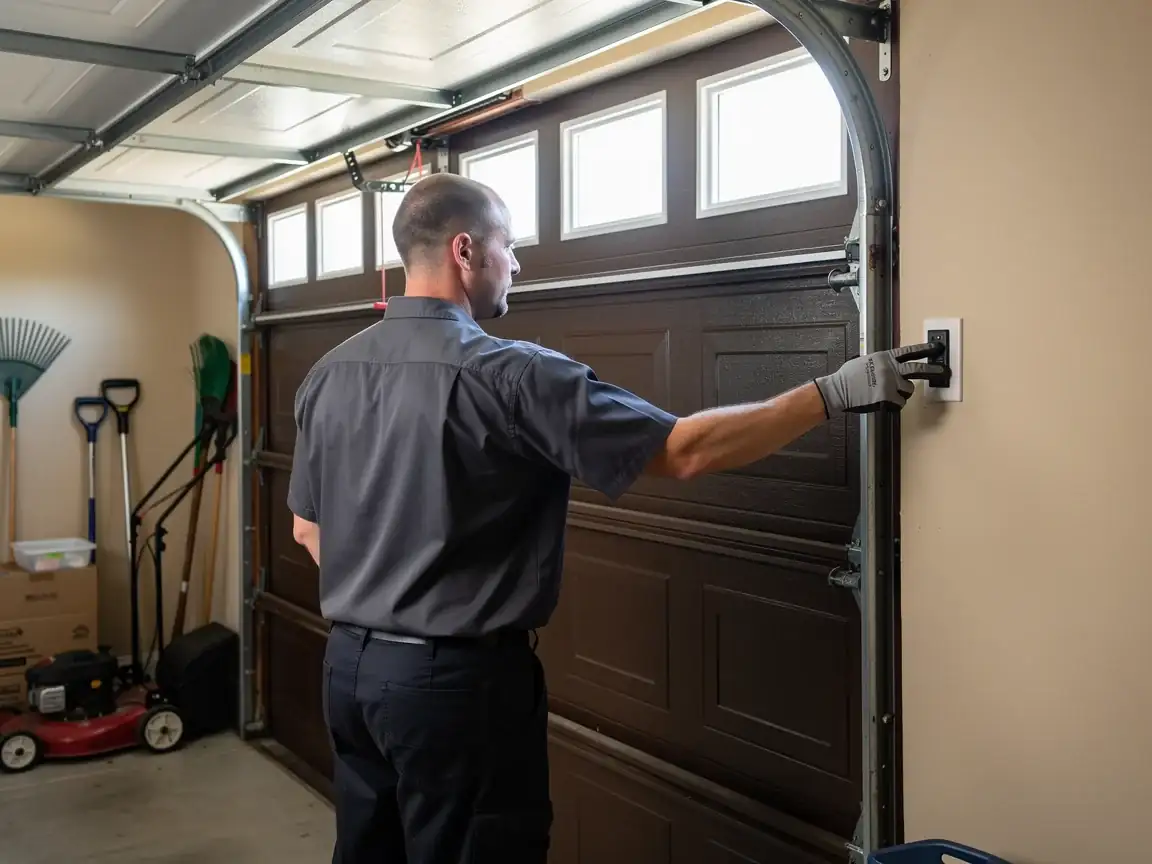
A technician in a gray shirt presses a button on a wall next to a brown garage door.

Repaired & tested

The repair is done, the door is set true and tested, and the work area left clean.

Not sure which repair your door needs in Fayetteville, GA? Describe what it’s doing - every job starts with a diagnosis.

How we work

What to expect

Diagnosis firstEvery visit starts by finding what actually failed - not a pre-written parts list.
The right part for the doorSprings and openers matched to the door’s weight and age, so the fix holds up.
Straight answersWhen a repair makes more sense than a replacement - or the reverse - you hear it plainly.
Clean, careful workTension released safely, hardware set true, the door tested under power before we leave.
What we do

Garage Door Services

Repair and installation work for Fayetteville homes and businesses.

Questions

Frequently asked

Straight answers about garage door repair in Fayetteville. Still unsure? Ask us directly.

My garage door is from the 1980s - is it too old to repair?

Not on its own. Age by itself doesn't disqualify a door - it's the condition of the spring, track, and panel that decides it. A lot of houses in this area date to that build era, and most of those doors are still fine structurally; what fails first is usually the spring or the opener motor, both repairable without replacing the door.

Why does my spring keep breaking in cold weather?

Fayetteville sits in a cold-moderate climate band, so the spring steel contracts in cold snaps and expands in summer heat, and that cycling is what fatigues a spring over years. A spring that's already near the end of its rated cycles is most likely to let go on a cold morning when the metal is stiffest.

Should I replace the opener or the whole door?

Usually just the opener. On houses built in the 1980s and 90s, the motor and logic board tend to wear out well before the door and track do. If the panel is straight and the track is true, swapping only the opener is common and sound - no need to replace the door with it.

How do I know if it's worth fixing versus replacing?

Check whether the problem is isolated - a frayed cable, a seized roller, a tired spring - versus the whole assembly, like a bent track or warped panel from a past repair. Isolated part failures are almost always worth fixing. We can't always tell for certain without seeing the door and checking the track for plumb.

Ready to get your garage door sorted?

Tell us what it’s doing and where you are in Fayetteville - we’ll take it from there.

Request a QuoteCall