Serving Fayetteville, GA & nearby
(770) 230-5959
Fayetteville, GA

When a Spring Goes in Cold Weather Near Fayetteville

Fayetteville homes built 1961-2007 see springs fail when temps drop. Here's what to check, what the cold does to steel, and when to call a pro.

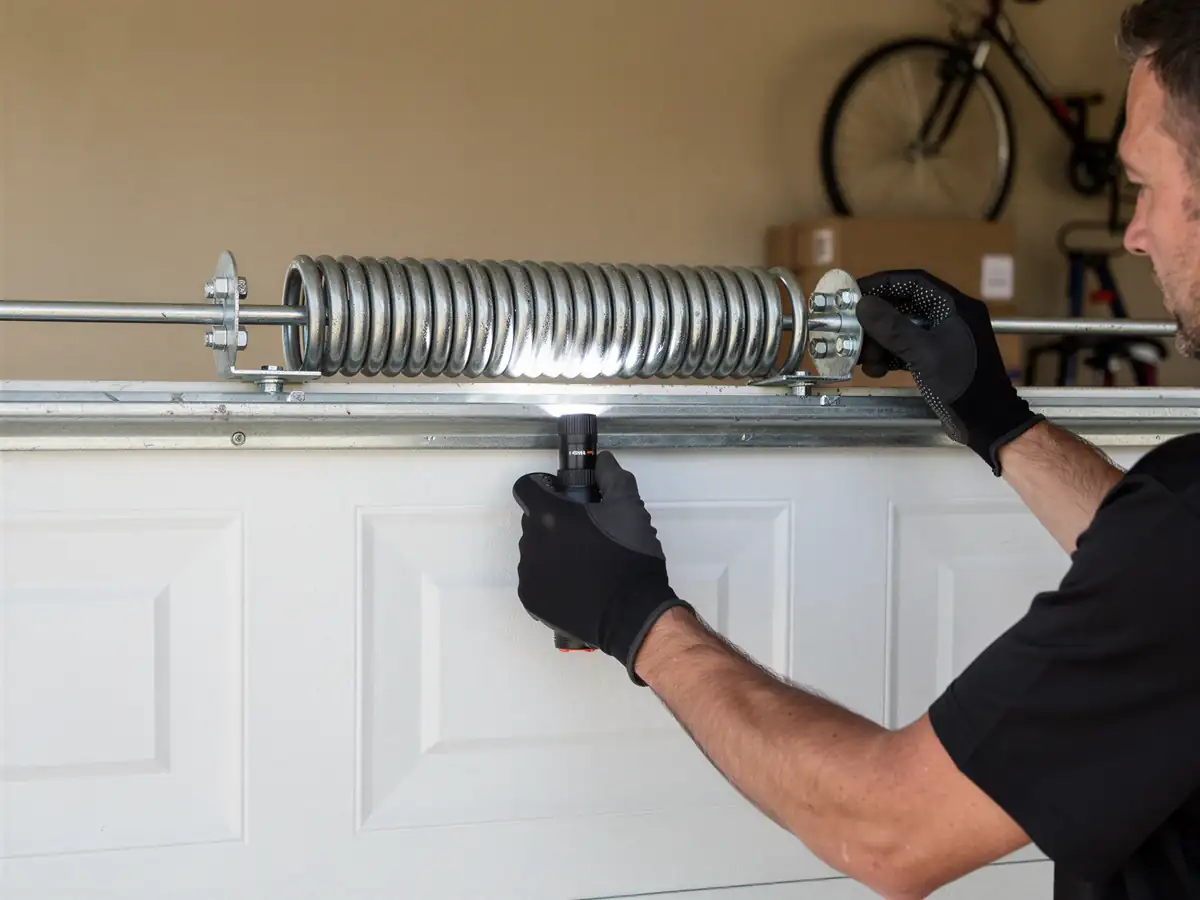
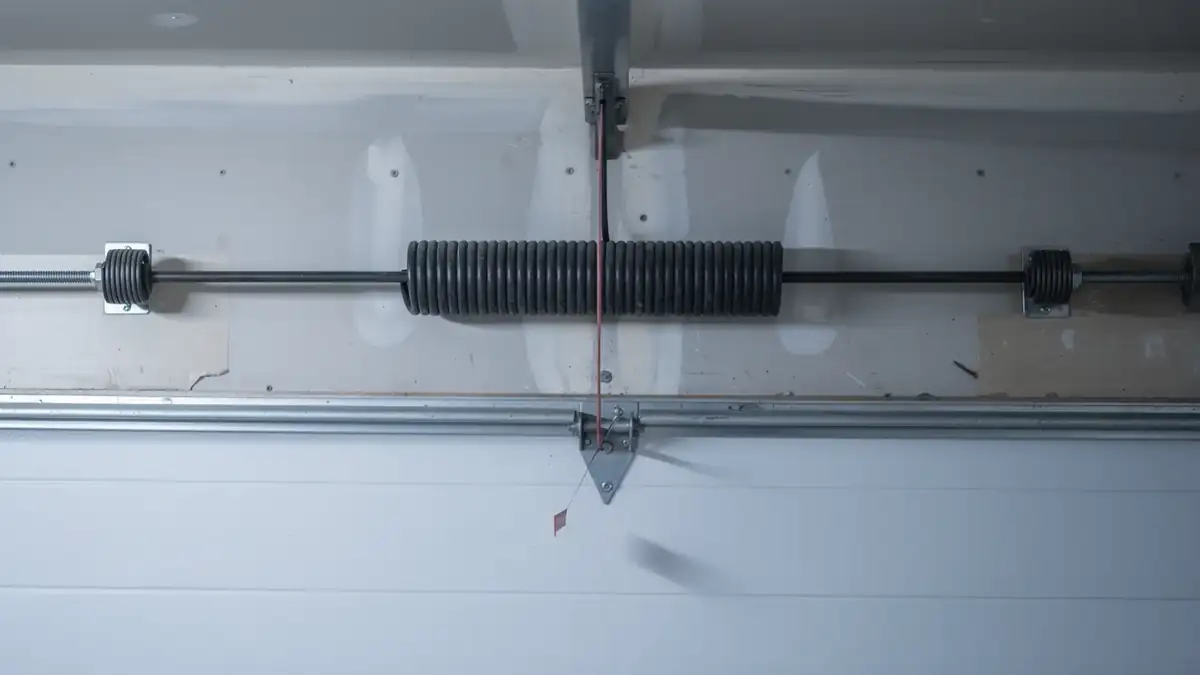
A garage door torsion spring is mounted above a white garage door.

When to Call Someone

If the door won't budge and you hear a bang from the garage first, that's a torsion spring letting go, not a motor problem. Don't pull the emergency release and try to lift it by hand - a broken spring on a standard double door is heavy enough to drop a panel or a finger. Call a pro when the door is dead weight, when one cable looks slack while the other is still tight, or when the opener strains and clicks but the door barely moves. Those are spring and cable jobs, not something to troubleshoot with WD-40 and hope. Most of the houses on this side of the county went up between 1961 and 2007, with the bulk from the 1980s and 90s, so a lot of garages still carry the original torsion hardware from that build window - parts that have had thirty-plus winters on them. If your door is from that era and it's never had the spring replaced, you're closer to a failure than you think, cold weather or not. The honest limit here: if the drum or the track is also bent from the same event, that's a bigger job than a spring swap, and we'll tell you straight if replacement makes more sense than patching it.

What the Weather Here Does to It

Fayetteville sits in a moderate cold band, not a deep-freeze climate, but that's exactly what catches people off guard. Steel springs lose a little flex every time the temperature swings, and a moderate cold snap after a warm stretch puts more stress on a spring than a steady hard freeze would. The metal contracts, the coil binds slightly tighter than it did in summer, and a spring that was already near the end of its life picks that morning to let go. It's not that this area freezes hard - it's that the swings are frequent enough to fatigue a spring faster than owners expect from a place that doesn't get brutal winters. Lubricant matters too. Grease that was fine in August turns stiff in a 30-degree garage, which adds drag right as the spring is already working harder. None of this means your door needs a call every cold front. It means a spring near the end of its rated cycle count is more likely to pick a cold morning than a mild one to fail, simply because that's when the extra load shows up.

What Is Going On

A torsion spring is rated for a set number of open-close cycles, somewhere in the tens of thousands, and it doesn't care what the calendar says once it's near that number. What cold weather does is expose a spring that's already close to done. The steel is stiffer, the coil has slightly less give, and the last few thousand cycles get used up fast. For a house built in the 1988 median year for this area, that's three and a half decades of cycles on original hardware if nothing's been swapped - plenty of time to reach the end of a spring's rated life regardless of temperature. What usually happens is the spring was fine on Tuesday and gone on a cold Wednesday, and the owner assumes the cold broke it. The cold didn't break it. The cold just happened to be there on the day the fatigue caught up with it. That distinction matters because it changes what we look at: not just the spring, but the drum, the cable, and the bearing plate it's been working against for all those cycles.

The Common Mistake

The mistake we see most is someone spraying the track and rollers with oil after a cold-weather failure, assuming lubrication was the whole problem, then putting the door back into daily use with a spring that's already stretched or sagging. A sagging spring doesn't always snap clean - sometimes it just loses tension gradually, and the opener starts doing the lifting the spring used to do. That burns out the opener motor faster, and now you've got two problems instead of one. The other mistake is matching a new spring to the old one by eye instead of by the door's actual weight and wind count. Springs are sized to the pound for the door they're lifting; a close guess works until it doesn't, and an undersized spring fails again within a season. If your garage is original to a house from that 1980s-90s stretch common across this area, it's worth having the spring's wind count and wire gauge actually checked against the door, not just swapped for whatever looks similar.
How it works

From “it’s stuck” to “it’s fixed”

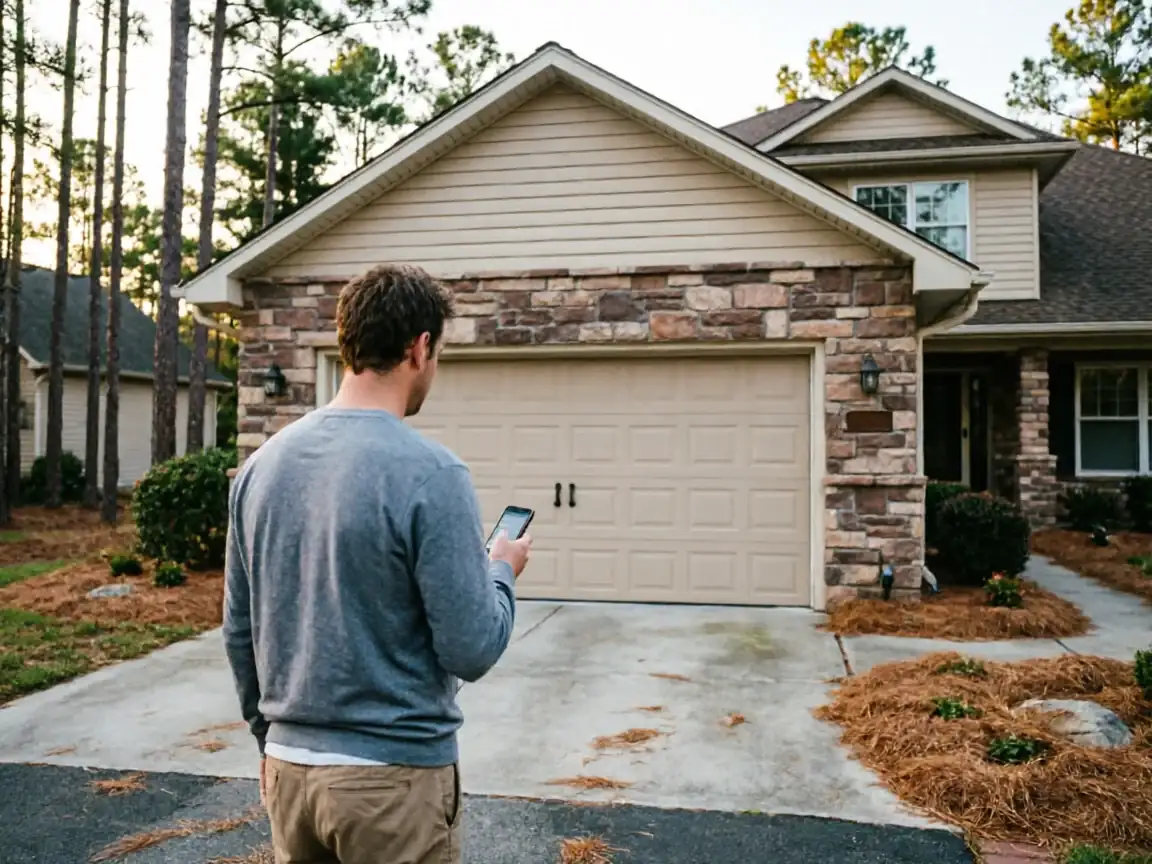
A man stands in a driveway, looking at his phone in front of a garage door.

Tell us what’s wrong

Describe the symptom - won’t open, loud bang, opener runs but the door won’t move.

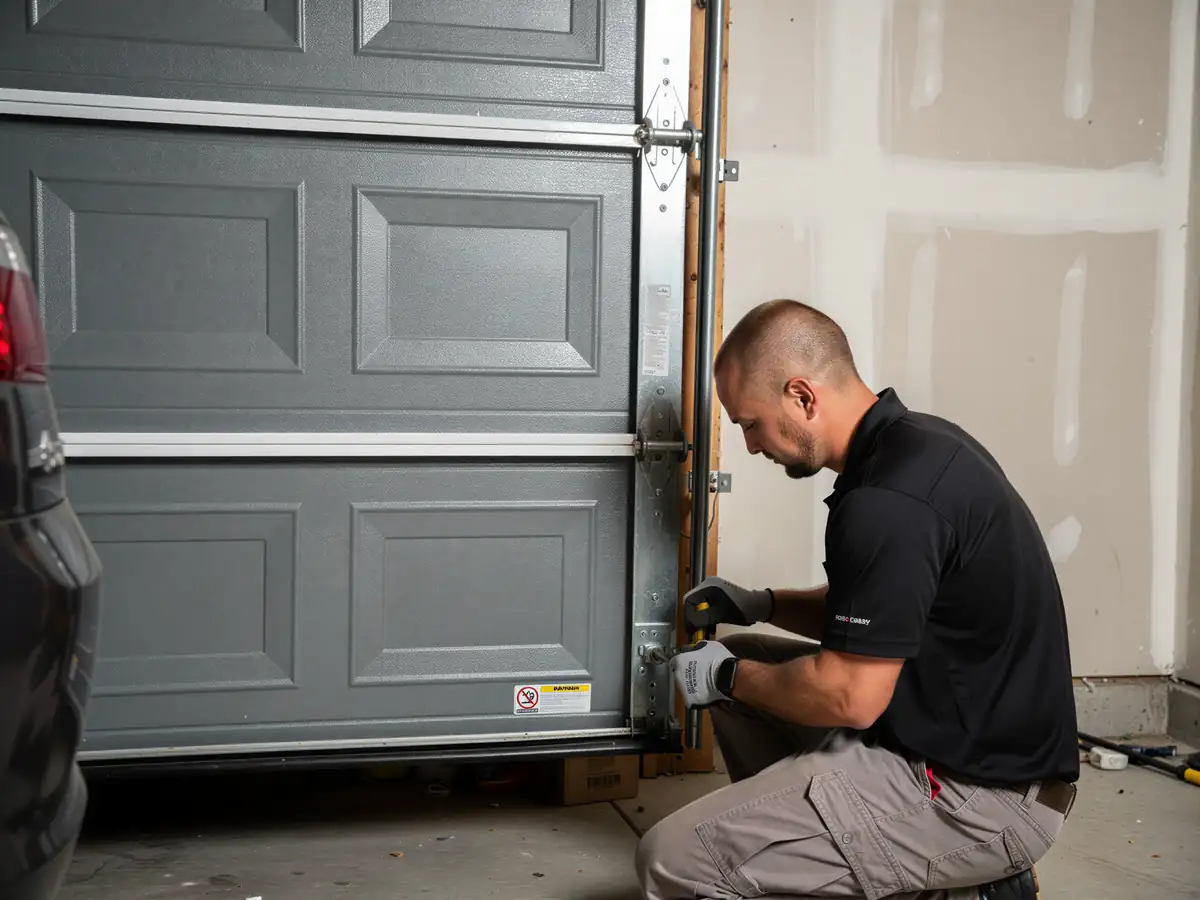
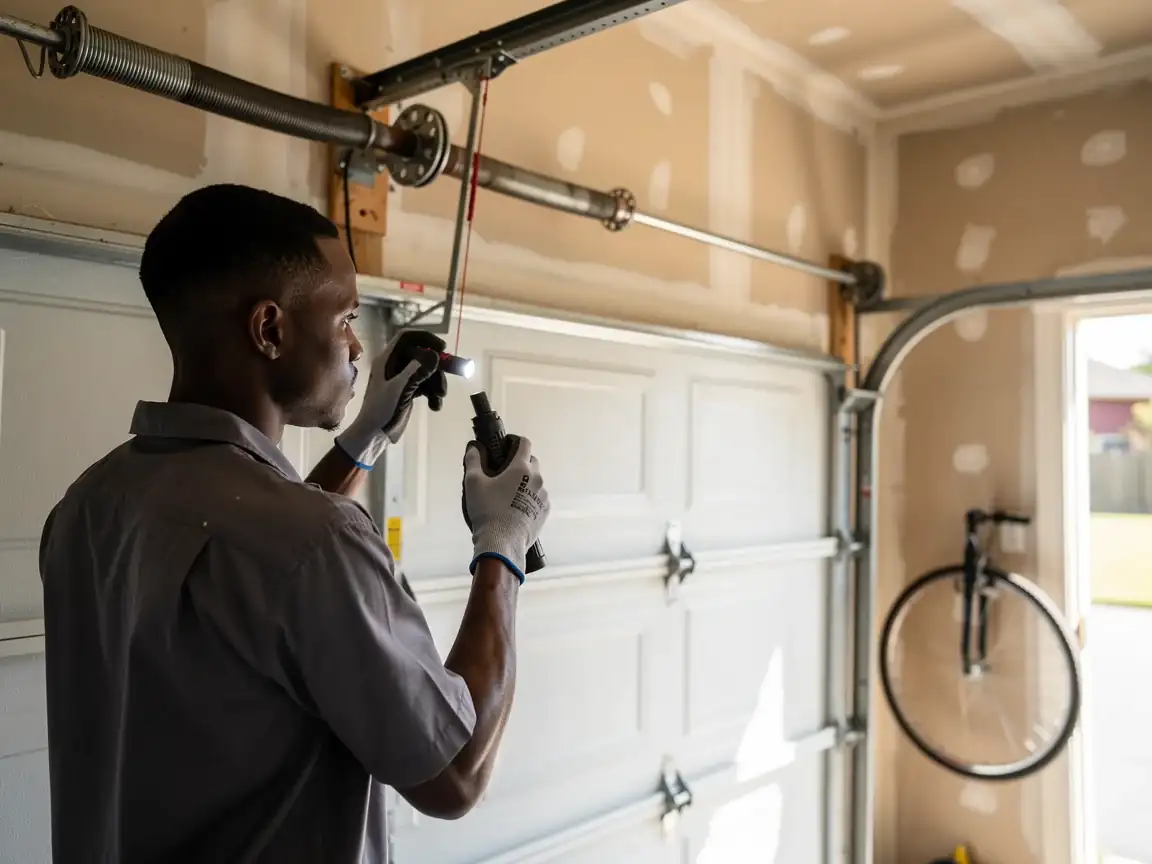
A technician shines a flashlight on a garage door torsion spring.

On-site diagnosis

A technician tests the door under power and by hand and finds what actually failed.

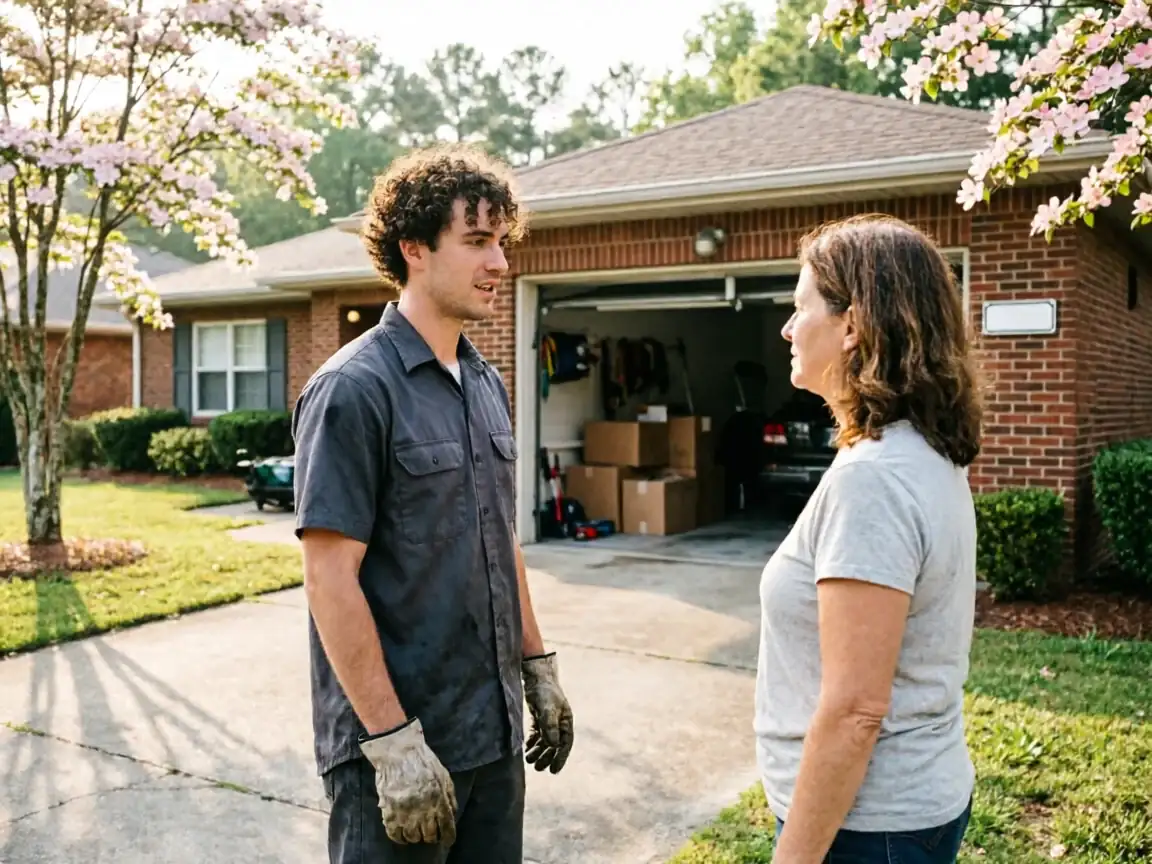
A technician in work gloves talks to a woman in front of a brick house.

Clear, up-front plan

You get the fix that’s needed and what drives the cost - before any work starts.

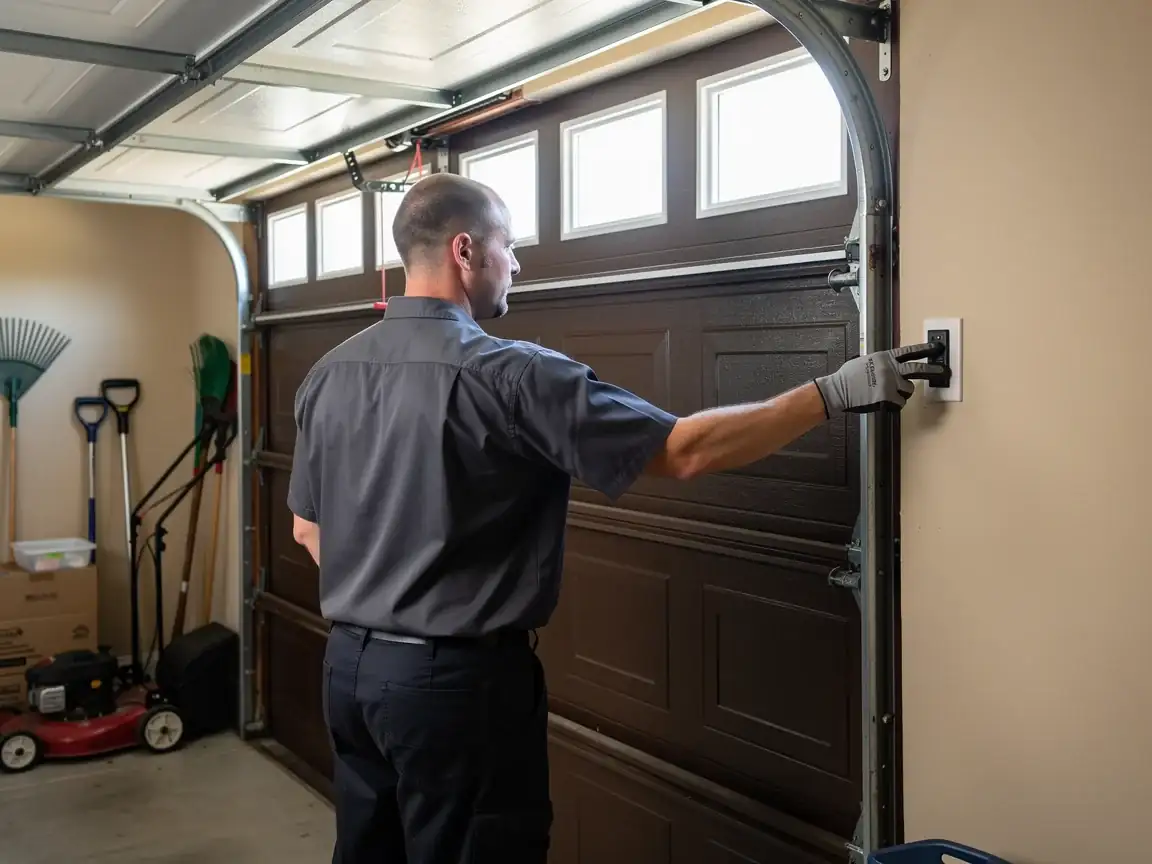
A technician in a gray shirt presses a button on a wall next to a brown garage door.

Repaired & tested

The repair is done, the door is set true and tested, and the work area left clean.

Not sure which repair your door needs in Fayetteville, GA? Describe what it’s doing - every job starts with a diagnosis.

How we work

What to expect

Diagnosis firstEvery visit starts by finding what actually failed - not a pre-written parts list.
The right part for the doorSprings and openers matched to the door’s weight and age, so the fix holds up.
Straight answersWhen a repair makes more sense than a replacement - or the reverse - you hear it plainly.
Clean, careful workTension released safely, hardware set true, the door tested under power before we leave.
What we do

Garage Door Services

Repair and installation work for Fayetteville homes and businesses.

Questions

Frequently asked

Straight answers about garage door repair in Fayetteville. Still unsure? Ask us directly.

Why did my spring break in the morning when it's only moderately cold out?

Temperature swings stress a spring more than steady cold. A spring near the end of its cycle life often fails on the first cold morning after a warmer stretch, because the steel stiffens slightly and that extra load is enough to finish off a coil that was already fatigued.

My house was built in the 1980s - is the spring probably original?

It's possible. Median housing in this area dates to 1988, and a lot of garages never get the spring touched until it fails. If yours has never been replaced, it's had three-plus decades of cycles on it, which is well past when most torsion springs are rated to last.

Can I replace a torsion spring myself?

We don't recommend it. A wound torsion spring holds enough stored force to cause a serious injury if the winding bars slip. It's a job that calls for the right bars, the right cone, and knowing the door's exact weight - not a weekend project.

Is the cold actually damaging my garage door hardware?

Not on its own in this climate band - it's moderate cold here, not extreme. What the cold does is add load to parts that are already worn, so a spring or cable near the end of its life is more likely to give out on a cold day than a mild one.

Ready to get your garage door sorted?

Tell us what it’s doing and where you are in Fayetteville - we’ll take it from there.

Request a QuoteCall