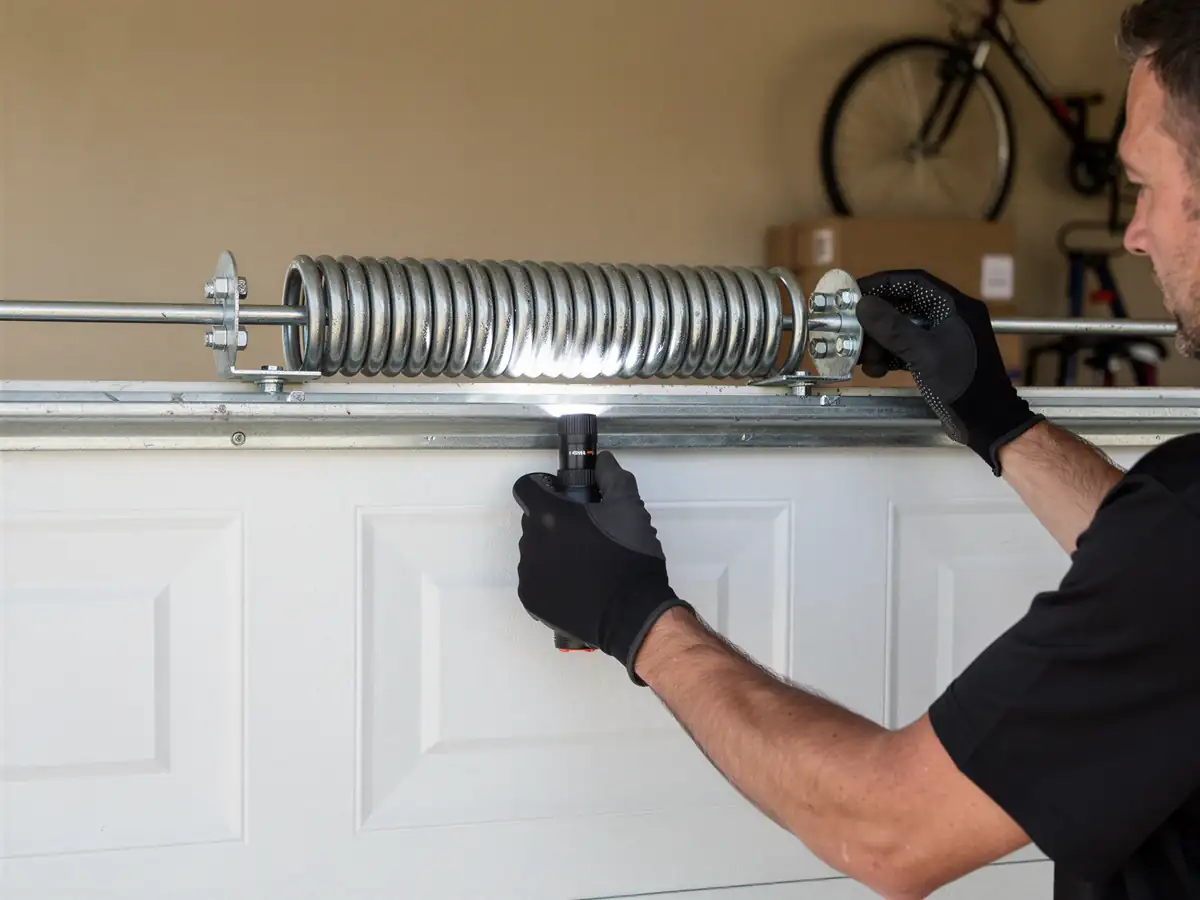
The Symptom
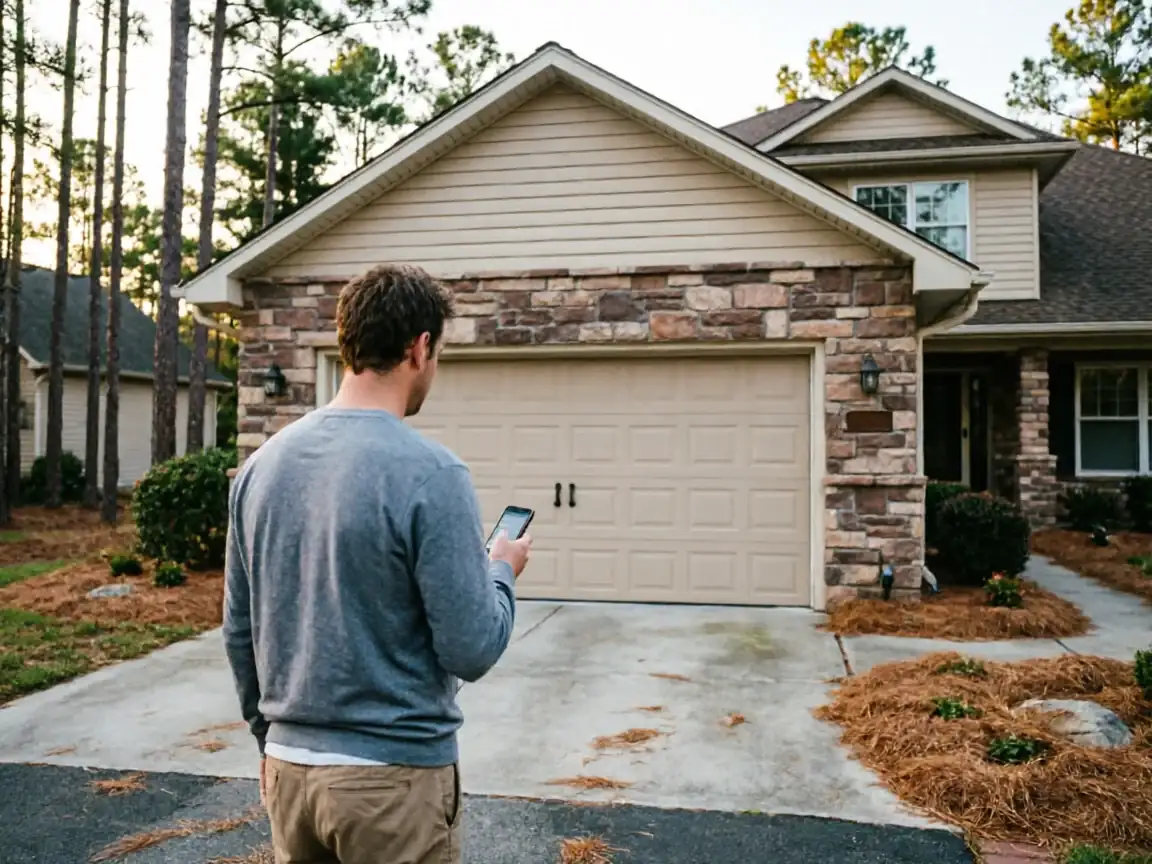
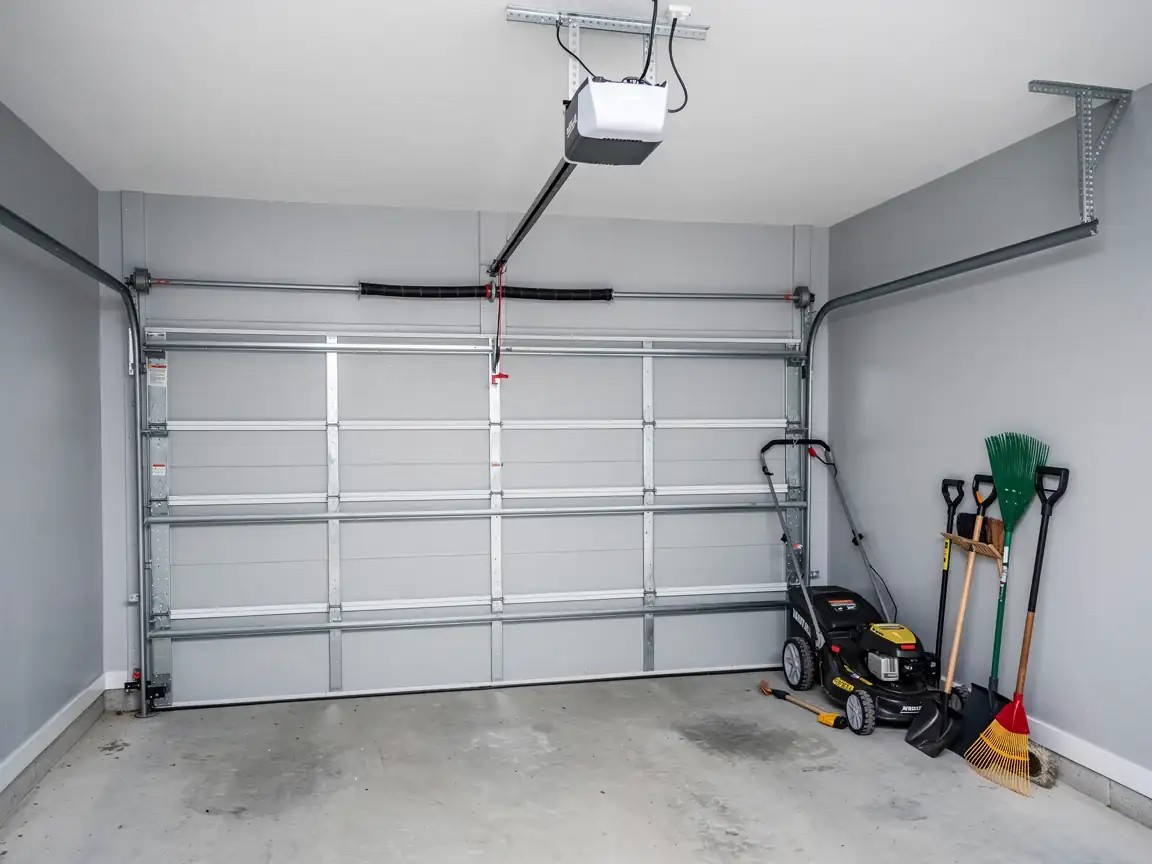
The door won't budge, or it starts up and drops back down like something let go. Sometimes you hear it before you see it - a loud bang from the garage, usually first thing in the morning or late at night when the house is quiet. That bang is almost always a torsion spring snapping at the winding cone. Other times it's quieter: the opener strains, the chain or belt hesitates, and the door feels twice as heavy as it did last week. That's a spring losing tension gradually instead of all at once, and it's usually a sign the other spring on a two-spring setup is about to go too, since they're wound to the same age and the same cycle count. If you see a visible gap in the coil above the door, or the cable looks loose and wavy instead of taut, stop opening the door by hand or by opener. A spring under partial tension is more dangerous than one that's fully broken.
How Long It Takes
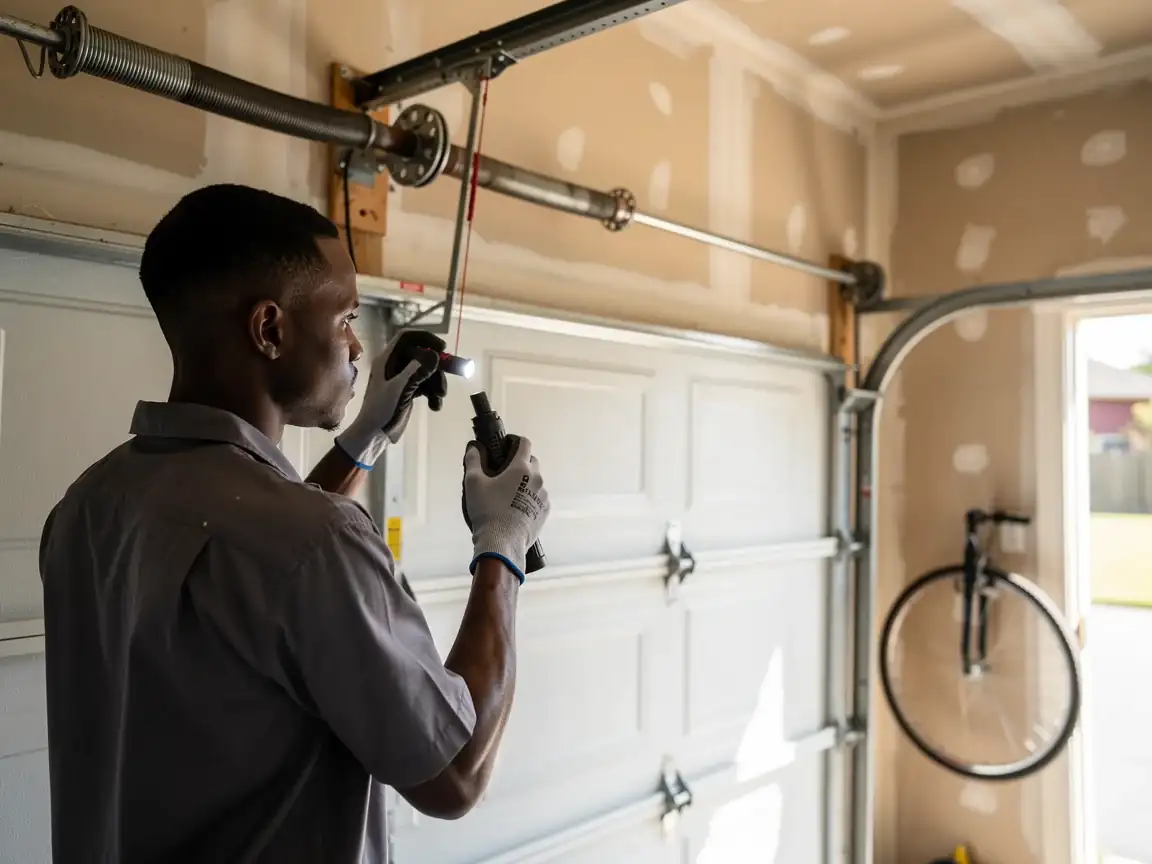
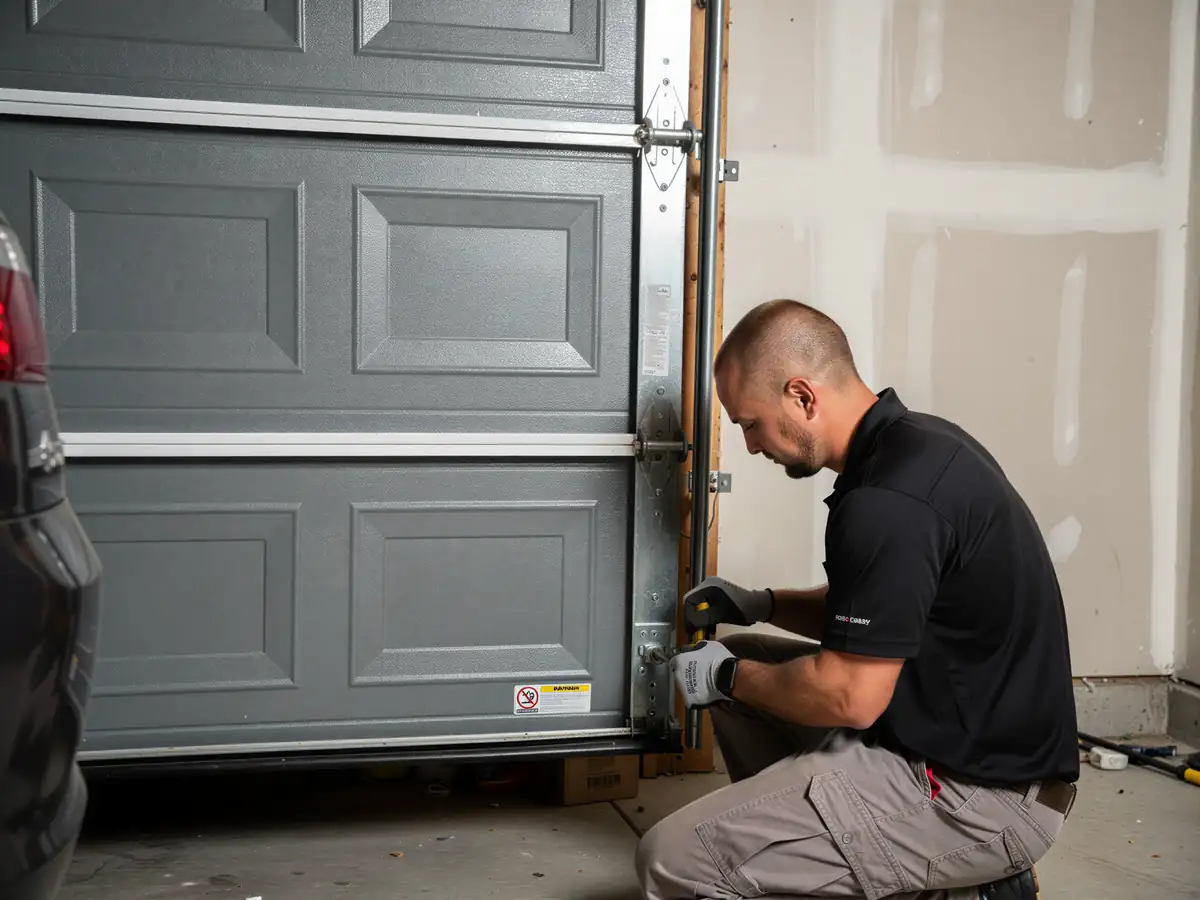
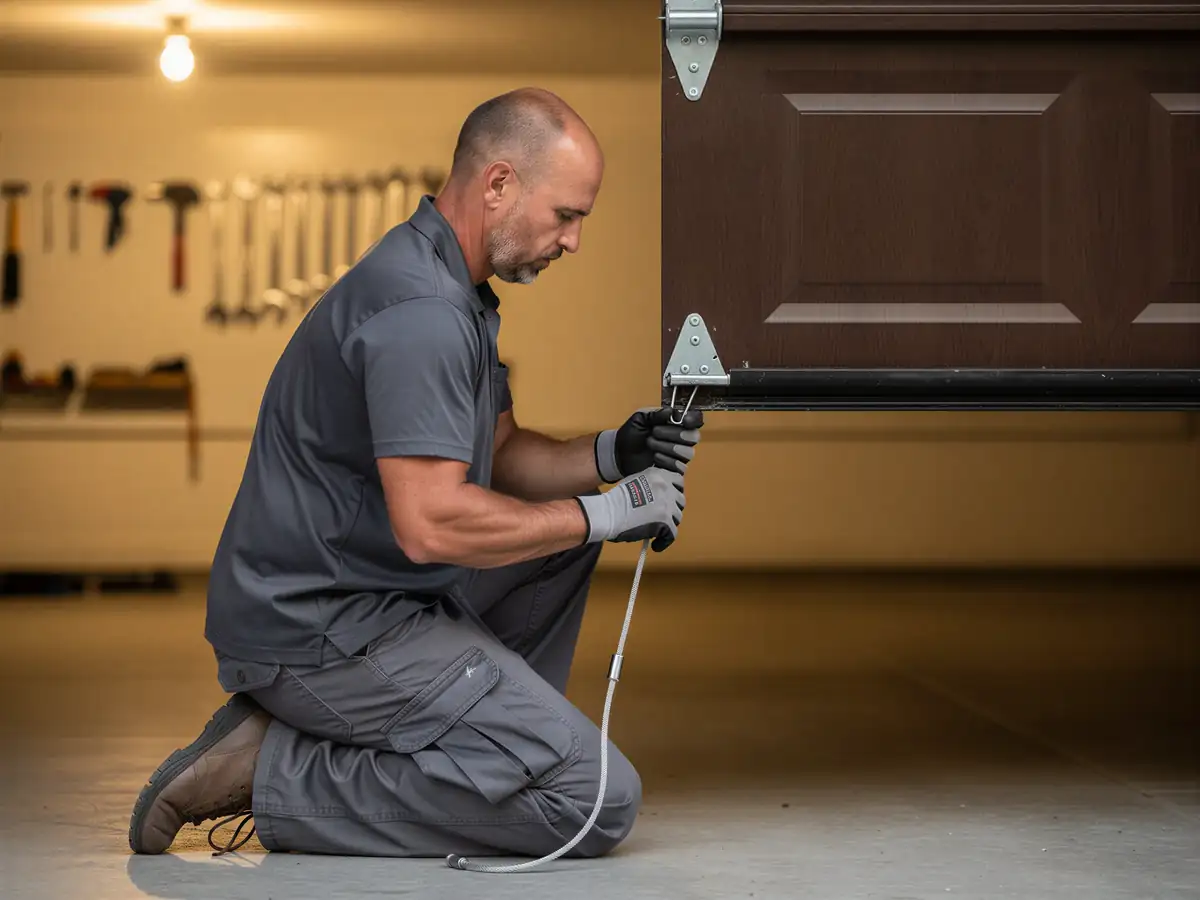
A straight spring swap on a standard double or single door, once the tech is on site with the right spring size, is a short job - most of the visit is diagnosis, setup, and safety checks around winding the new spring to the correct tension, not the swap itself. What adds time is matching the spring: wire size, inside diameter, and wind length vary by door weight and track type, and older homes in this area sometimes have hardware that doesn't match what's on the shelf for newer doors. If the cable, drum, or bottom bracket took damage when the spring went, that adds a step. A same-day fix is realistic for most calls, but if a part has to come from a supplier rather than the truck stock, that's an honest delay - we'd rather tell you that up front than guess.
Can You Do This Yourself
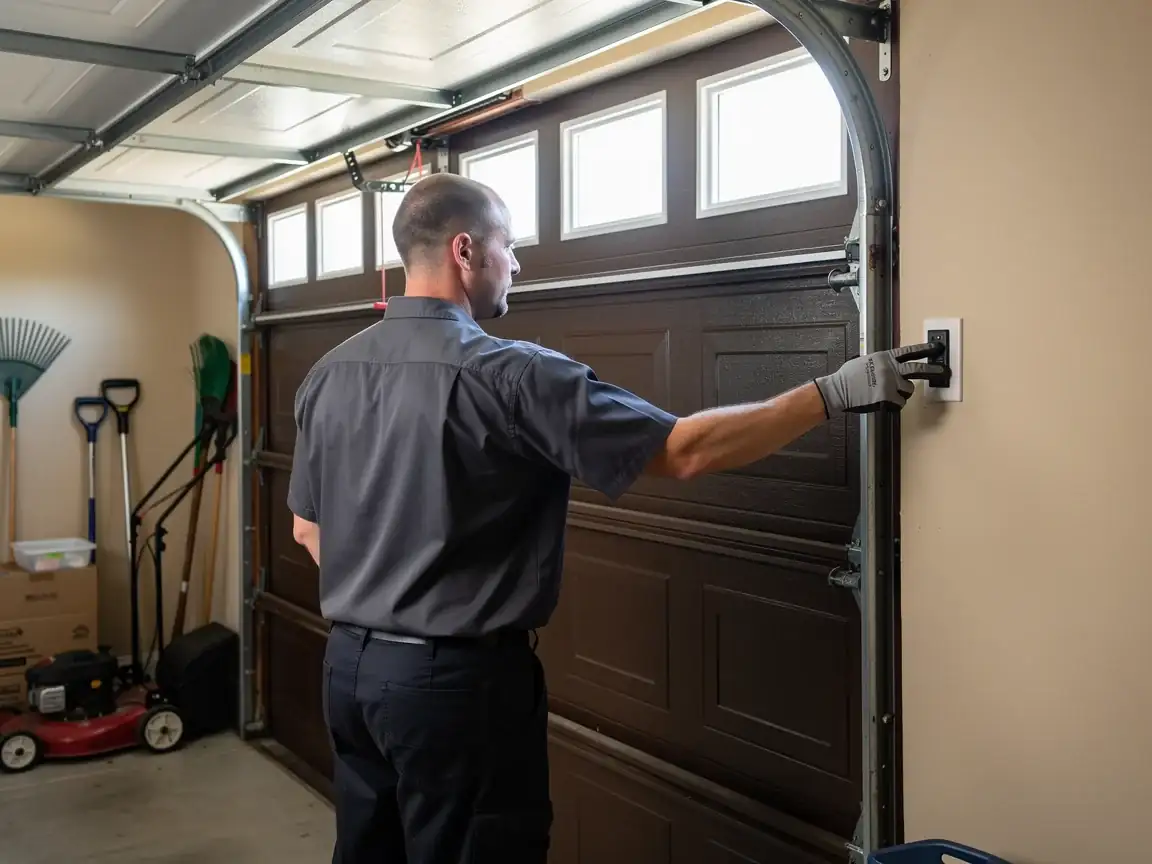
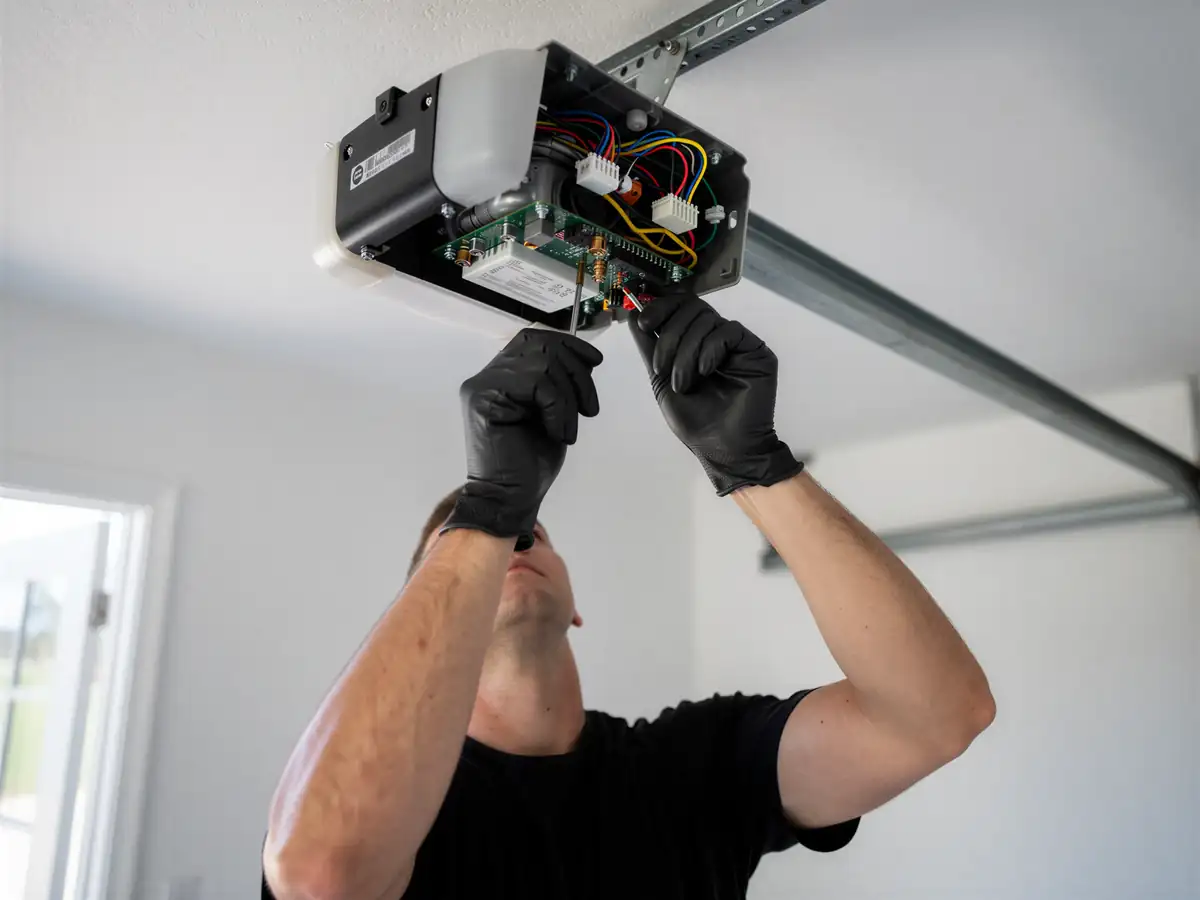
Don't wind or unwind a torsion spring yourself. This is the one place in garage door work where a mistake doesn't mean a callback, it means a trip to the hospital - the spring is holding enough stored force to snap a winding bar out of your hands or take a finger. If you're comfortable and the door is already down with the spring broken (not partially wound), you can safely inspect the coil, check the cables for fraying, and confirm which spring type you have before calling, which saves time on the visit. You can also disconnect the opener and try the door by hand to confirm it's a spring and not an opener gear or track problem - if it's dead weight and won't lift at all, that's consistent with a broken spring. Past that, leave the winding cones and bars alone.