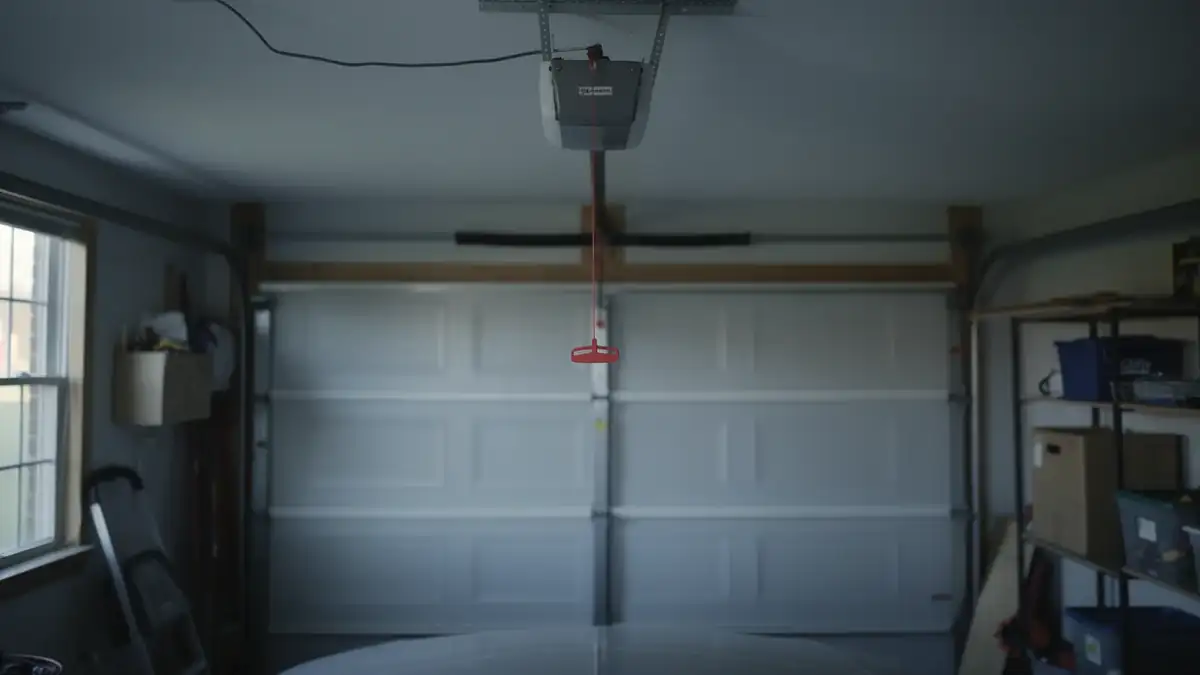
When to Call Someone
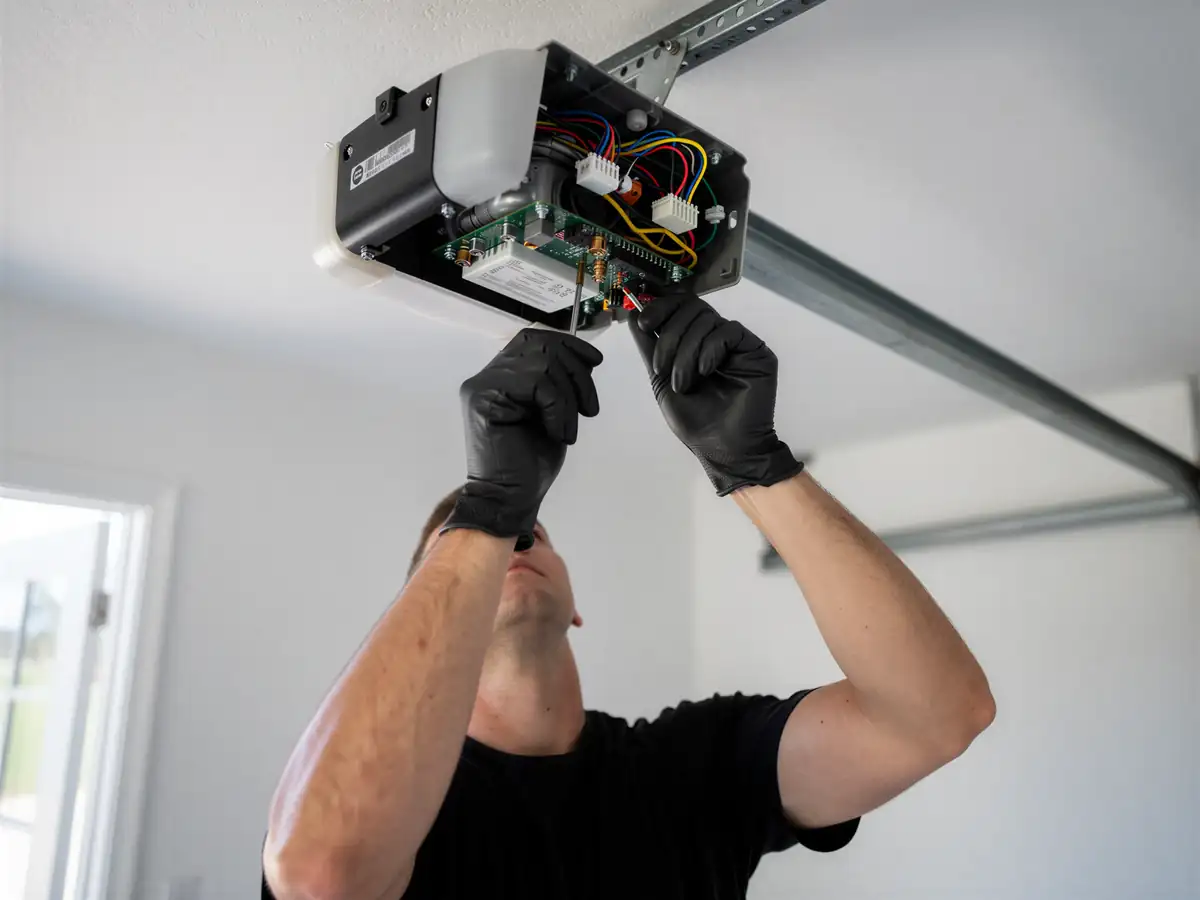
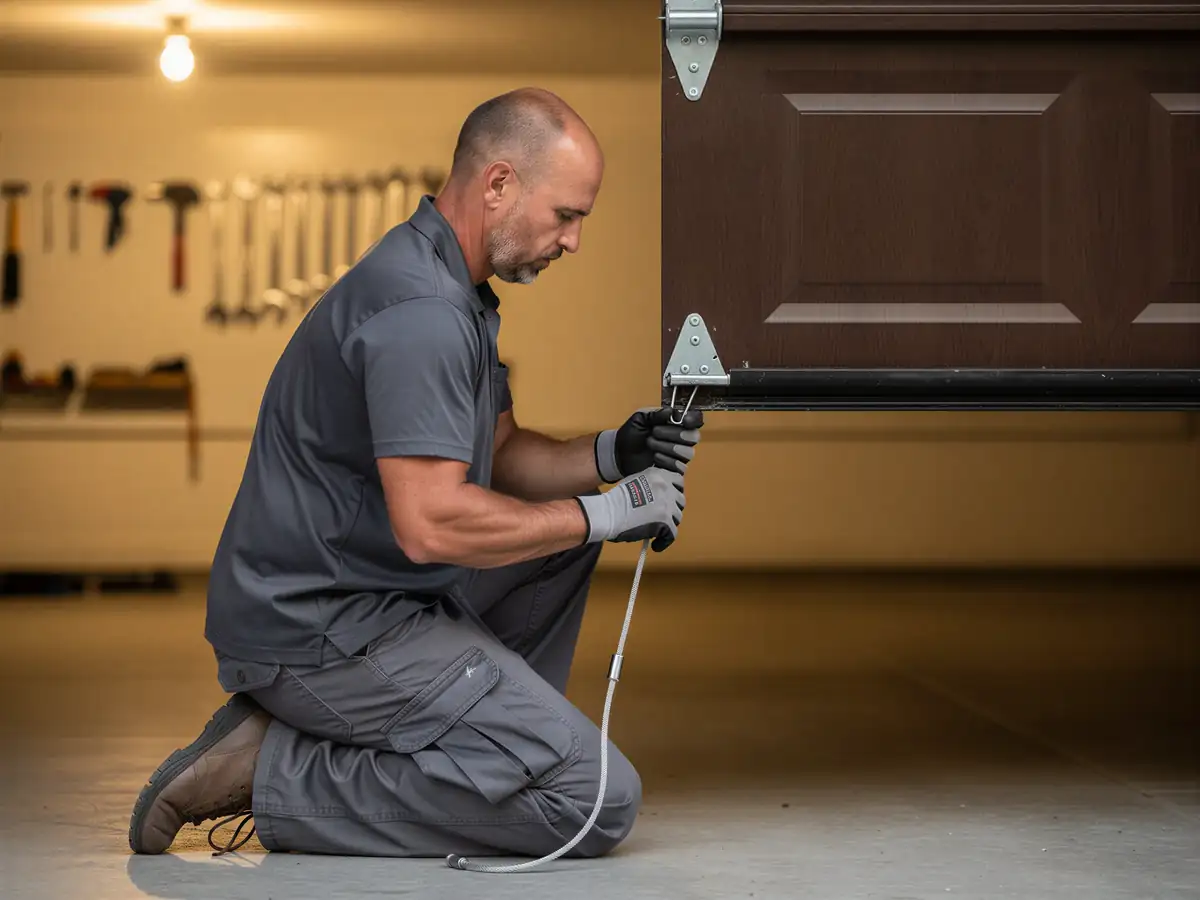
If your opener hums but the door won't move, or the light blinks and nothing happens, that's usually not a power problem - it's the opener itself. But if the whole house went dark and the garage door is the only thing you're worried about, you don't need a call, you need the manual release cord. Pull it, lift the door by hand, and reconnect it once power's back.
Call when the opener runs fine on battery backup (if you have one) but the door binds, grinds, or reverses before it closes. That's a track or spring issue hiding behind an electrical symptom, and running the opener against it will burn out the motor faster than normal use would. Also call if your opener predates battery backup entirely - a lot of units in this area do - and you want one added rather than replacing the whole unit.
What doesn't need a call: a door that won't open because the breaker tripped. Check the panel first. We get calls for that more than you'd think, and it saves you a trip charge.
What the Weather Here Does to It
Fayetteville sits in a cold-moderate climate band, not the deep freeze further north
But enough winter weather comes through to knock power out for a stretch - ice on lines, downed limbs, the usual. That's the actual risk to your opener: not the cold itself, but what happens when the power drops and you've got a chain-drive unit from the 80s or 90s with no backup battery and no idea where the release cord is.
Temperature swings also matter for the door itself, not just the opener
Steel contracts in cold snaps, and on older housing stock the weatherstripping has usually hardened and shrunk, letting in more draft than it used to. That's not an opener problem, but it often gets blamed on one when the real issue is a worn bottom seal letting cold air trip a sensor or fog up a safety eye.
We don't get hurricane-force events here, so this isn't about building a bunker
It's about knowing that a power cut during a winter storm is a when, not an if, in this area, and an opener with no backup plan is going to leave you stuck in the driveway at the worst time.
What Is Going On
Across the 19 named areas we work in, most houses were built between 1961 and 2007, with the typical one going up around 1988. That means a big share of the openers still running today are original or first-replacement units - chain or belt drives from an era before battery backup was standard equipment, let alone smart-home add-ons.
What that looks like in practice: an opener that's twenty-plus years old, no backup battery, and a release cord the homeowner has never touched because they've never needed to until the power went out. Add a power cut on top of that, and a working door suddenly isn't working, even though nothing mechanical actually broke.
The fix isn't always a new opener. Plenty of these units can take a retrofit battery backup if the motor and gears are still sound, which is often cheaper and faster than full replacement. We check the condition of the existing unit before we recommend swapping it - no reason to replace a motor that still has years in it.
The Common Mistake
The mistake we see most is waiting until a power cut happens to find out the manual release doesn't work smoothly, or doesn't exist in a form anyone remembers how to use. On houses built in that 1961-2007 window, the release mechanism has often sat untouched for decades, and the cord itself can be brittle or seized from age, not use.
The other mistake is assuming a battery backup fixes everything. It buys you a handful of cycles, not indefinite power. If you're relying on the opener through a multi-day outage, it'll run out, and you're back to the manual release anyway. We won't sell you a backup battery as a permanent solution - it's a bridge, not a fix for the underlying outage.
One honest limit: we don't install whole-house backup generators or do electrical panel work. If your power cut problem is bigger than the garage, that's outside what we handle, and we'll say so rather than take the job.