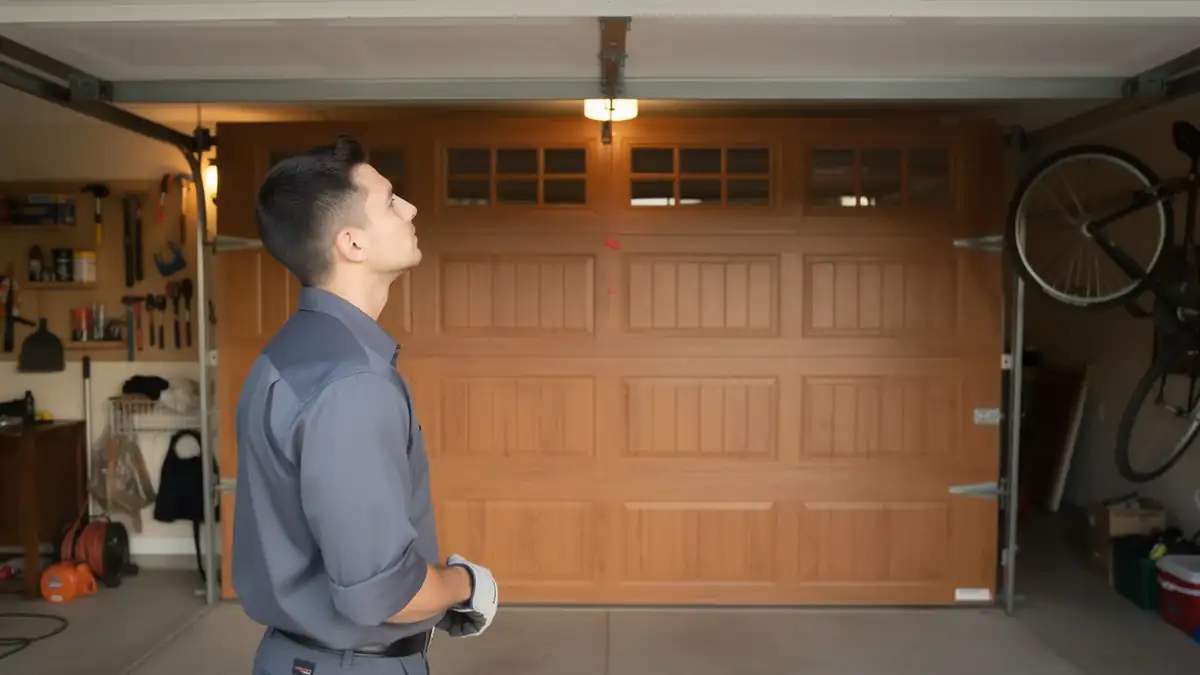
When to Call Someone
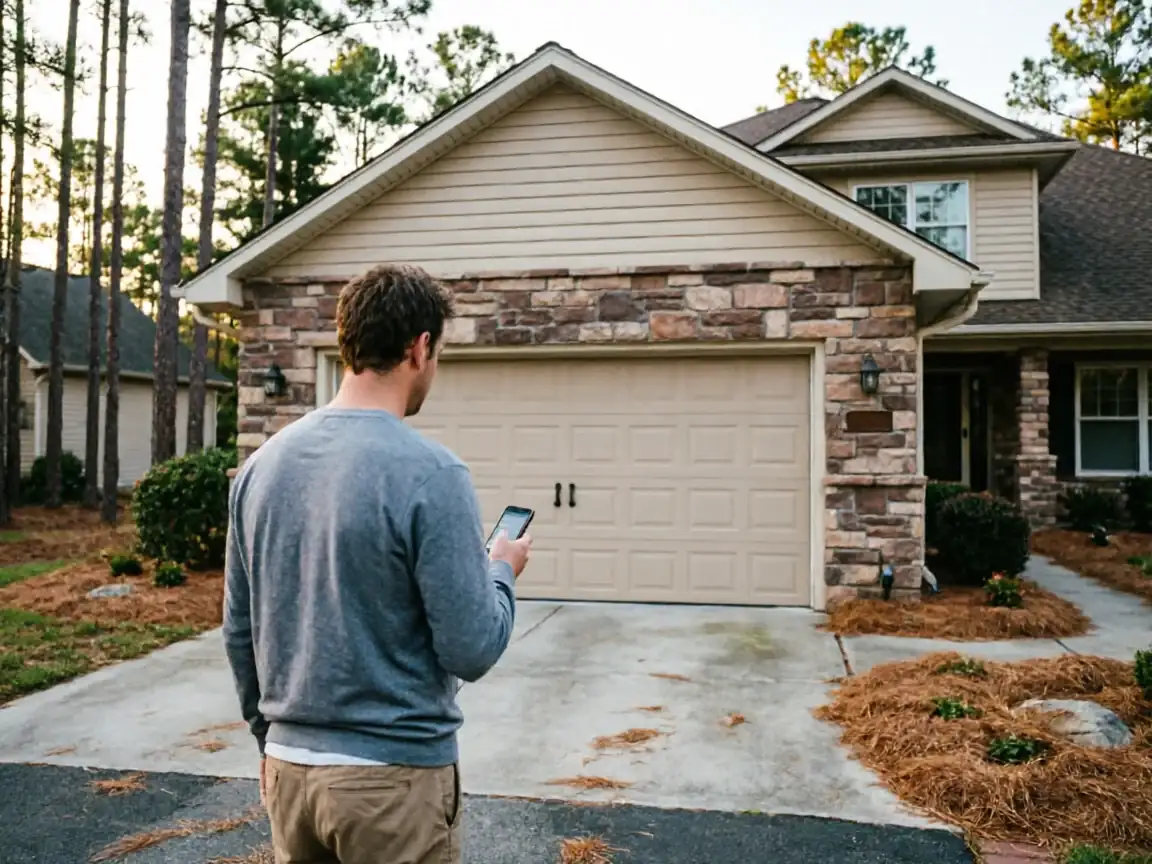
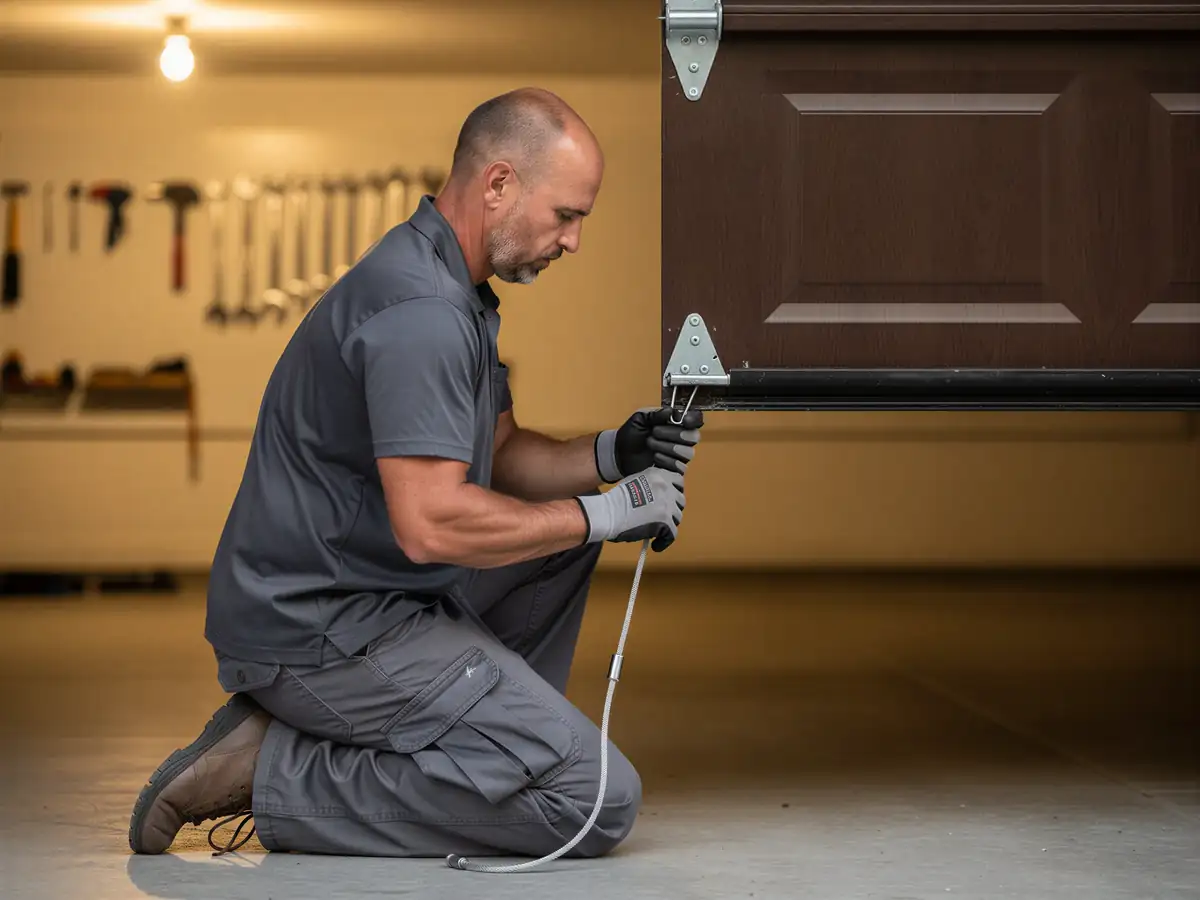
If the door grinds, bangs once and drops, or the opener strains and reverses halfway up, stop using it and call. A door that slams down from a broken spring can hurt someone standing under it, and a cable that's starting to fray will eventually let go without much warning.
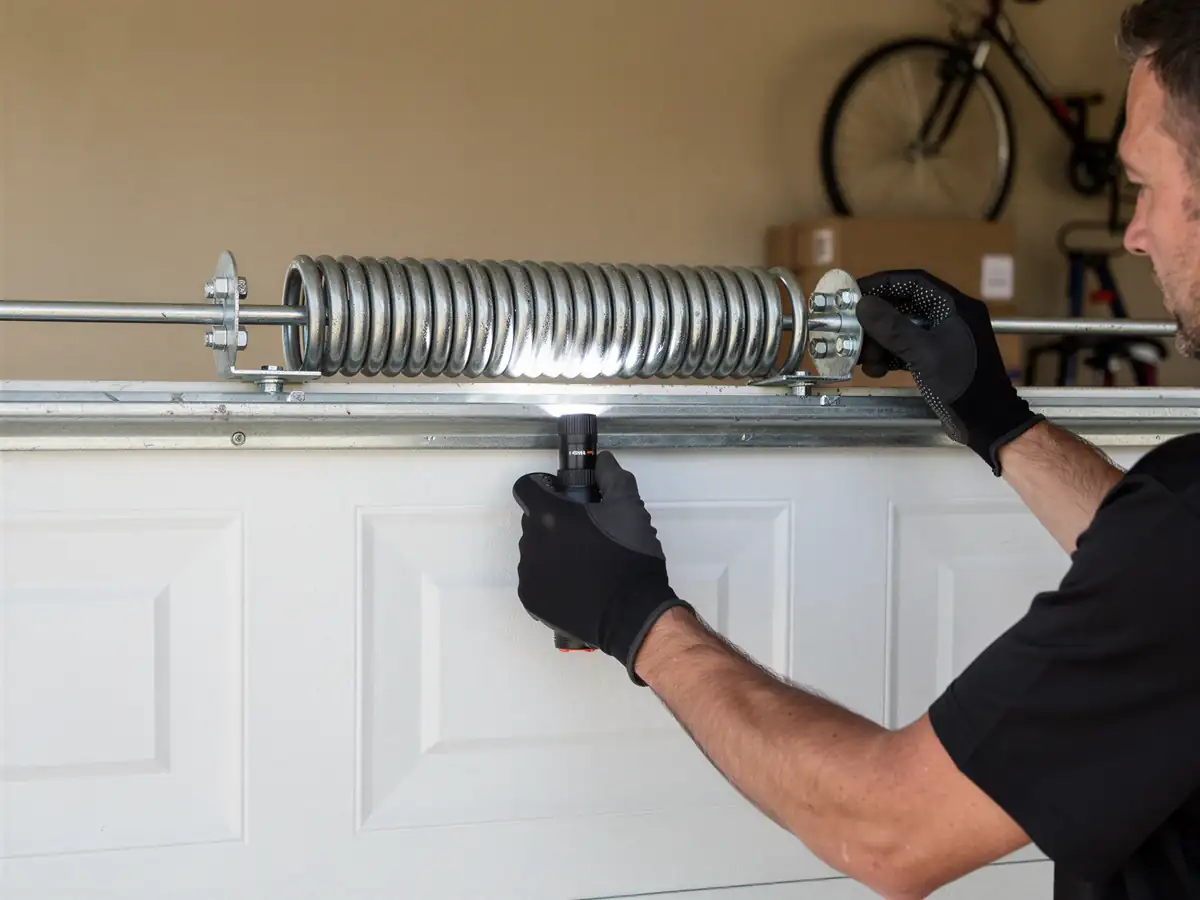
Most of the houses we work on in this service area went up between 1961 and 2007, with the bulk of that stock from the 1980s and 90s. That means a lot of original torsion springs are now thirty-plus years old and well past the cycle count they were rated for. A spring doesn't usually fail quietly - it fails loud, and it fails at the worst time, which is right after a cold snap tightens everything up.
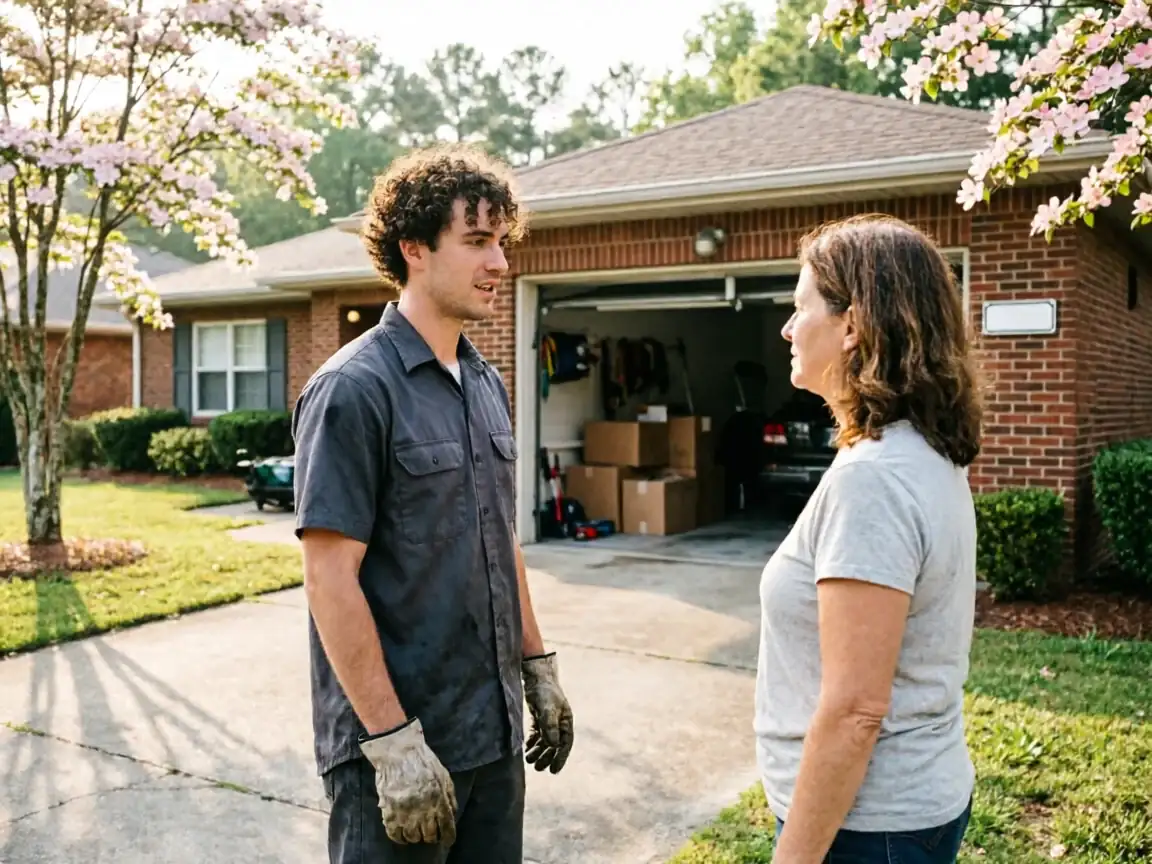
A squeak on a dry roller is not an emergency. A door that won't budge, or one that moves unevenly on one side, is. If you're not sure which category you're in, describe the sound when you call rather than guessing at the part - a sharp pop is different from a steady grind, and it points us to a different repair before we even get a truck out.
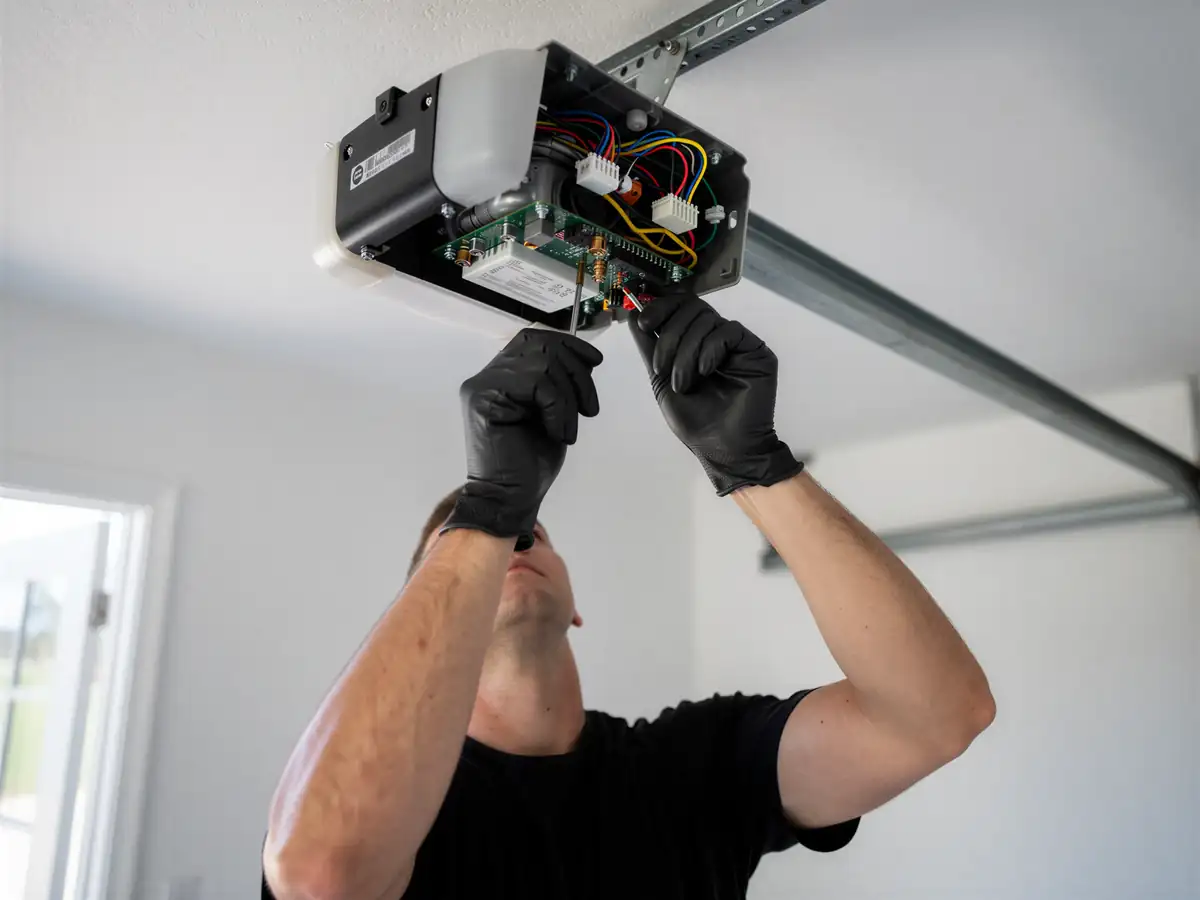
Honest limitation: we can't diagnose an opener logic board issue over the phone. If the noise is coming from the motor housing itself and not the door, track, or springs, we need to look at it in person.
What the Weather Here Does to It
This area sits in a cold-moderate band, not the hard freeze country further north
But cold enough that steel hardware contracts in winter and grease stiffens up. That's the stretch when a marginal spring or a dry roller stops being quiet and starts being a problem.
A door that was fine all fall and suddenly grinds in January isn't coincidence
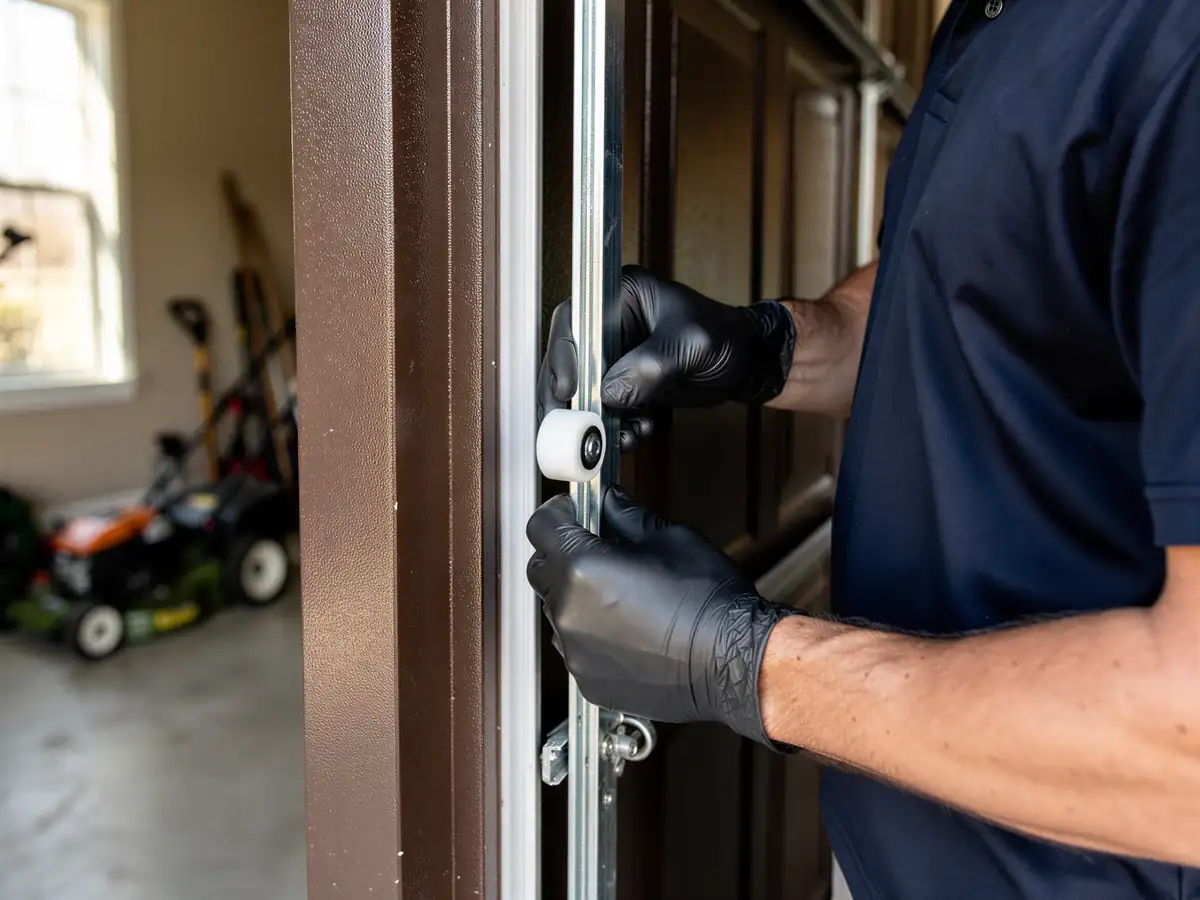
The metal has less give, so a roller that was already wearing unevenly starts chattering in the track, and a spring near the end of its life loses the last bit of tension it had. Lubricant that was thin enough in August to coat a hinge properly turns gummy and does nothing in the cold.
We don't get the extreme swings that crack concrete slabs or warp wood overlays in a single season
Which is one reason doors here tend to fail from age and cycle count rather than from weather damage outright. But the seasonal temperature drop is enough to turn a slow problem into a loud one almost overnight. If your door has been a little noisy for weeks and it gets worse the first cold morning after a warm stretch, that's the hardware telling you it was already close to done.
What Is Going On
Across the 19 named areas we cover, most garages are running hardware that matches the housing stock - built mostly in the 1980s and 90s, with a median build year around 1988. That's relevant because torsion springs are rated in cycles, not years, and a door that's been opened twice a day since 1988 has put a lot of wear on parts nobody thought to replace unless something broke.
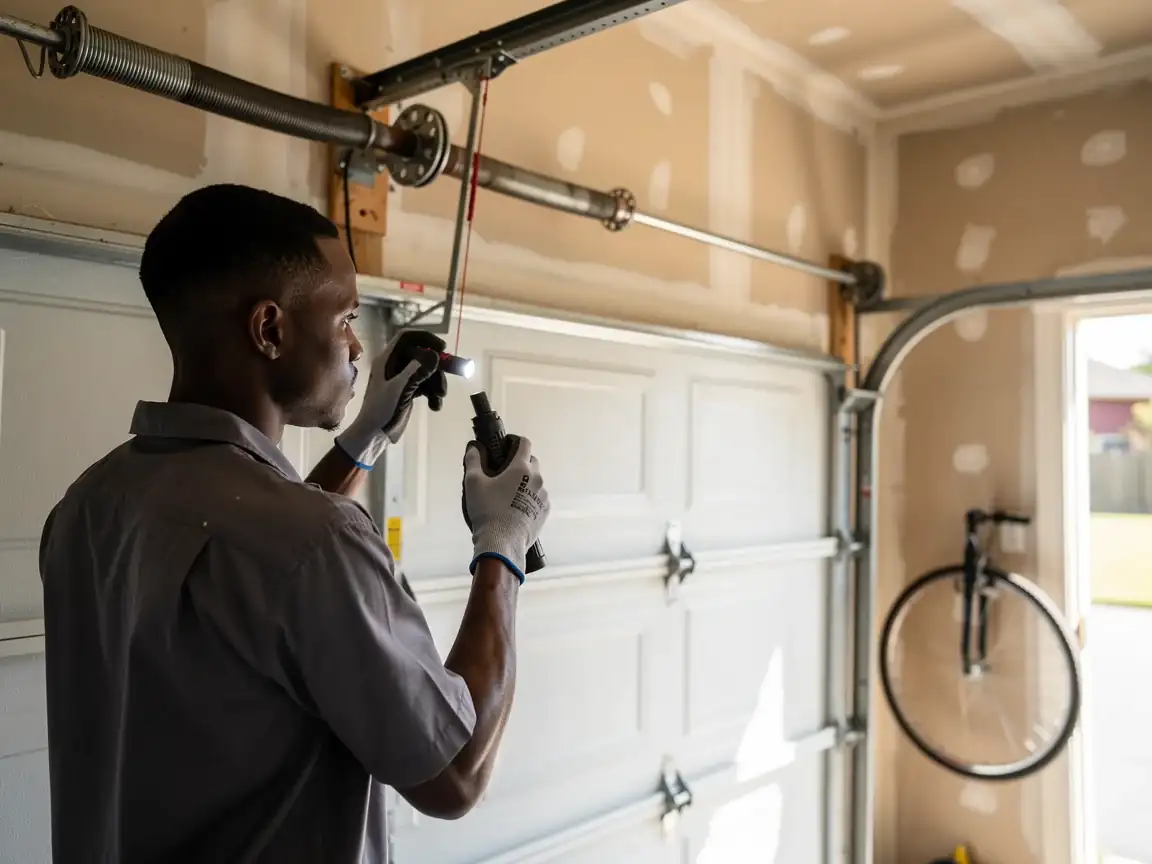
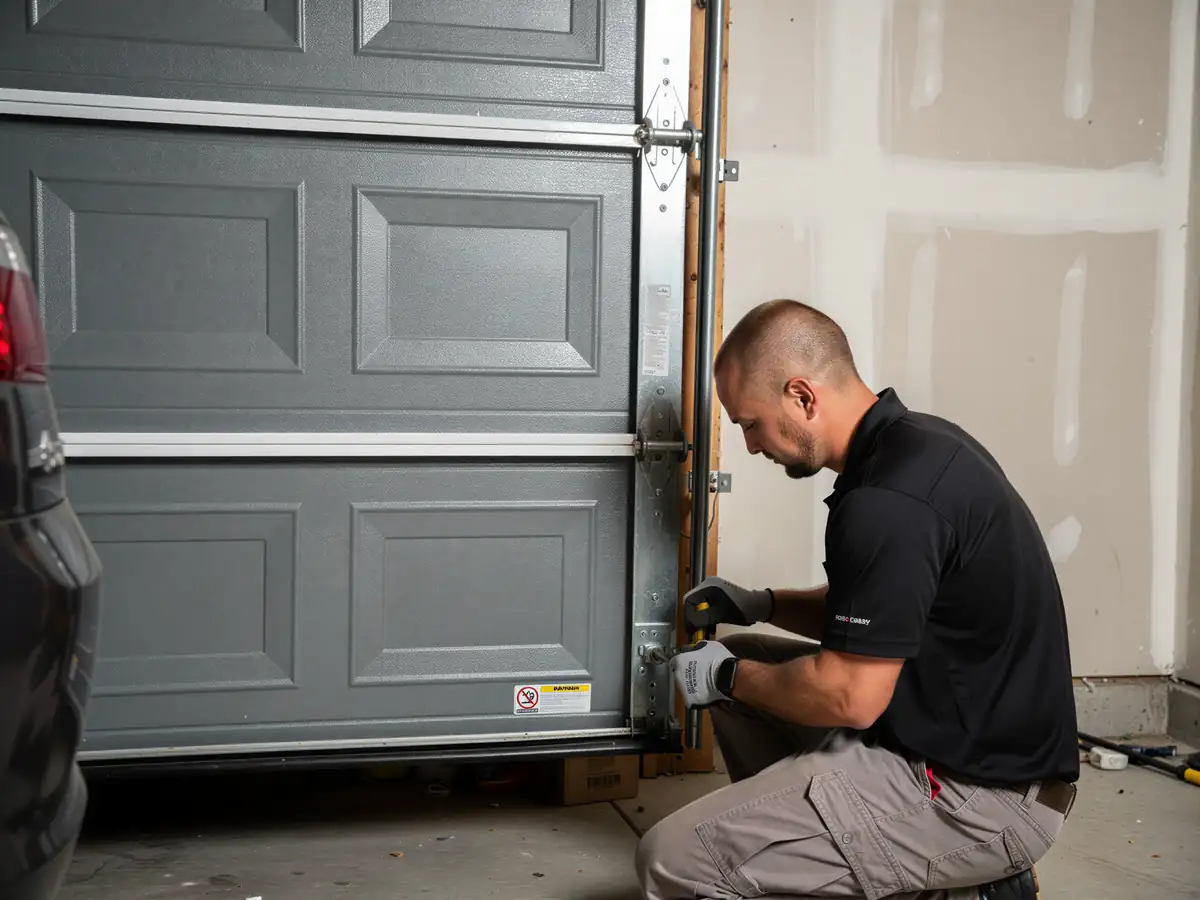
A grinding sound usually means a roller has gone dry or cracked and is riding rough in the track. A sharp bang, especially one that happens with the door sitting still, is almost always a spring letting go. A rhythmic thump as the door moves is often a bent track section or a roller that's worn down unevenly on one side.
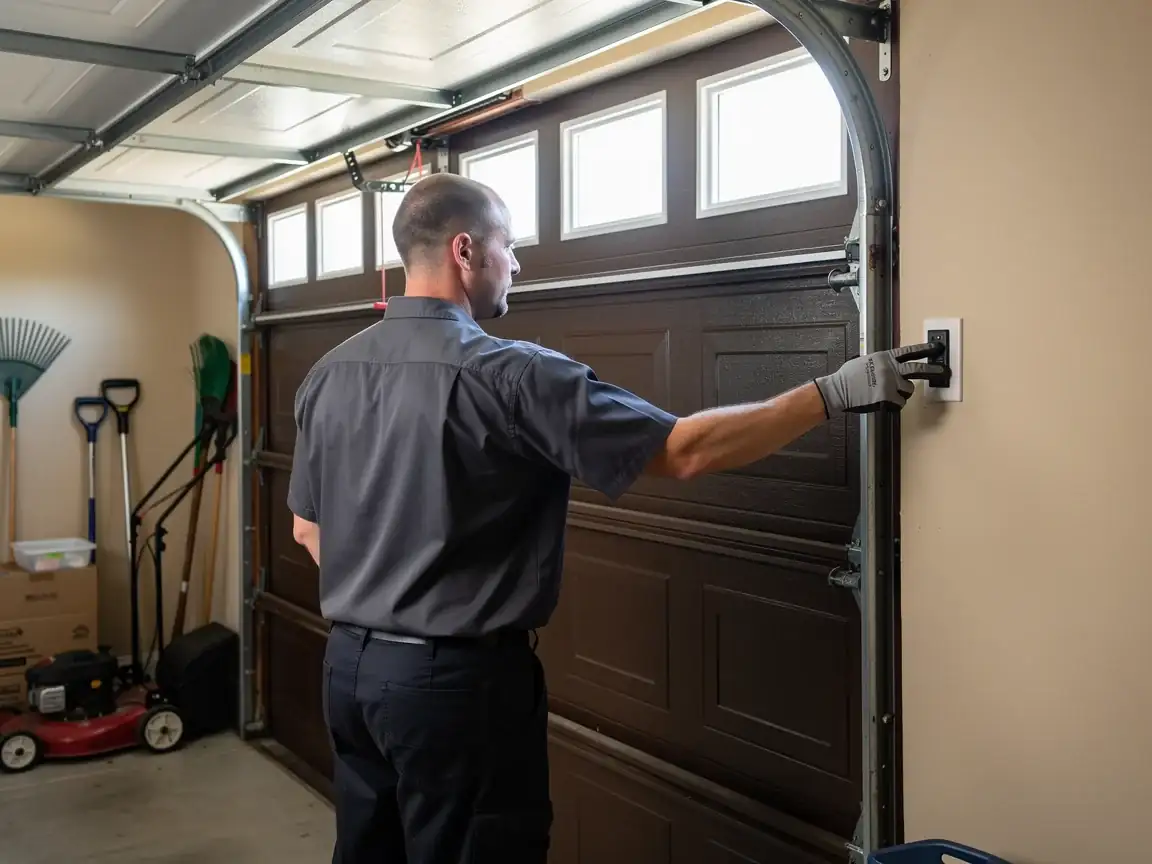
If the opener motor runs but the door doesn't move, or moves then stops, that's usually the opener straining against a spring that's no longer doing its job - the motor is doing work it was never built for. None of this is specific to one house; it's specific to hardware this old, in a climate that stresses it twice a year at the seasonal swings.
The Common Mistake
The most common thing we see is someone spraying WD-40 on a noisy roller or hinge and calling it fixed for six months. It quiets things down briefly, then the noise comes back louder because WD-40 is a solvent, not a lubricant - it strips old grease out of the roller bearing rather than replacing it.
The second mistake is ignoring a single bang because the door still opens. On a double door especially, if one spring breaks and the other is the same age, it's typically close behind. Replacing one and leaving the matching spring is false economy - you're paying for a service call twice instead of once.
With housing stock this age across the service area, a lot of original hardware is simply due, not broken in any dramatic sense. Catching a dry roller or a loosening track bracket before it becomes a bang-in-the-night call is cheaper and a lot less disruptive than an emergency repair on a Saturday morning. We'd rather tell you a part looks tired in year 32 than wait for it to fail.