When to Call Someone
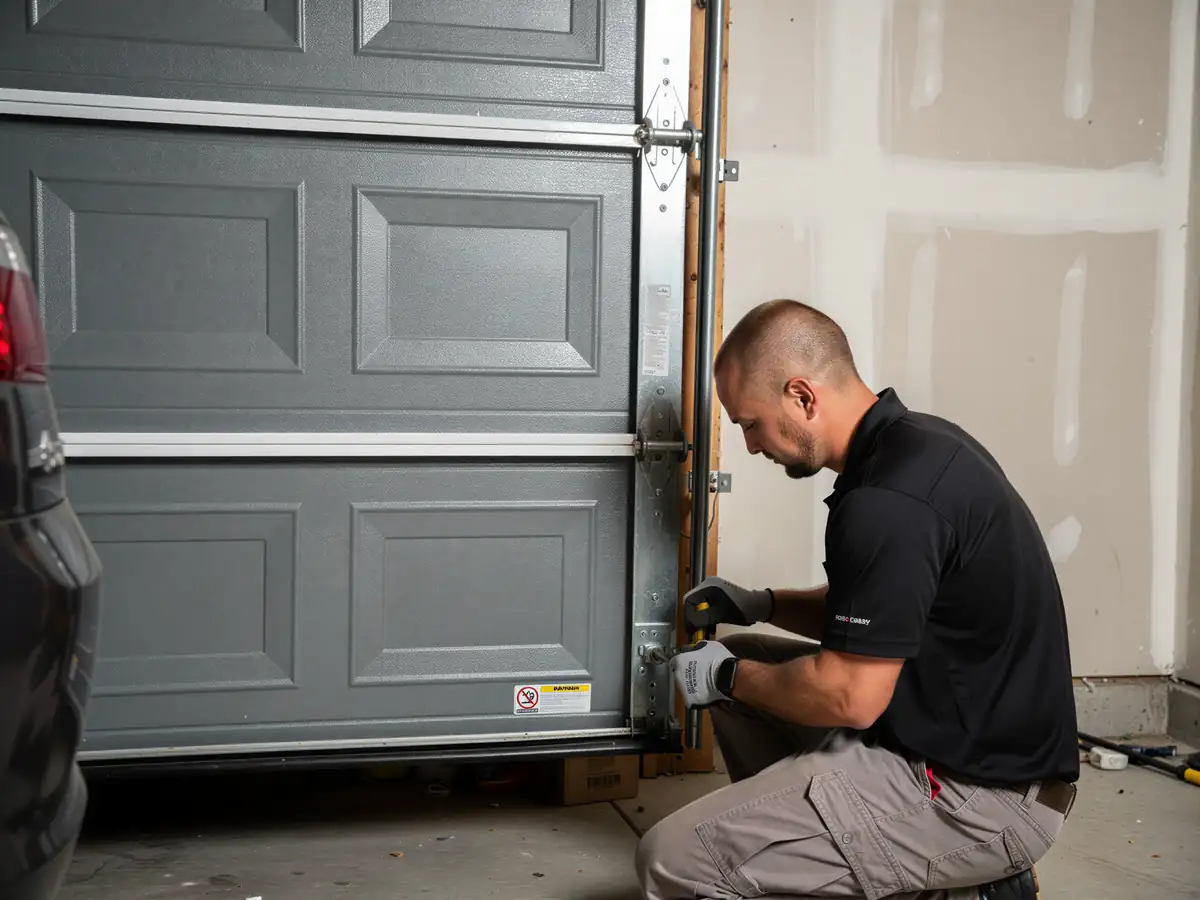
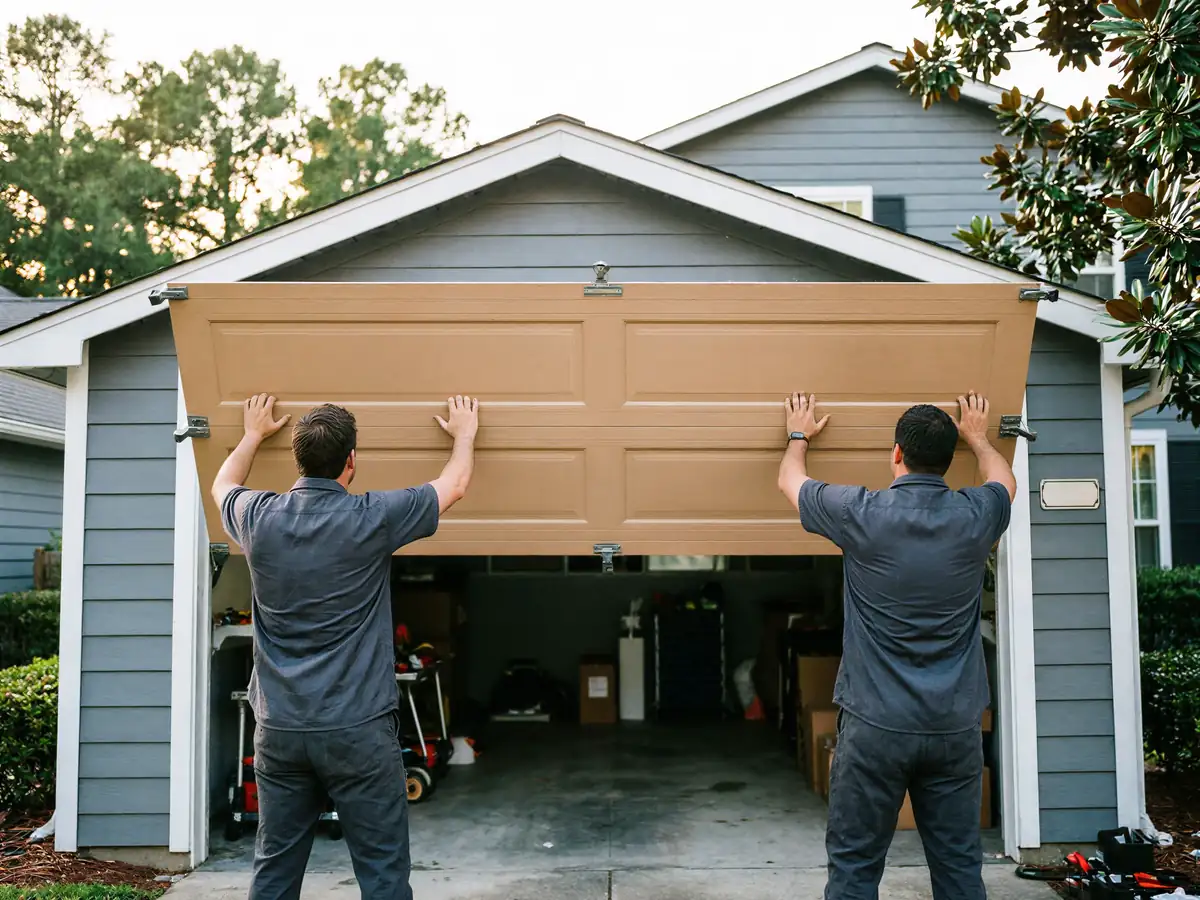
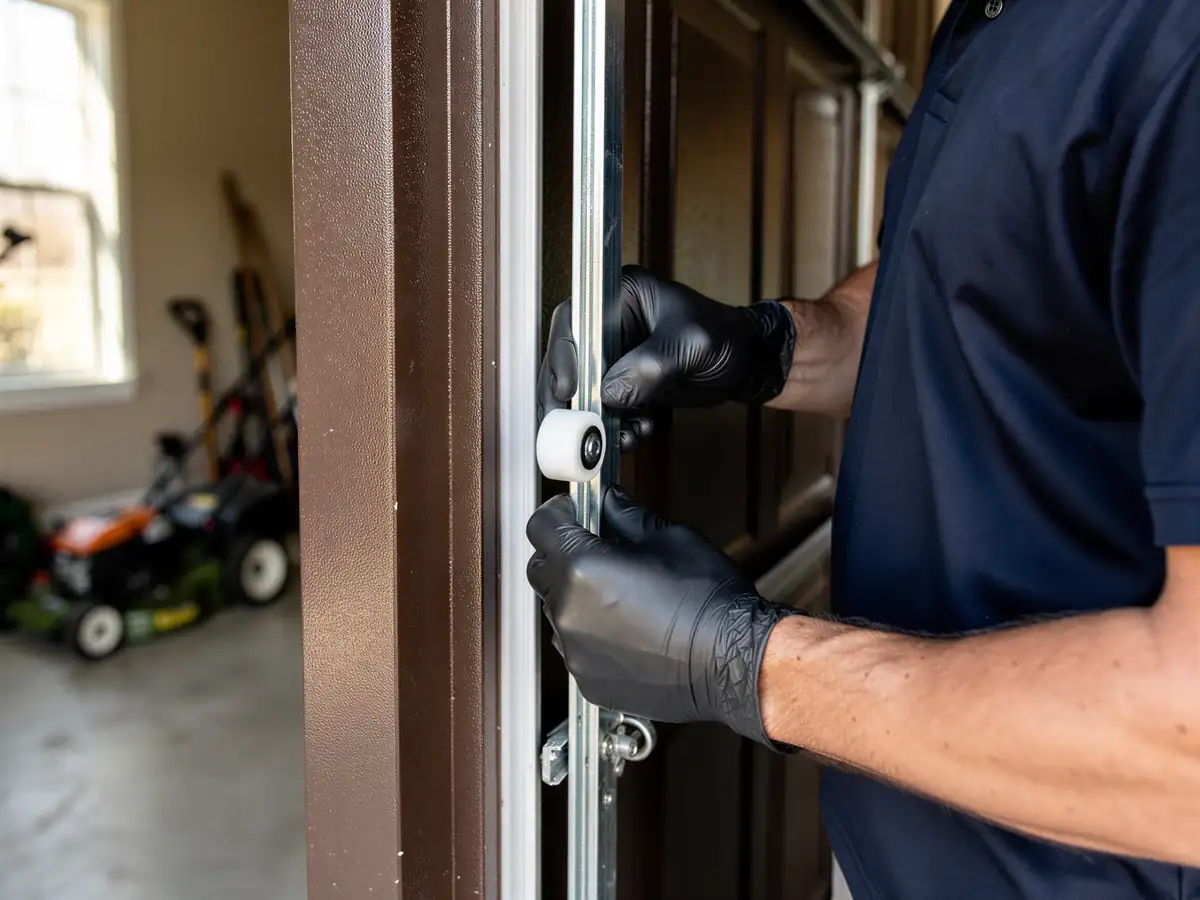
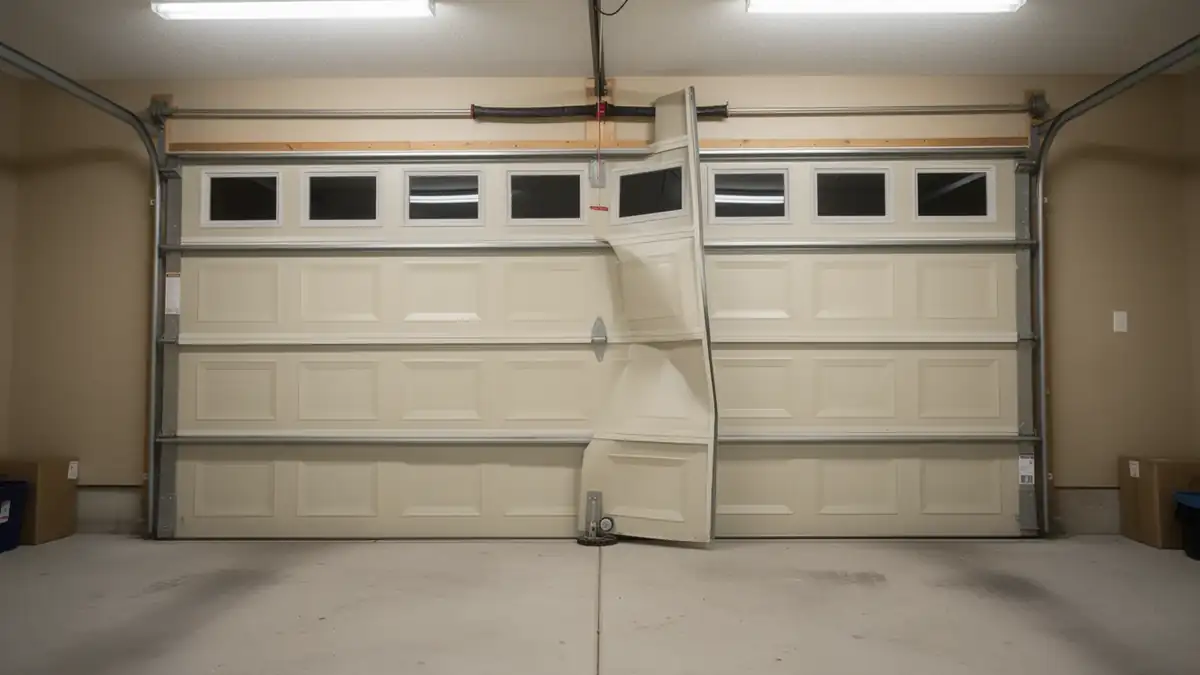
If the door jumps the track while it's moving, stop using the opener right away. Running it further usually bends the track worse or snaps a roller clean off its stem. A door that's leaning in the opening, or that only comes off track on one side, is telling you a roller or a bracket has already failed - that's not a tighten-the-bolts fix.
Across this part of the county, a lot of the housing stock going up a call is original 1980s or 1990s hardware. Steel track from that era was installed with lighter brackets than what goes in today, and after thirty-plus years those brackets work loose from the jamb a little at a time. You don't always see it until the day the door finally walks off the rail.
One honest limit: if the track is bent more than a slight bow, we don't try to hammer it back straight. Bent track almost always comes back worse within a few months, so replacing that section is the right call rather than patching it.
What the Weather Here Does to It
Fayetteville sits in a cold-moderate climate band
Which means the ground and the garage slab go through real freeze-thaw swings every winter, not just a hard freeze and done. That cycle shifts the concrete under the track brackets a fraction of an inch at a time. On a door with original hardware from the 1980s or 90s, those fractions add up - the vertical track that was plumb when it went in slowly leans, and the rollers start riding the edge instead of the center.
It's not dramatic
Nobody notices a quarter-inch of lean. What they notice is the door suddenly binding on cold mornings, or a roller finally giving up after fighting a crooked track for years. The moderate part of the climate band matters too - this isn't the kind of extreme freeze that snaps springs outright, it's the slow kind of stress that loosens fasteners and lets track drift out of alignment over a long stretch of ownership.
What Is Going On
Across the 19 named areas we cover, most of the housing was built between 1961 and 2007, with the bulk of it going up in the 1980s and 90s. That matters for track problems specifically because track hardware from that period was fastened with lag screws straight into jamb wood, not the reinforced brackets that have become standard since. Wood shrinks and swells with the seasons, and after a few decades those screws sit in oversized, worn-out holes.
Once a screw loses its bite, the track flexes every time the door runs, and a flexing track eventually lets a roller slip past the edge instead of rolling inside it. It's a slow failure - the door might run fine for months with a loose bracket before the roller finally jumps. By the time you hear a bang or see the door hang crooked, the bracket has usually been loose for a while.
The Common Mistake
The mistake we see most is someone noticing the door rubbing or squeaking on one side and grabbing a can of spray lubricant instead of checking the brackets. Lubricant quiets a roller for a week or two, but it doesn't do anything for a lag screw that's backed out of 1980s-era jamb wood. The noise comes back, usually louder, and now the track has flexed enough times that the roller finally pops loose.
The other mistake is waiting because the door