How Long It Takes
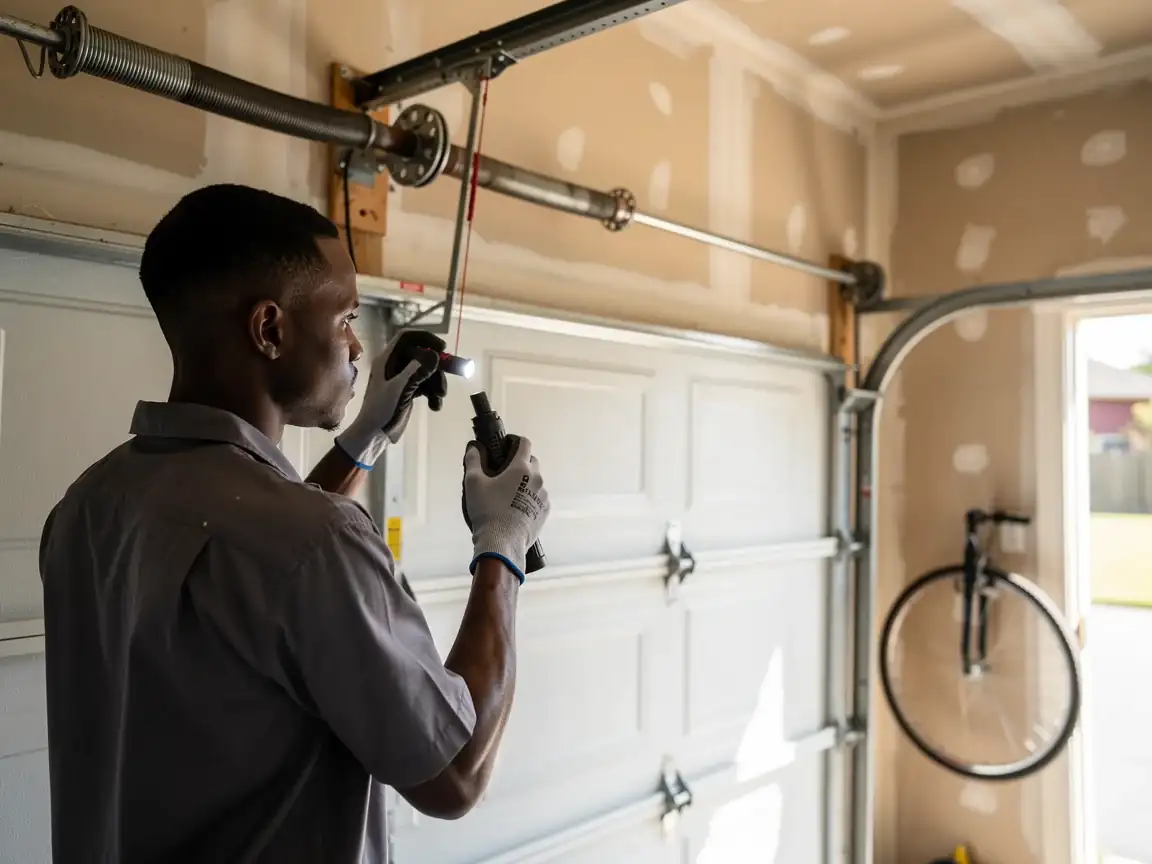
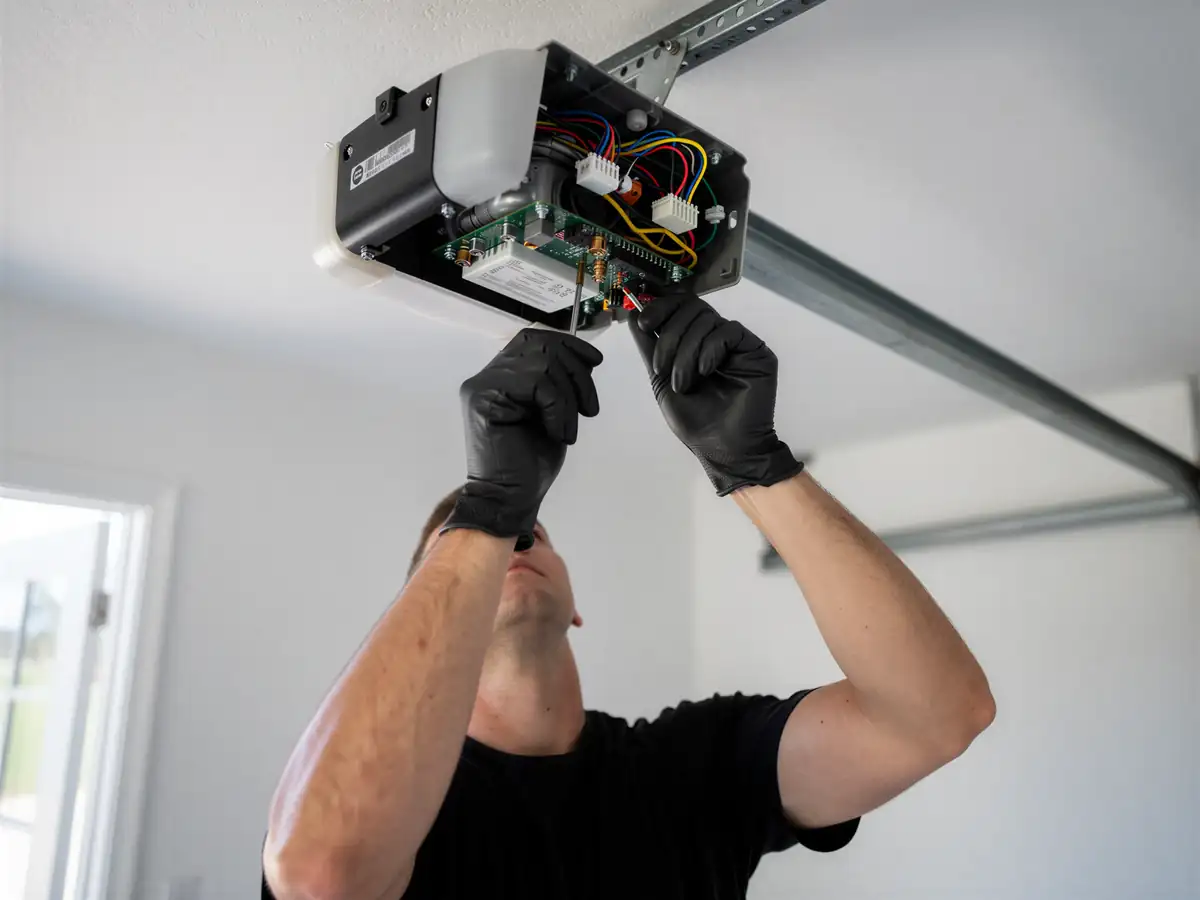
Tyrone's homes mostly went up after 2000, which means the openers we're pulling covers off are usually original units pushing twenty-plus years old. That's close to the end of life for a logic board, whether the brand is a chain-drive or a belt-drive unit. Diagnosis on a call is quick - we can usually tell within a few minutes whether it's a sensor, a capacitor, or the board itself. What takes longer is parts. If your opener is a model that stopped being made ten or fifteen years back, the exact circuit board isn't always sitting on a shelf anywhere, ours included. We'll tell you straight if that's the case rather than string you along, and we'll walk through whether a universal board or a full unit swap gets you back working faster. We travel the 7 miles out from Fayetteville for every Tyrone call, so there's no local branch stock to draw from - what we carry on the truck is what we carry, and the rest is a parts order.
Can You Do This Yourself
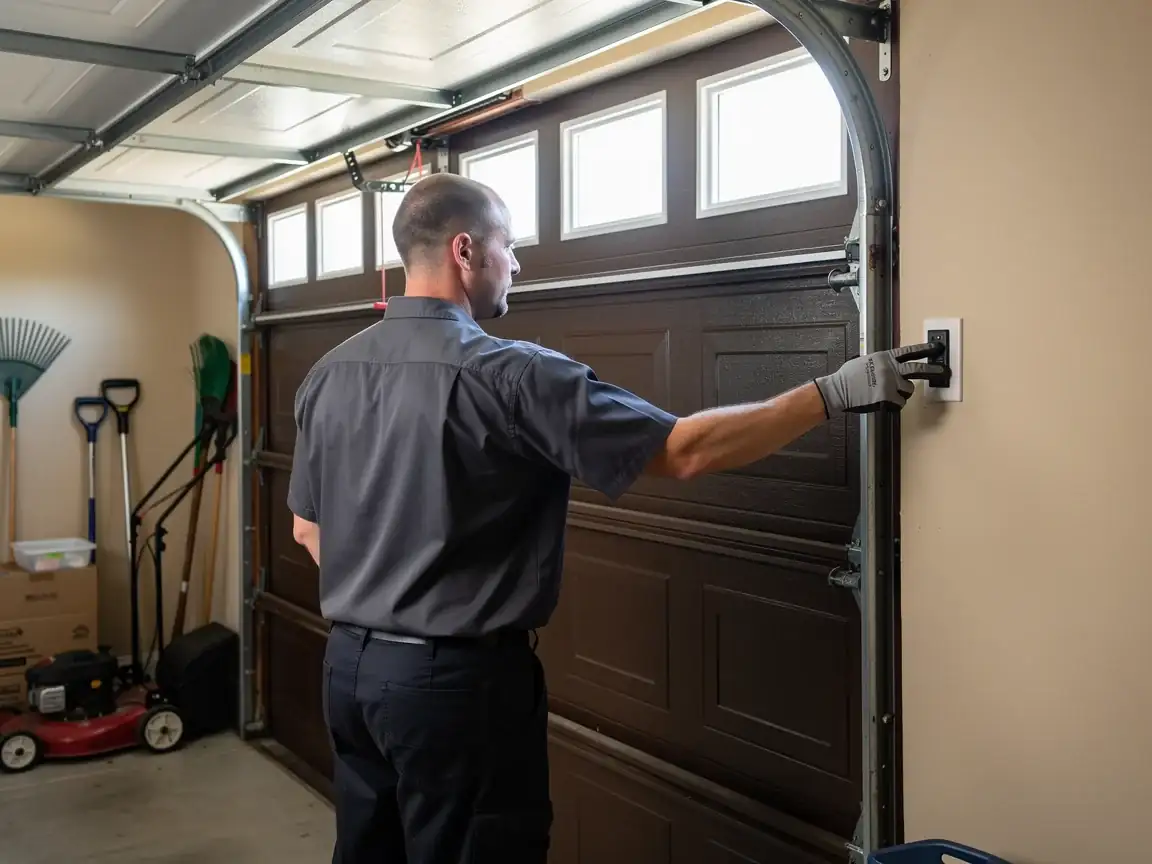
Some of this is fair game for a homeowner with a ladder and a Saturday morning. Wipe the sensor lenses with a soft cloth, check that both sensor brackets are still screwed down tight and facing each other square, and swap the remote battery before you assume the opener itself is bad. If the wall console lights up but nothing happens at the motor, that's worth checking too - sometimes it's just a loose wire nut at the console, not the unit.\n\nWhat we don't recommend touching is the logic board or anything behind the motor housing cover. These units hold a charged capacitor even unplugged, and on a twenty-year-old board the insulation isn't what it was. If you've reset the opener, checked the sensors, and the door still won't cycle, that's the point to stop and call rather than start swapping boards yourself.
What Can Go Wrong
The most expensive mistake we see is someone ordering a replacement circuit board for a 2000-era opener based on a model number alone, only to find the connector pinout changed mid-production or the board needs a matching wiring harness. Second most common: forcing a door that's reversing on its own, which can strip the nylon drive gear inside the housing - a $20 part if caught early, a full motor teardown if it keeps running against resistance.\n\nWe also see opener replacements bolted onto an old rail and trolley that don't match, which leaves the new unit straining and burning out early. With Tyrone's median household income running well above the area-wide figure, we're often asked to put in a higher-spec belt-drive or battery-backup unit - those pair fine with newer rail systems already installed in homes built since 2000, but they're not a drop-in fit on an older track, and we'll say so before we quote the job.