The Symptom
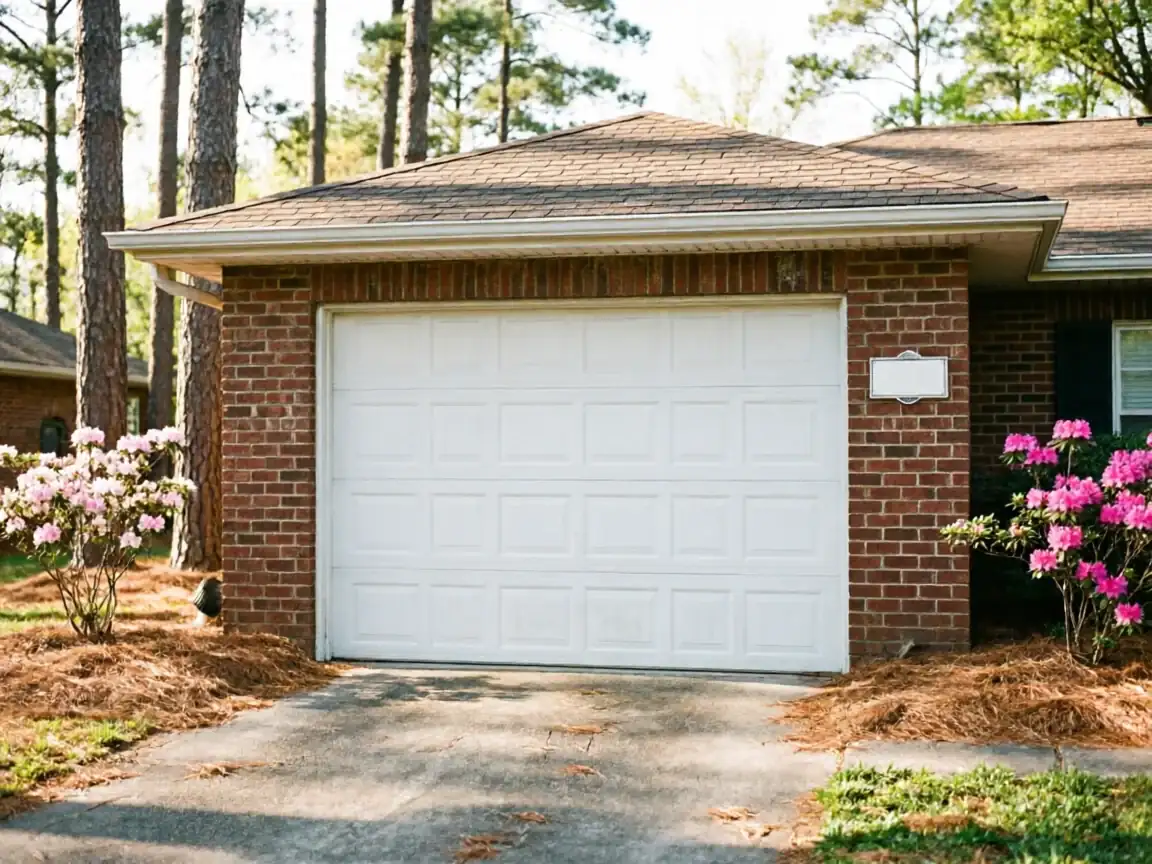
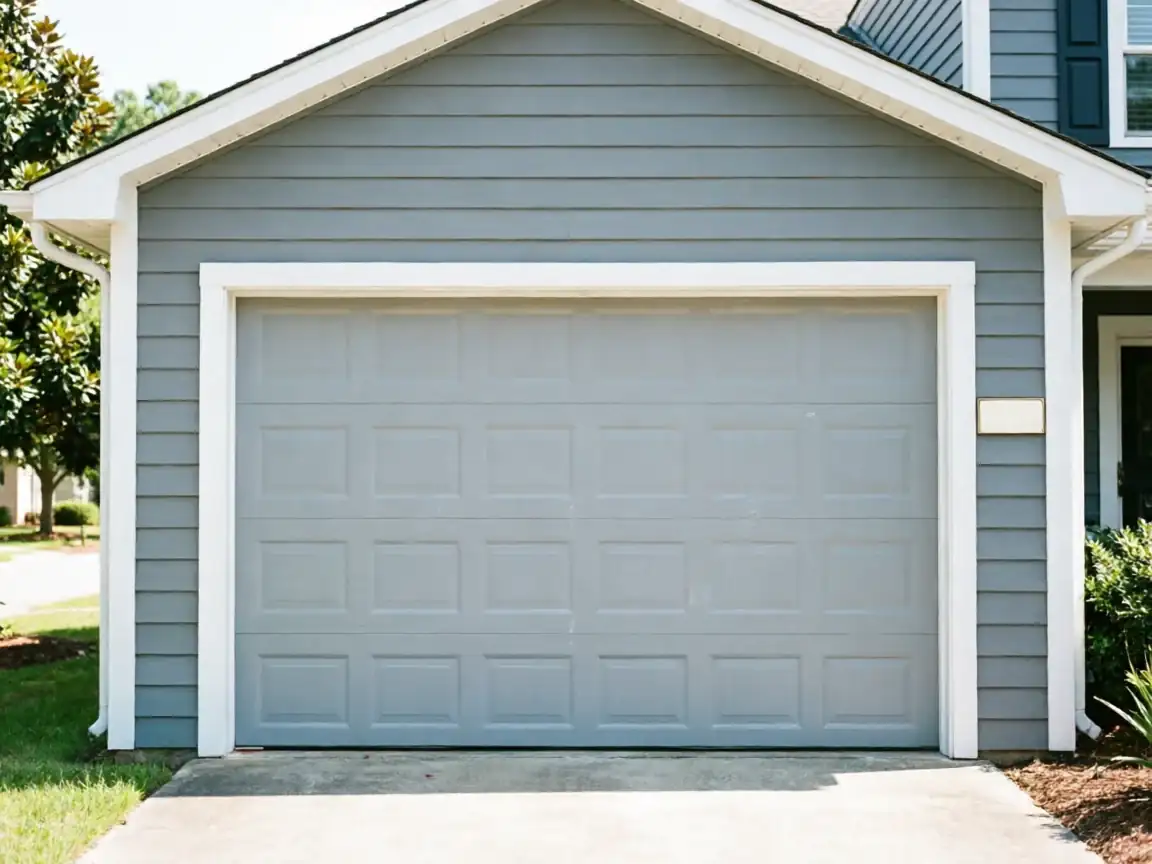
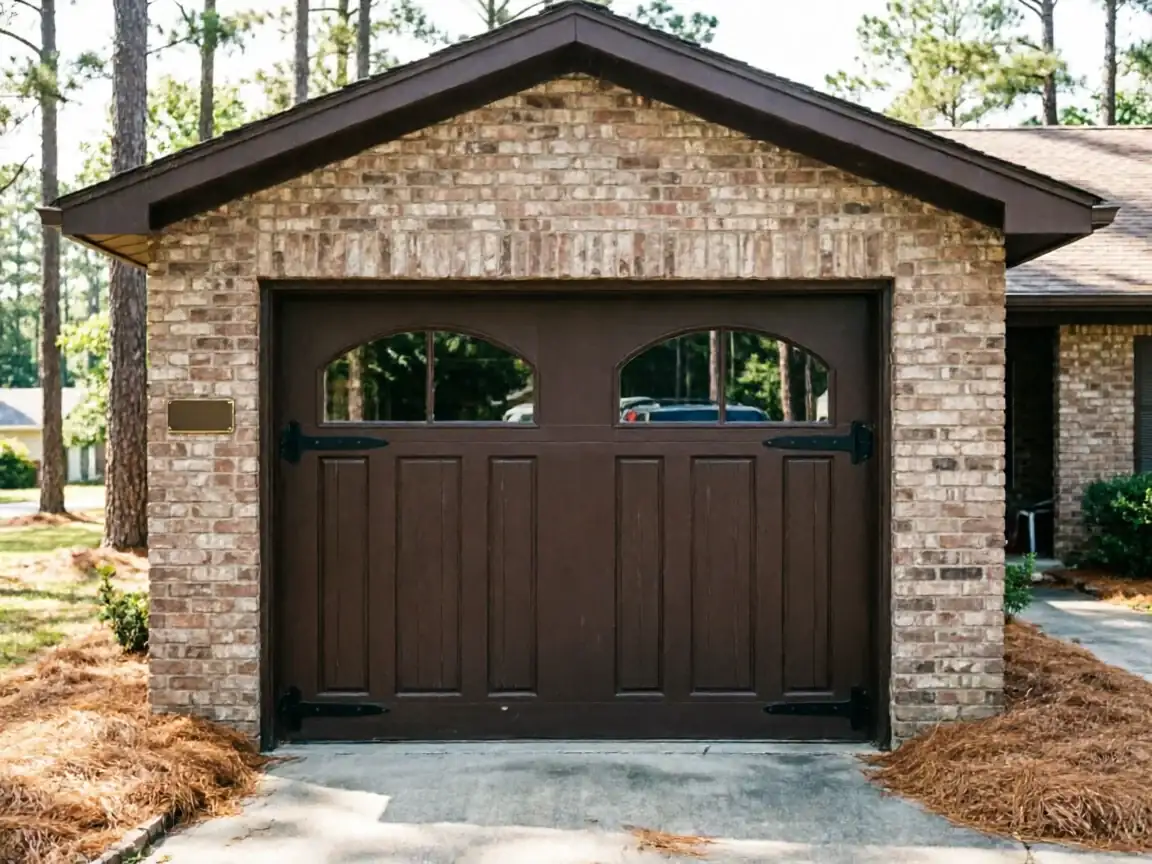
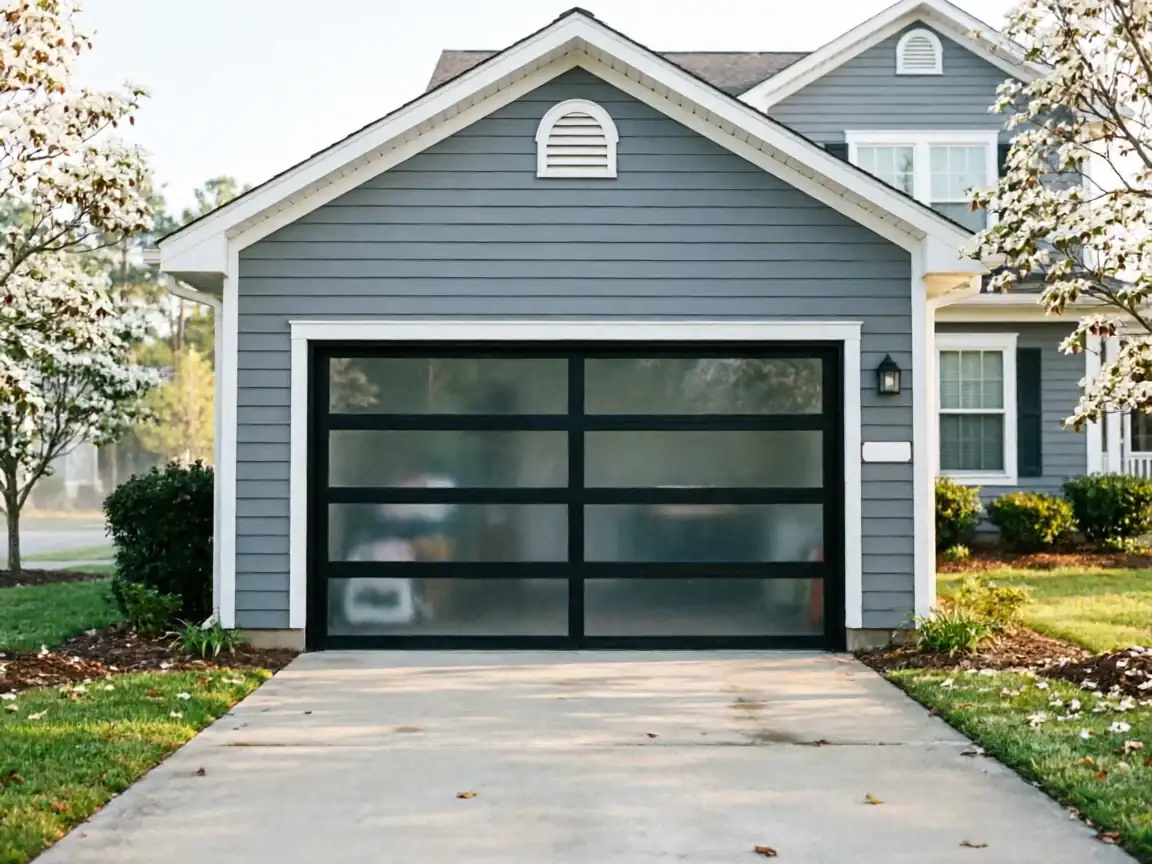
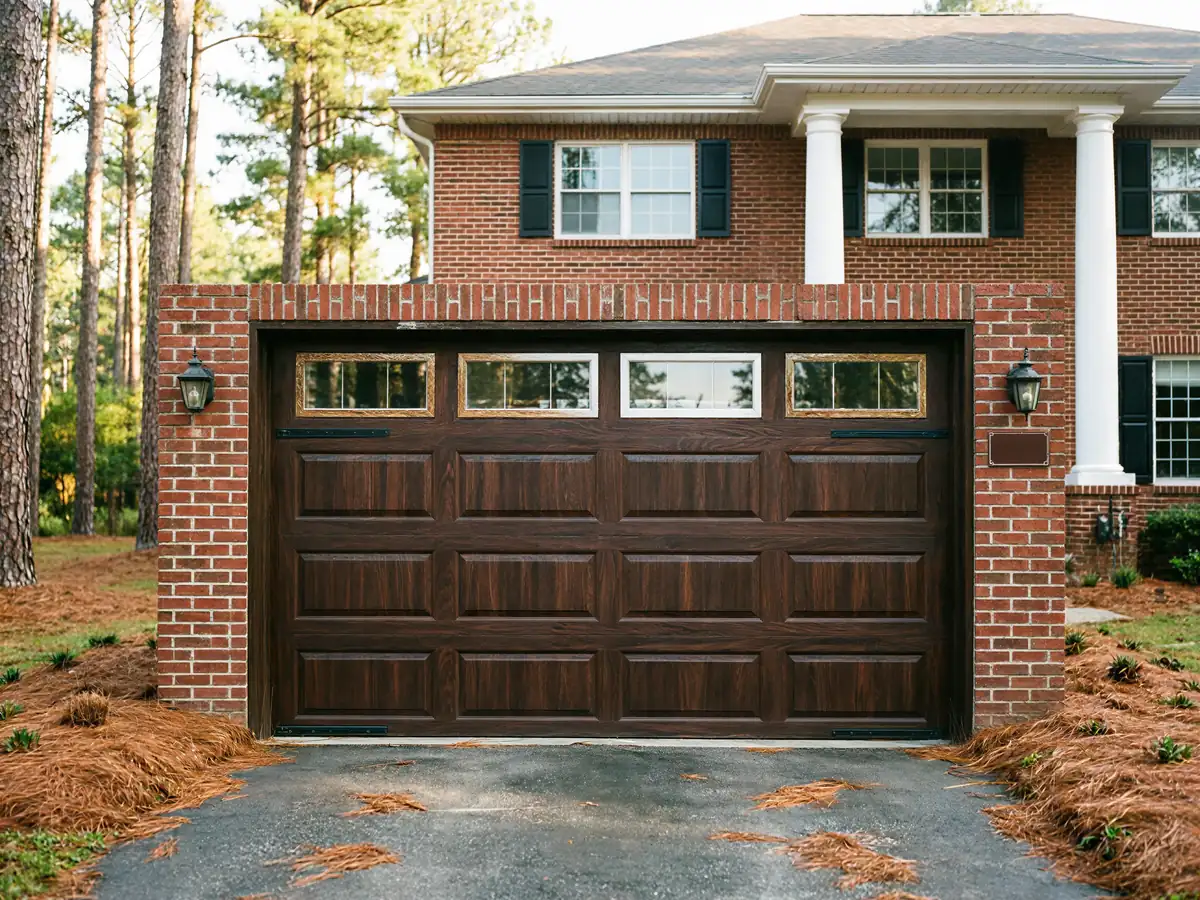
Bonanza sits about 8 miles out from our shop in Fayetteville, which is close enough that a roller job doesn't turn into a half-day trip, but it's far enough that we plan the call instead of swinging by on a whim. Most of the houses on this side of the county went up around 1993, which puts a lot of garage doors here at an age where the original rollers - usually plain nylon or steel on a stamped stem - have logged three decades of open-close cycles. That's long past the point where they roll smooth. What you hear is a grinding or clunking as the door travels, sometimes worse at the top or bottom of the track where the roller has worn a flat spot or the bearing has dried out. Cold mornings make it louder; plastic rollers get brittle and steel ones without sealed bearings tighten up when grease thickens. If your door shudders more in January than in July, that's the roller, not the opener. Left alone, a bad roller chews up the track itself, and then you're paying for track straightening or replacement on top of the rollers you should have swapped first.
How We Fix It
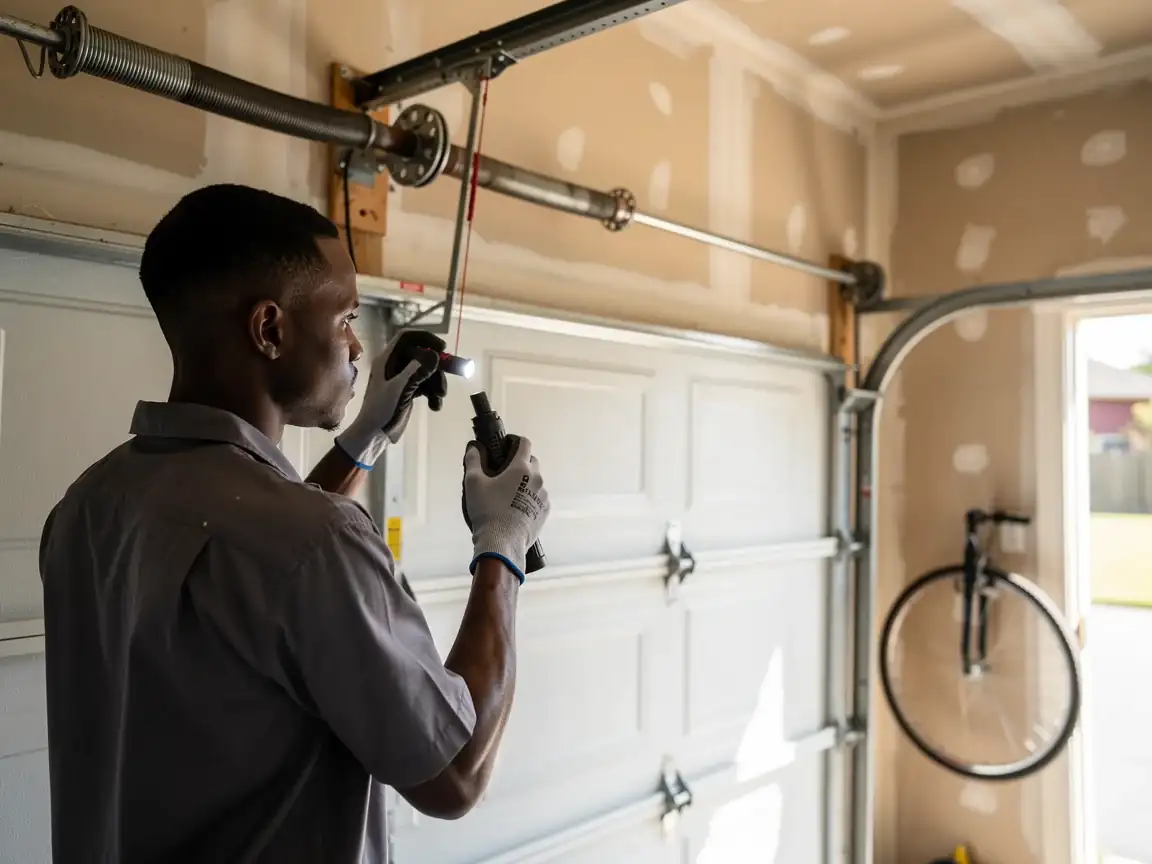
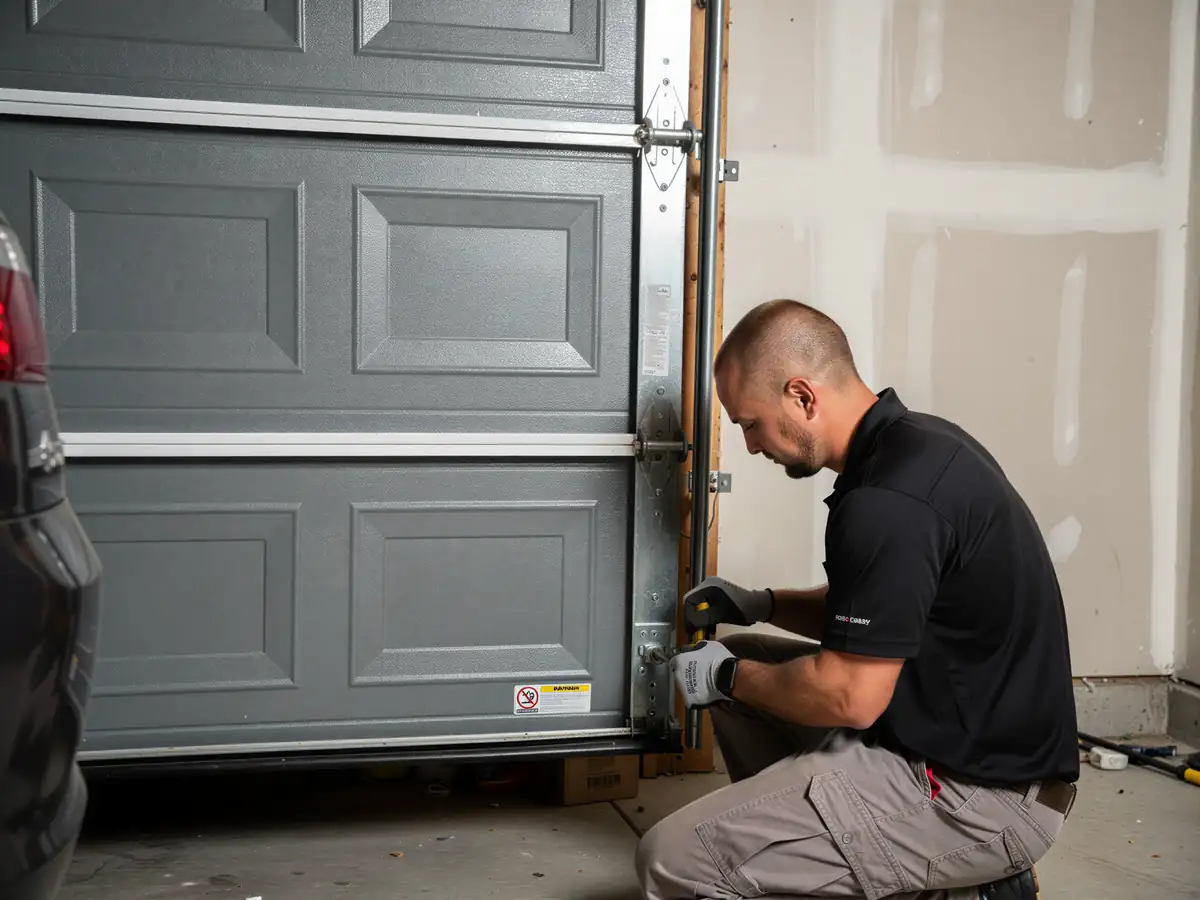
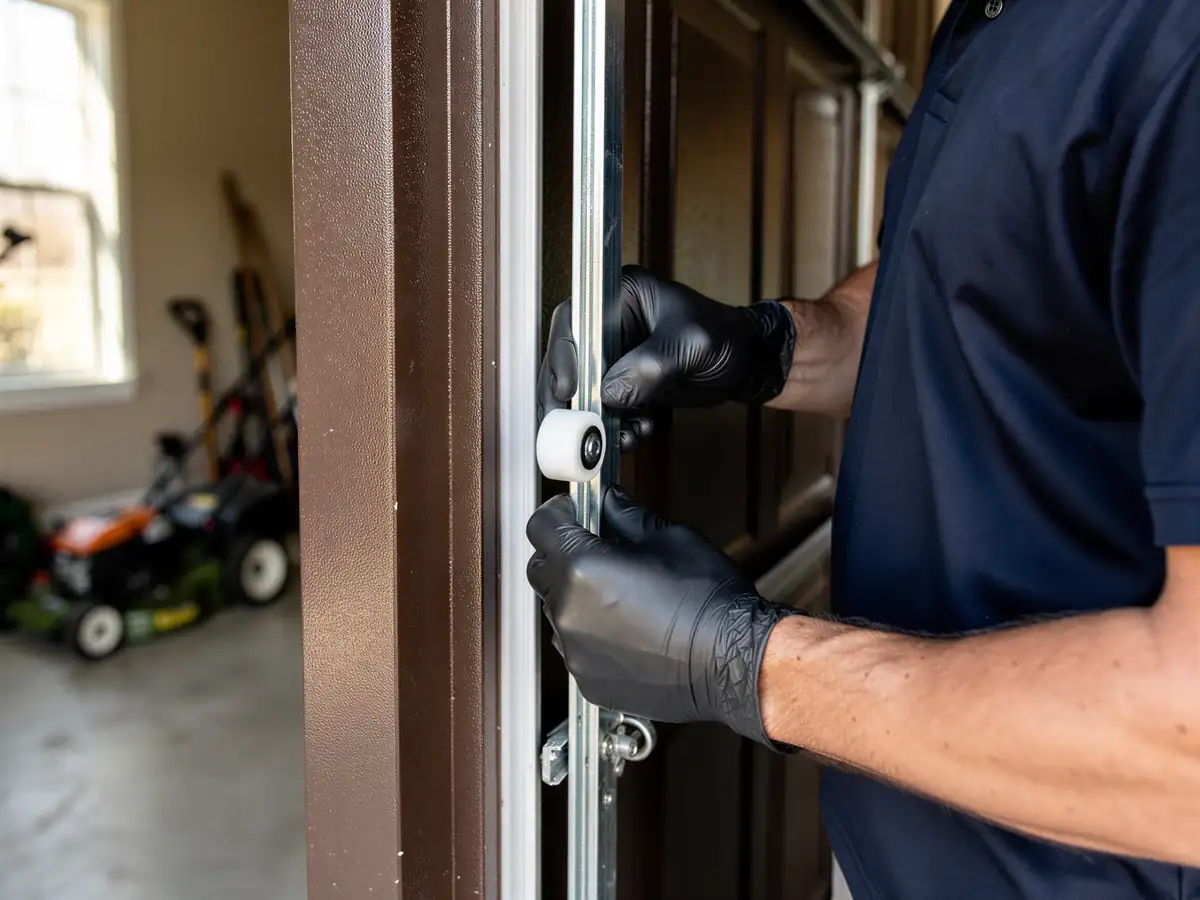
On a door from the early 90s, the rollers are almost always 7-ball or 10-ball nylon on a steel stem, sometimes still the original builder-grade steel rollers if nobody's touched the door since the house was framed. We pull the old rollers one at a time, working a hinge at a time so the door stays supported on the track, and check each bracket and hinge for wear while we're in there - a worn hinge hole will chew through a brand-new roller just as fast as an old one. We replace with sealed-bearing nylon rollers, which hold up better through the swings between a humid Georgia summer and the cold snaps this area gets in winter; plastic that gets brittle in the cold is usually what failed in the first place. We also check the track alignment while the panel's loose, since a flat-spotted roller often means the track's been bent slightly out of plumb and needs a tap back into line, not just new hardware.
Can You Do This Yourself
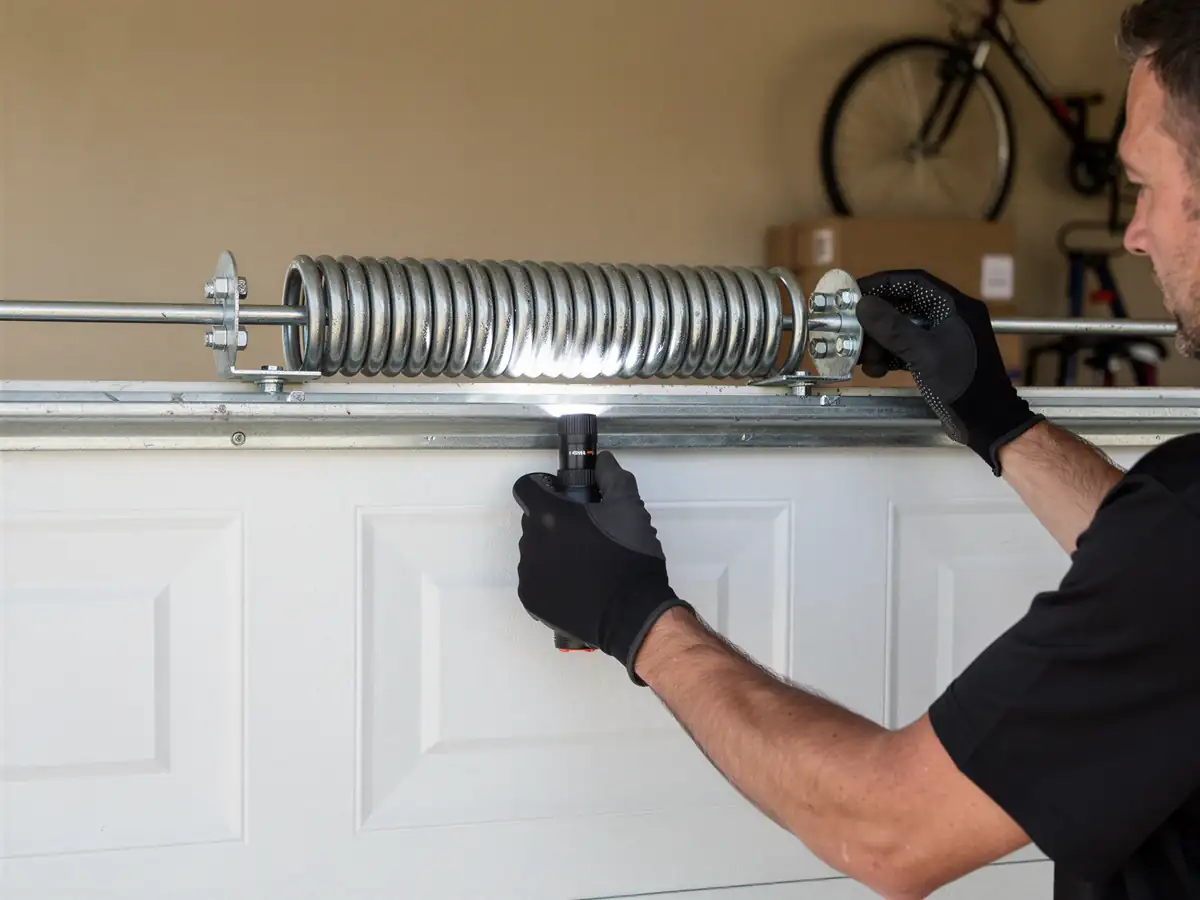
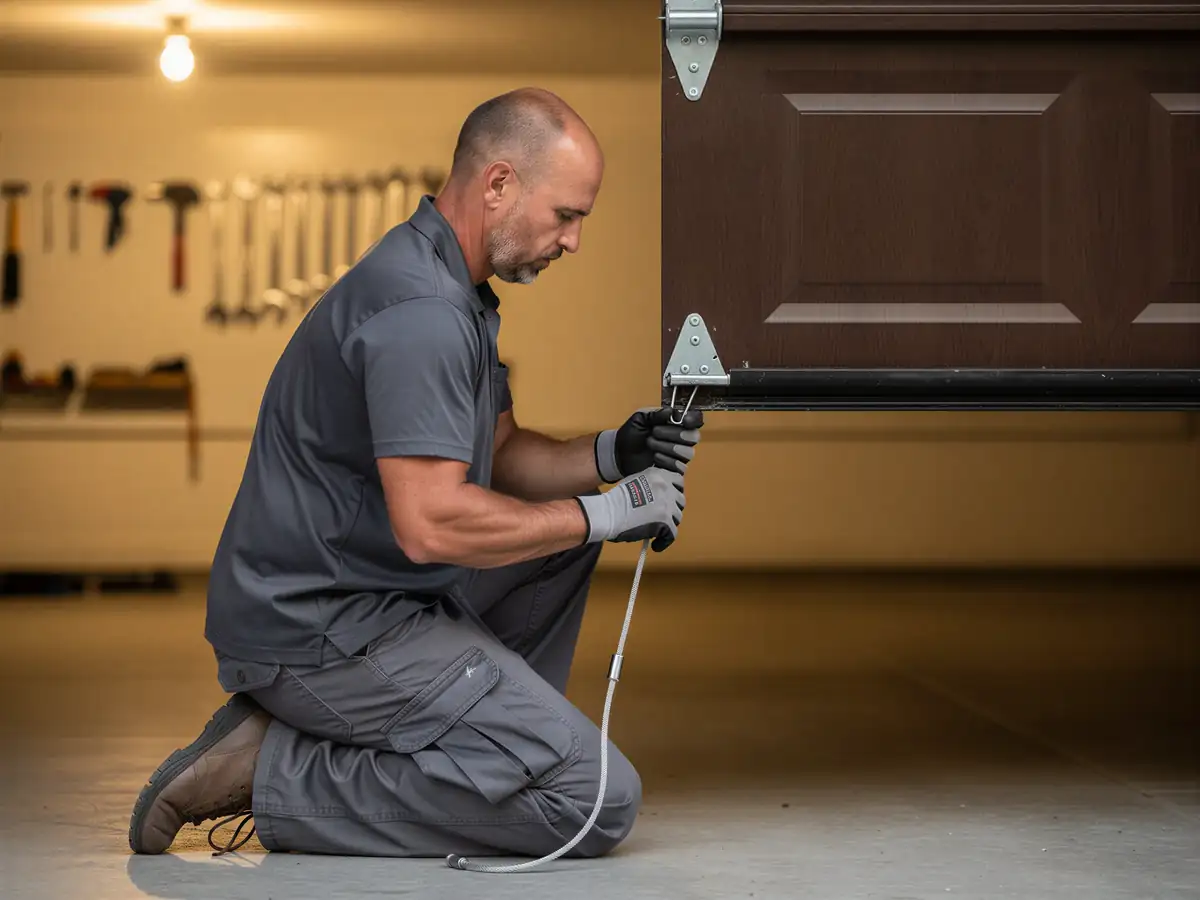
Swapping a roller on the bottom panel, away from the spring and cables, is a job some homeowners manage with the door manually propped and the opener disconnected. It's the rollers near the top of the door, close to the torsion spring and the cable drums, where we'd tell you to stop and call. That's not us protecting the job - a cable or spring that lets go while you're working the top hinges can put real force into your hands fast, and it's not worth the risk to save a service call. If your door's original to a house built around 1993, there's also a decent chance the track itself has some wear that a new roller alone won't fix, and that's easier for us to spot with the door off its hinges than for you to judge from a stepladder.