What Can Go Wrong
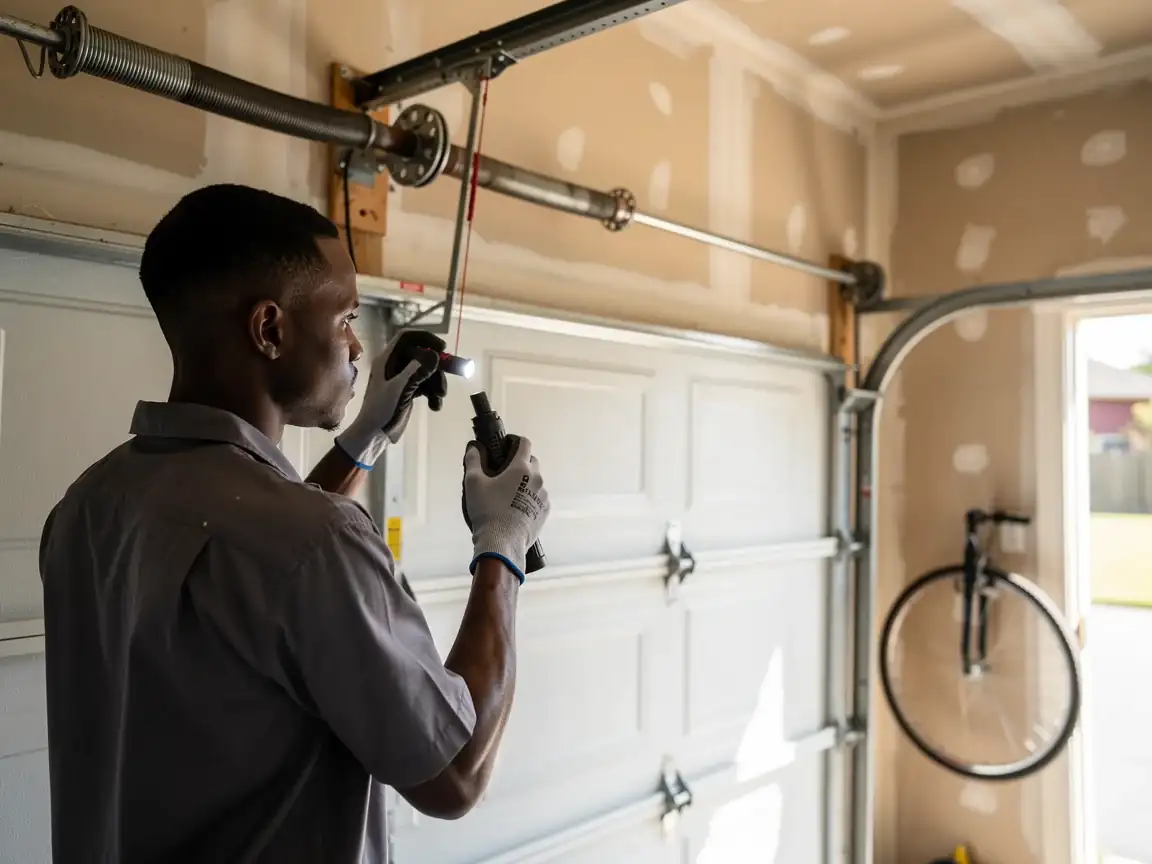
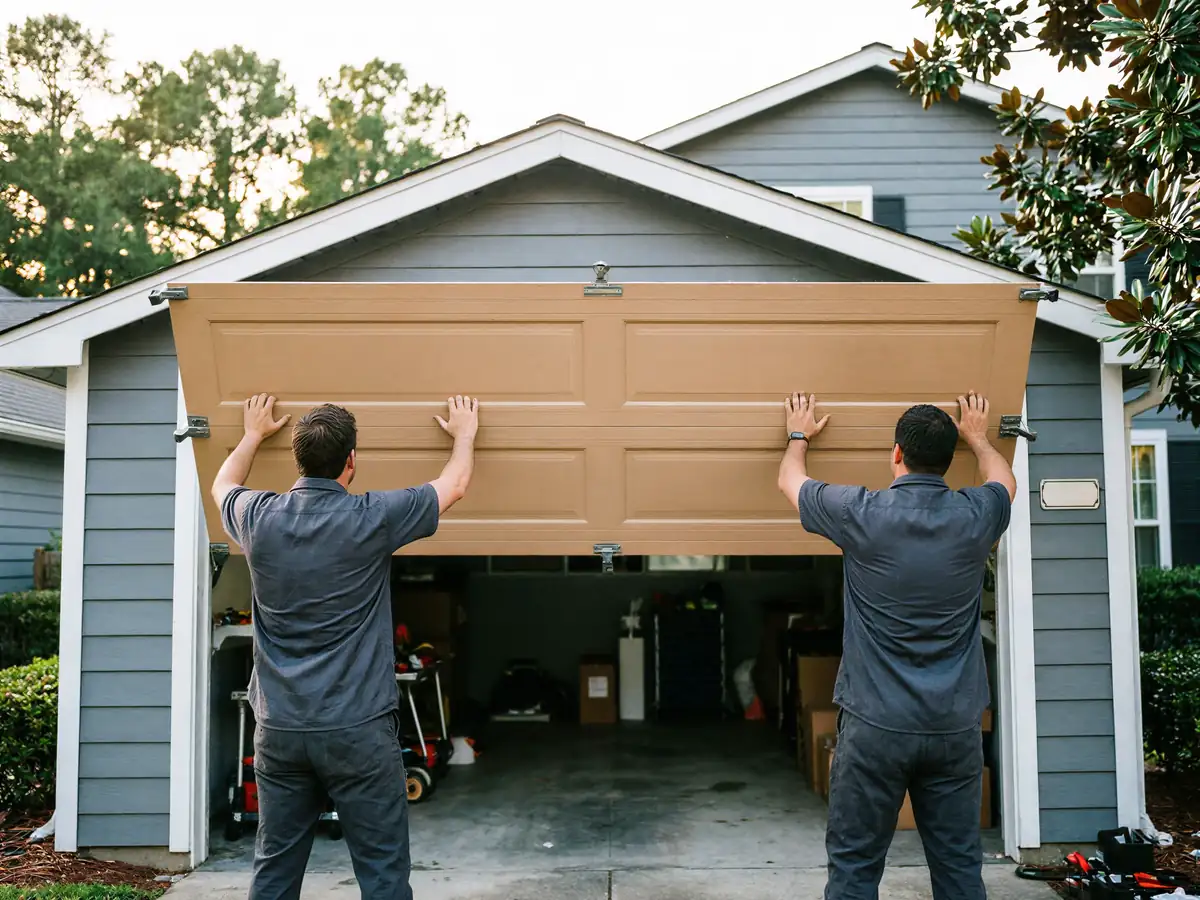
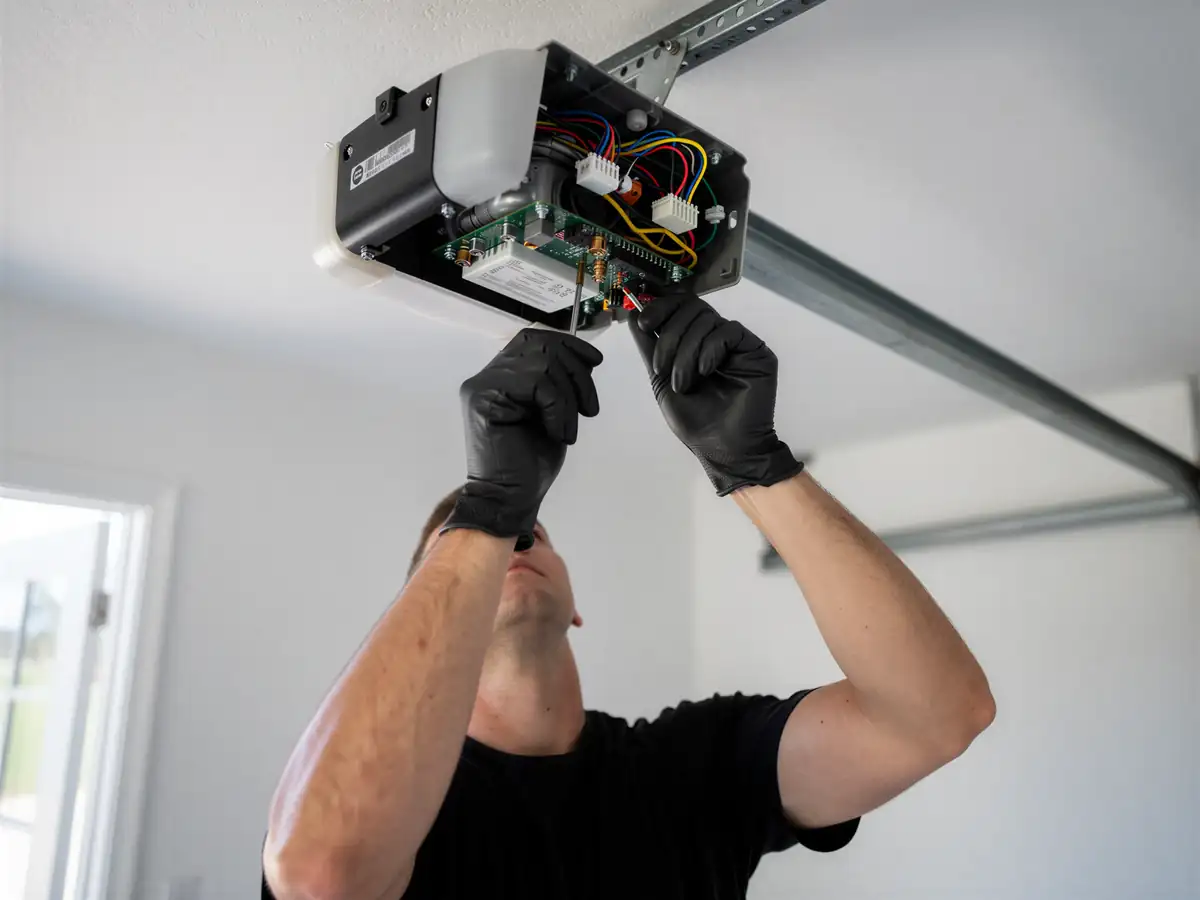
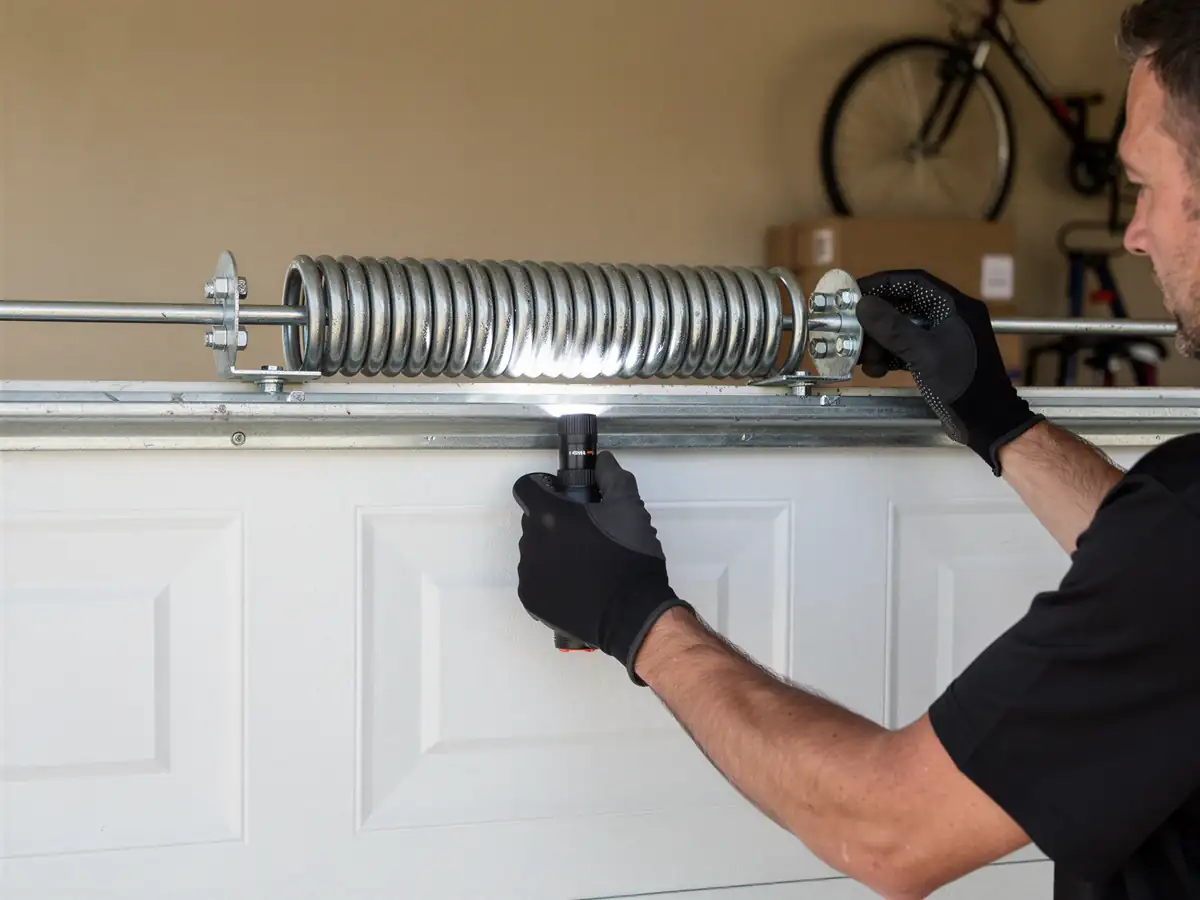
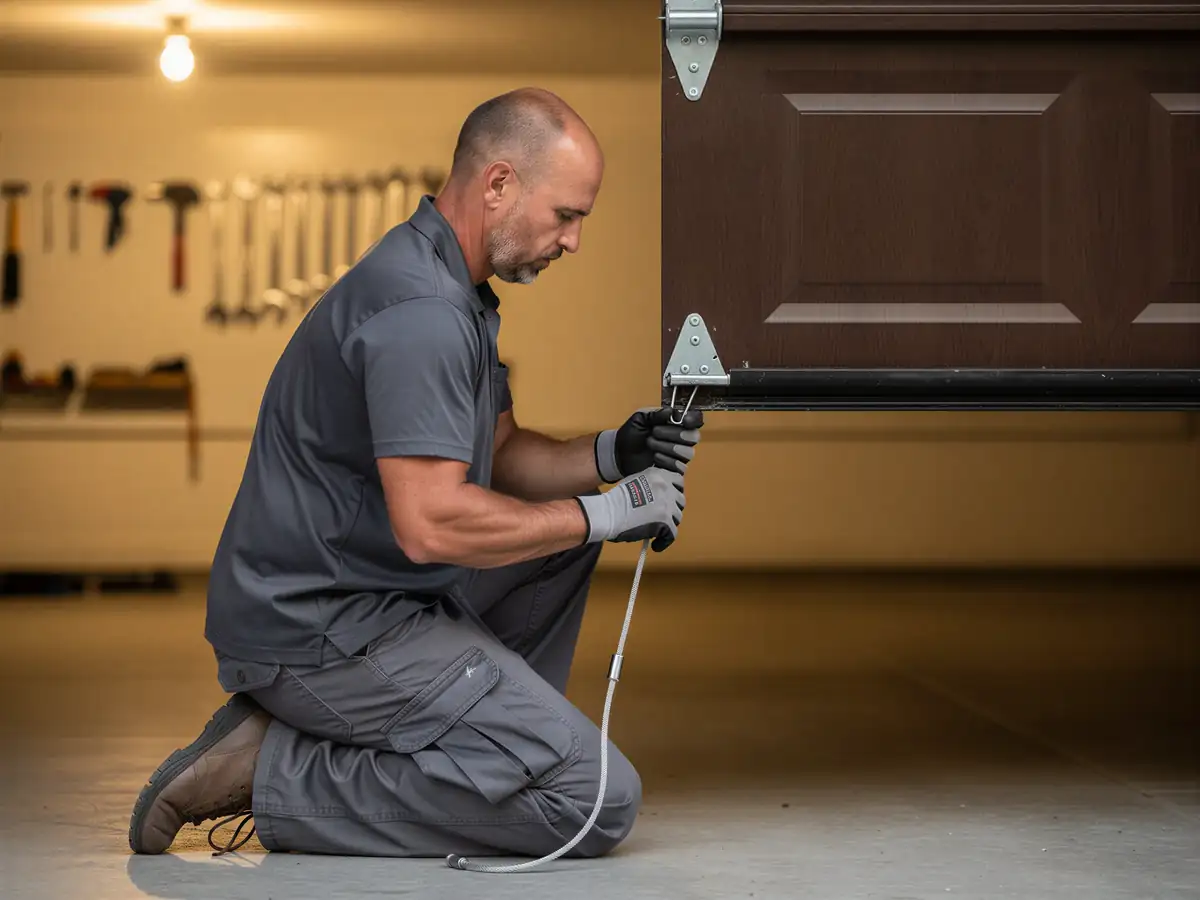
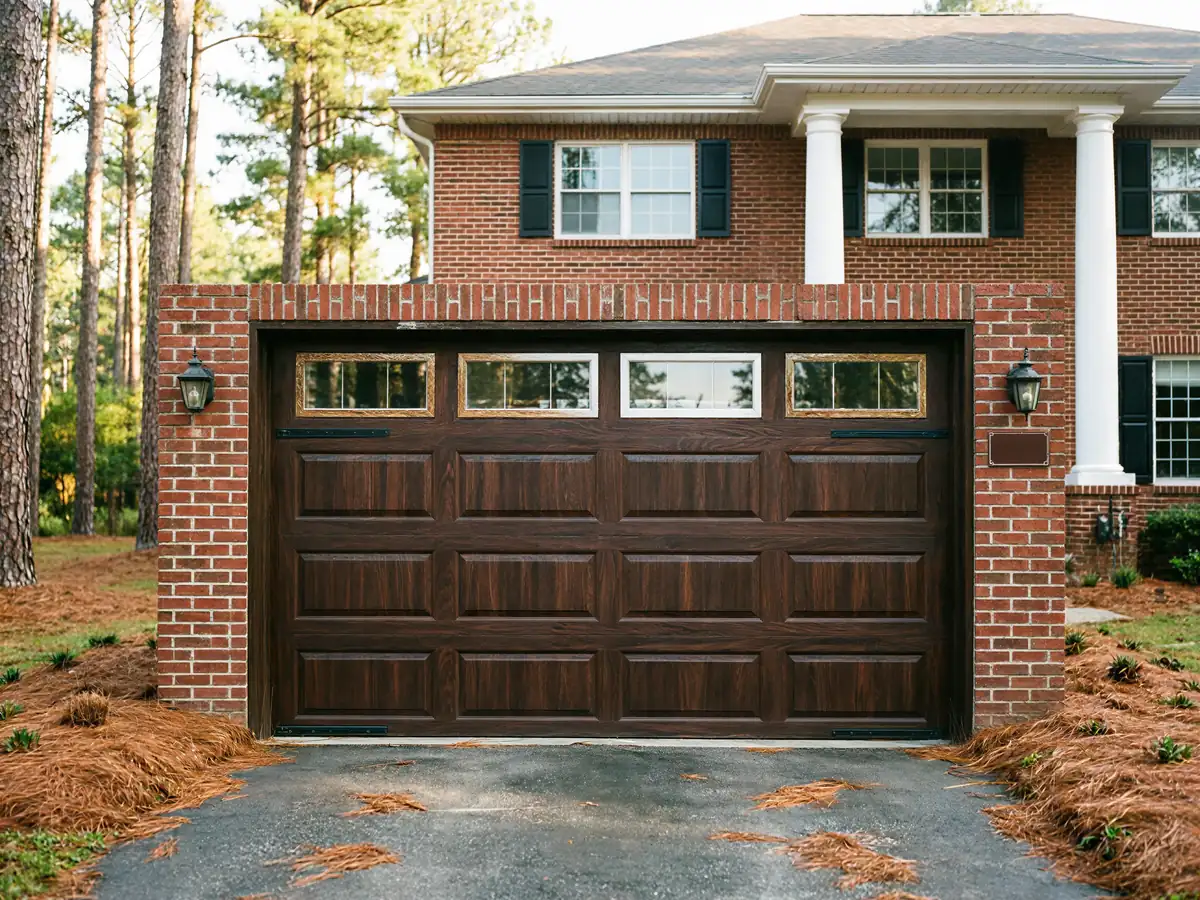
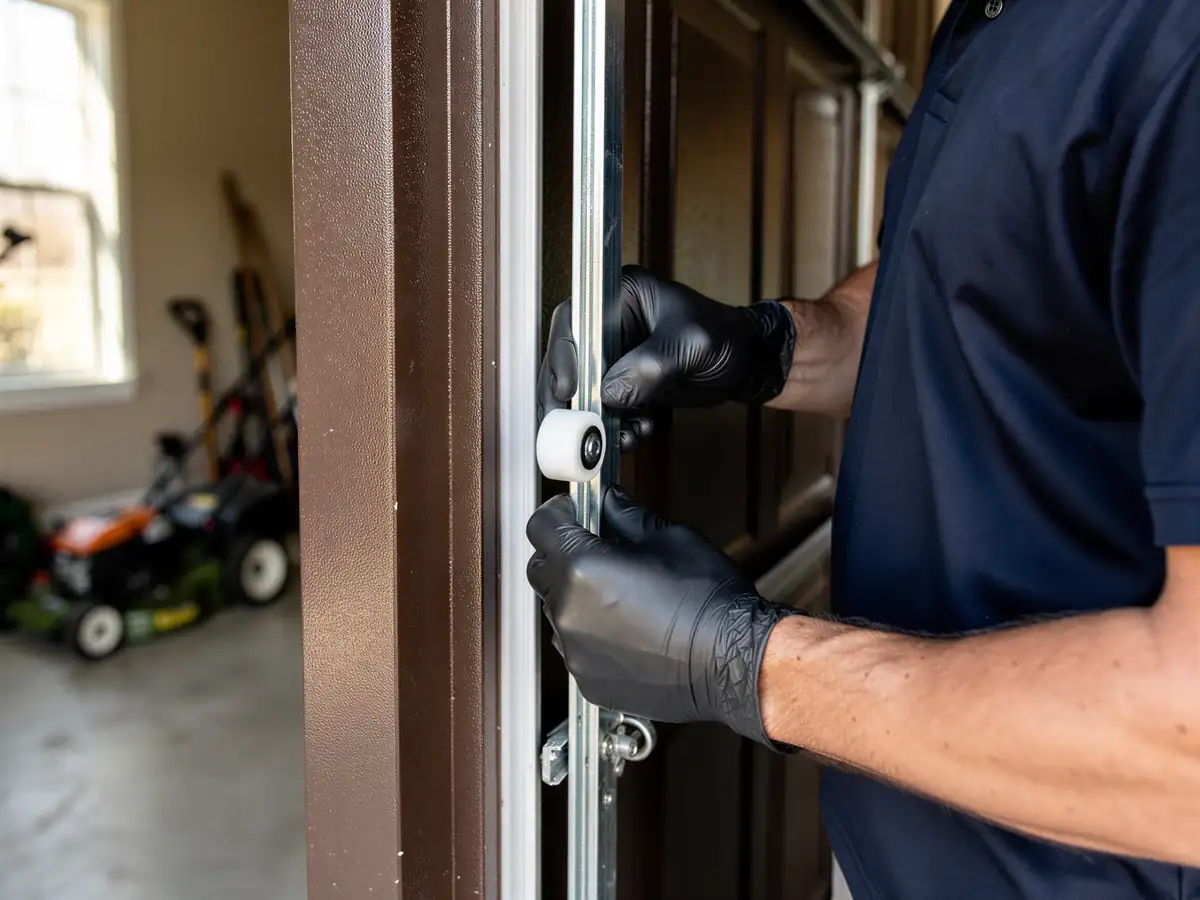
Fairburn's housing runs newer than most of the territory we cover - the area-wide median year built across our 19 service communities sits around 1988, but Fairburn itself skews to roughly 2004. That matters because doors from that era came with steel torsion springs rated for lighter composite or insulated steel panels, and openers with early safety-reversal sensors that are now past their expected service life. We see broken torsion springs that fatigued after a decade-plus of daily cycles, photo-eye sensors knocked out of alignment, and nylon rollers that have worn down to the point of binding in the track. Because houses here were built to a more modern energy code than the older stock elsewhere in our area, insulated doors are more common, which means a bent panel is heavier to replace than the hollow steel doors of the 1980s. We also see opener circuit boards failing - a common weak point on mid-2000s production runs - rather than the chain and gear wear you'd expect on an older unit. One limitation: if the spring size or drum isn't stamped clearly, we don't guess the rating off a VIN sticker; we measure it on site, which can add a few minutes to the call.
Parts We Carry
Because Fairburn's housing clusters in the early 2000s, we stock torsion springs sized for the wind-load and panel-weight standards common to that construction window, plus the steel tracks and ball-bearing rollers that pair with insulated doors. We carry photo-eye sensor pairs and opener logic boards for the production runs that show up most often on these newer builds. What we don't carry on the truck: specialty wood-composite panels or discontinued opener models from older builds elsewhere in our territory - those can take longer to source, and we'll tell you up front if your job needs a special order rather than letting the truck inventory make that call for you.
How We Fix It
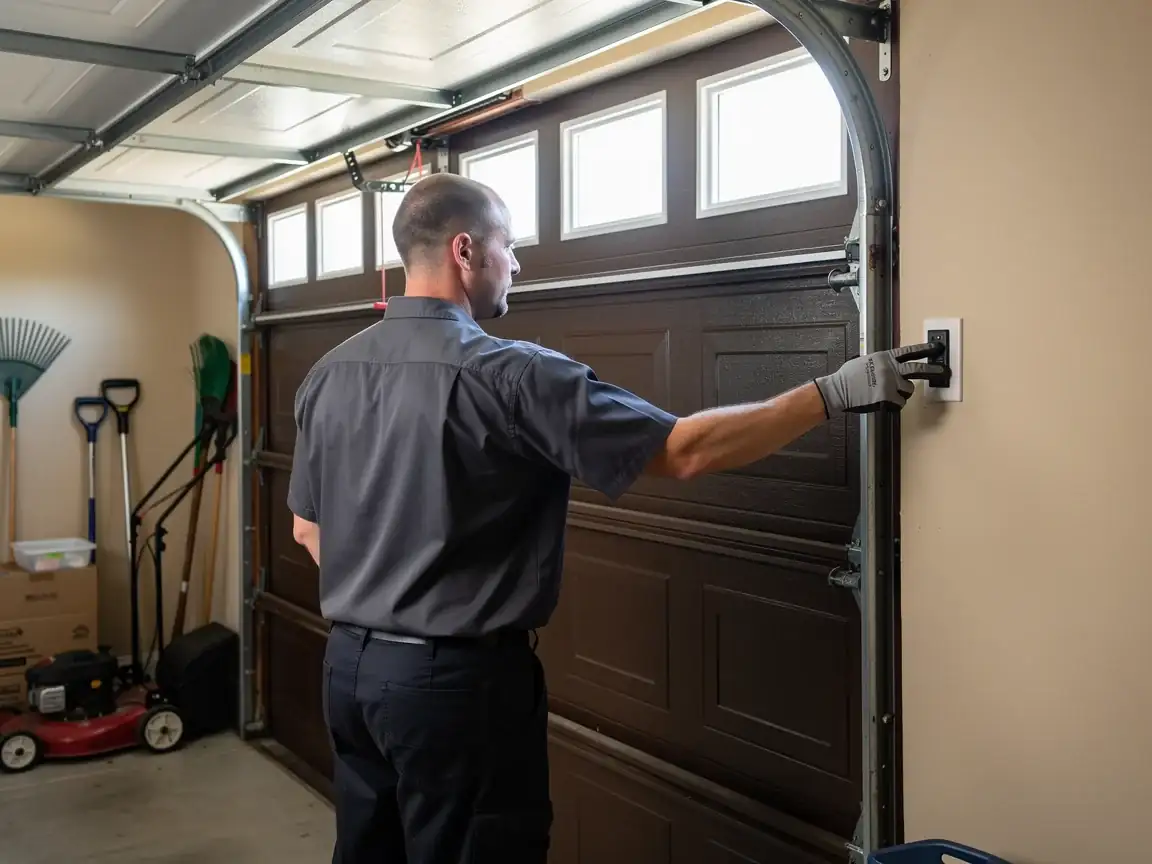
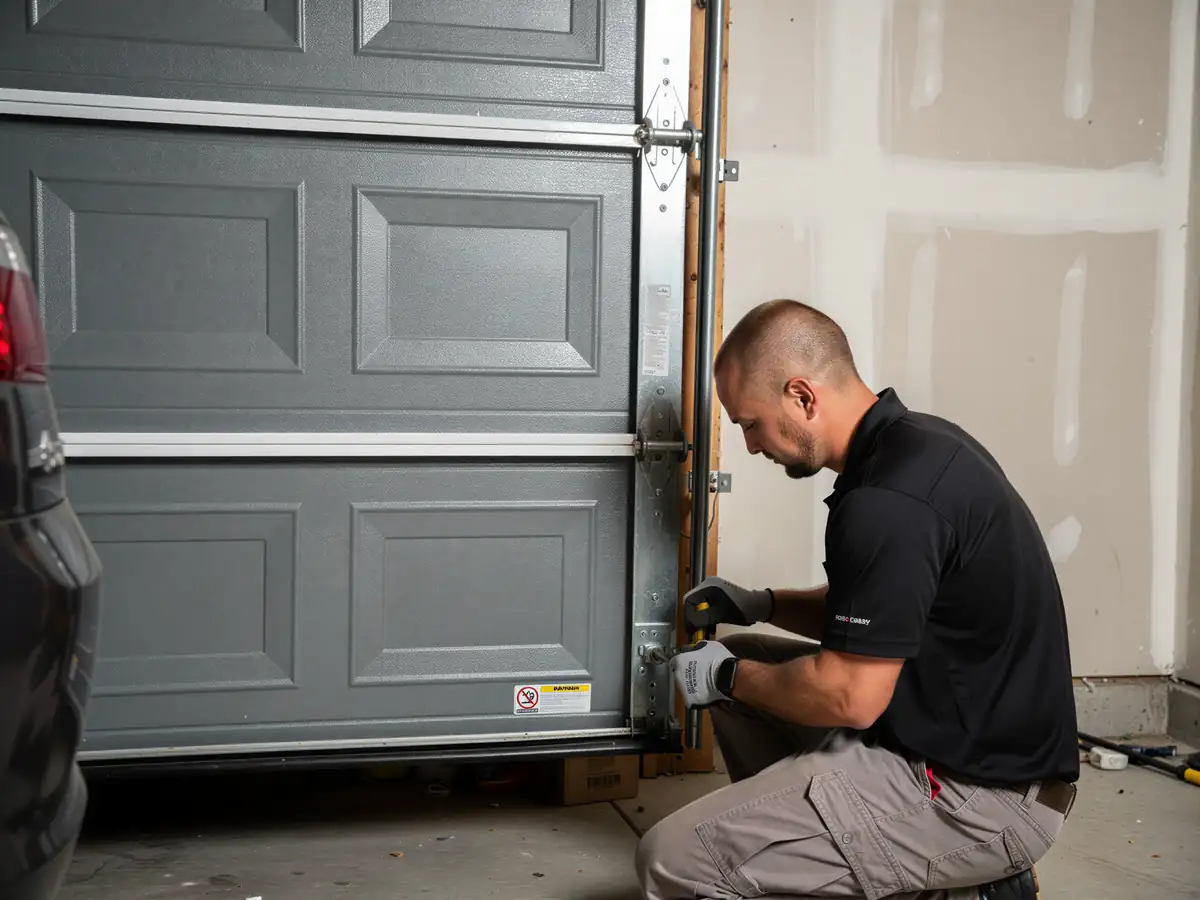
We start by identifying what the house was built with, not just what's broken. On a 2000s-era Fairburn door, that usually means a standard torsion setup on a steel header above the opening, not the older extension-spring systems you find on pre-1988 construction elsewhere in the service area. We isolate the door from the opener before touching springs, replace both springs as a pair even if only one failed - mismatched spring age is the number one callback we try to avoid - and re-test the balance by hand before reconnecting the opener. For sensor or opener board failures, we check the wiring harness first since that's the more common point of failure on circuit boards from this production era, not the board itself. We finish every repair with a full cycle test and a force-setting check on the opener, since insulated panels common in Fairburn's newer stock weigh more than the hollow steel doors we service elsewhere.
What It Costs
We don't post a flat price here because spring size, panel weight, and opener model all change the number, and guessing at a figure before we've seen the door does homeowners no favors. What we can tell you: households in our broader service area report a median income of $61,454, and Fairburn runs meaningfully higher than that, which is part of why insulated doors and newer opener models are more common here than in some of the older sections of our territory - and why parts for this era tend to be in stock rather than special order. We give a real number on the phone once we know what's broken, before we drive out.