What Can Go Wrong
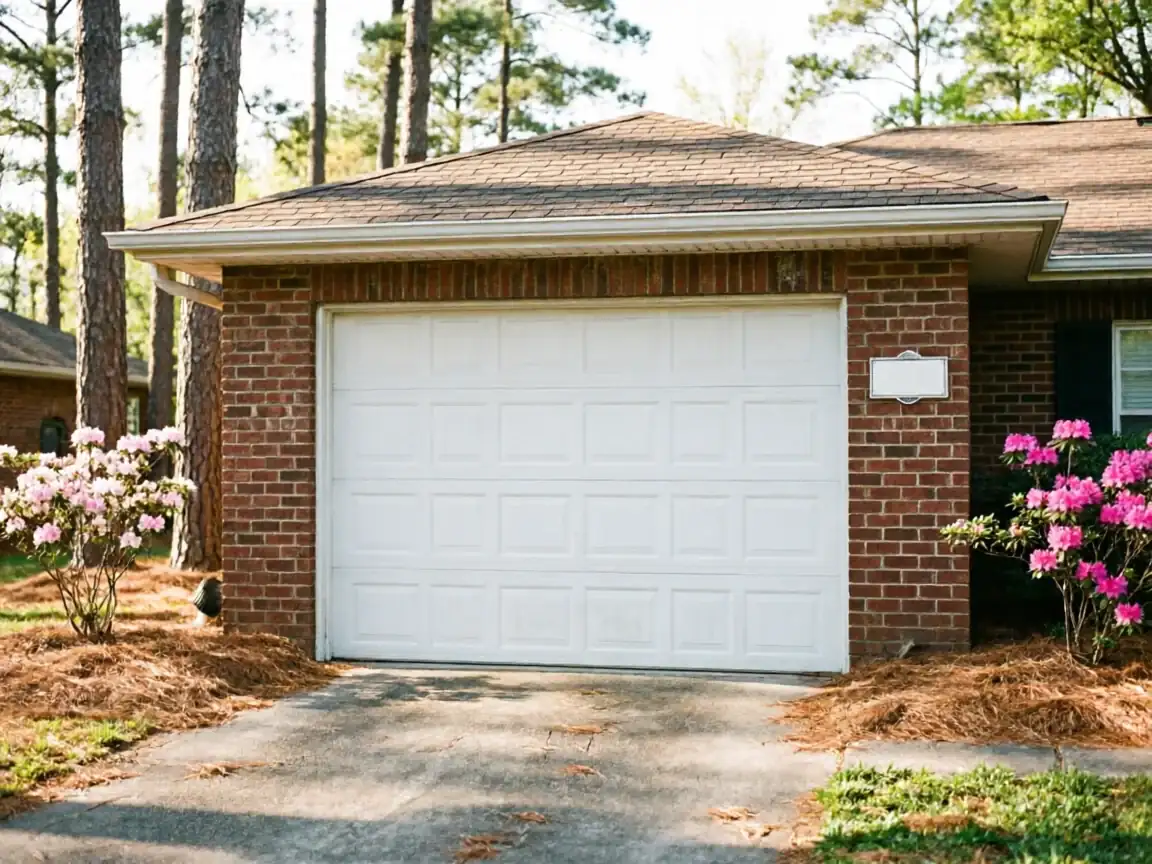
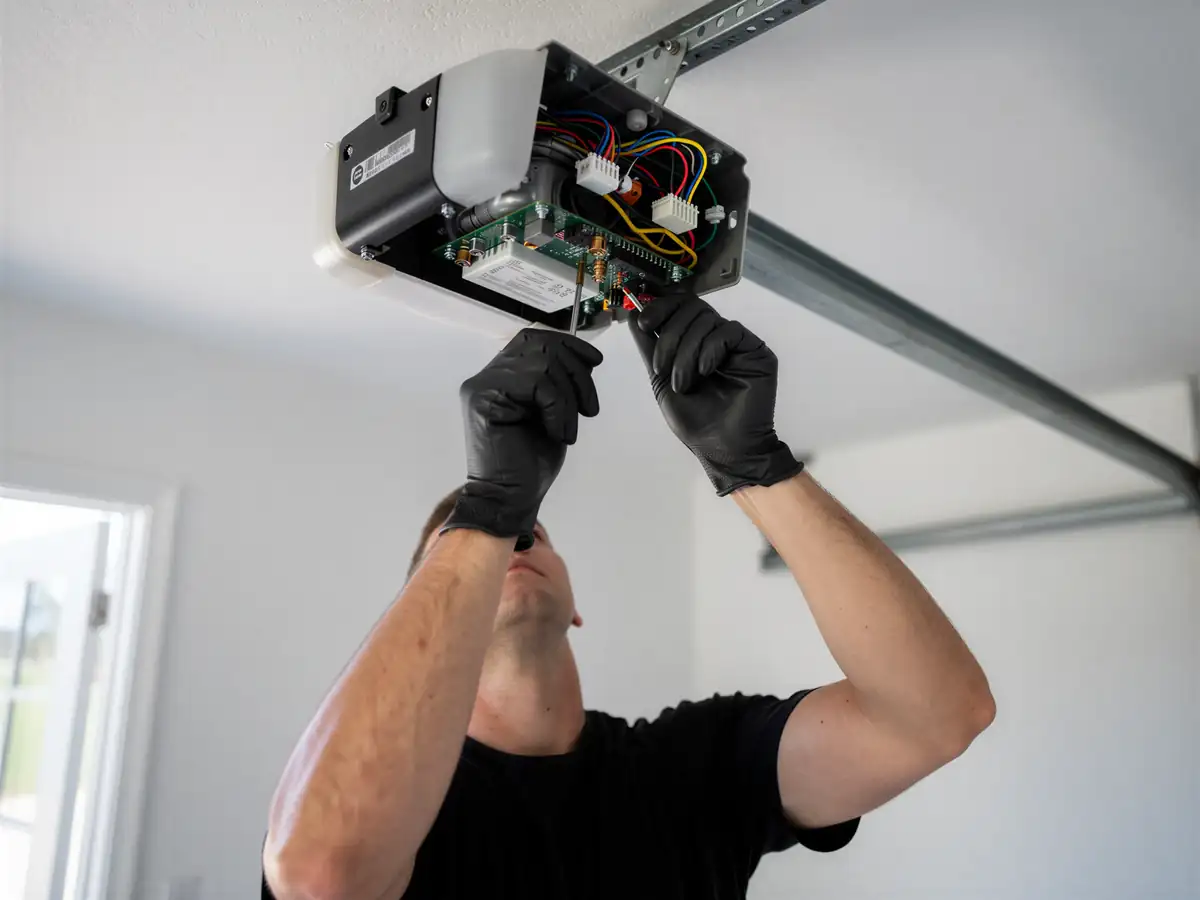
Fairburn's median home was built around 2004, a good fifteen years newer than the 1988 median across the rest of the service area. That matters for openers because it tells us what's inside the box on the ceiling. A house built in 2004 almost never has an old chain-drive unit with exposed gears and a mechanical limit switch. It has a circuit board, a logic chip, photo-eye safety sensors required by code since the 1990s, and a capacitor that was never meant to last twenty-plus years. The failures we see here skew electronic: a board that won't take a signal, a capacitor that's swollen or dead, sensors that have drifted out of alignment after two decades of settling. We still see worn drive gears and stripped sprockets, but the board failure shows up more in this age bracket than it does on the older stock elsewhere in the area. One honest note: if the board is original to a 2004 install, replacing just the capacitor sometimes buys a few more years, but a full board swap is often the better call once one part starts going.
Parts We Carry
Because Fairburn's housing runs newer than most of the area we cover, we stock logic boards, capacitors, and photo-eye sensor pairs sized for openers from the early-to-mid 2000s on the truck, not just the older chain-drive parts that cover the 1988-median homes elsewhere. We also carry drive belts and gears for belt-drive units, which started showing up in new construction around that build era more than they did in the older stock. What we don't carry is every obsolete board for every brand ever sold - if your unit is a less common make from that period, we may need to order the exact board rather than swap it same-visit.
How We Fix It
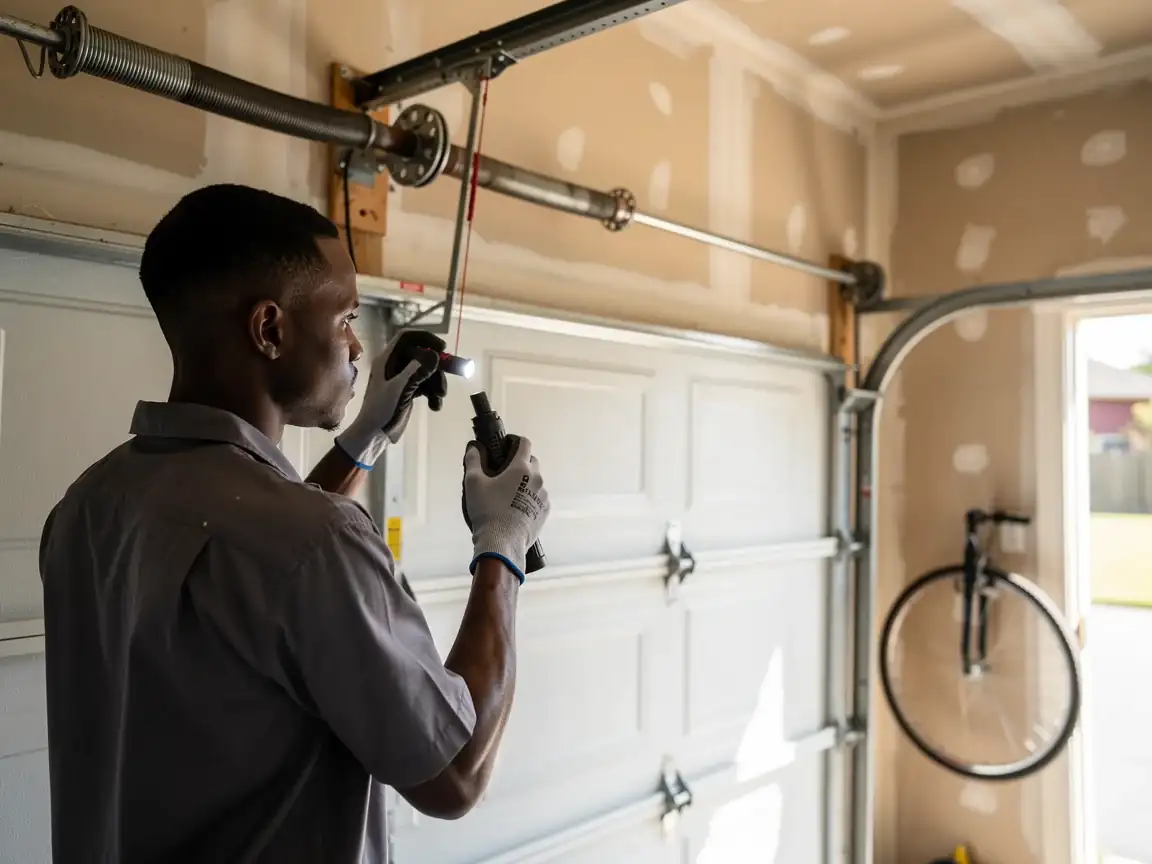
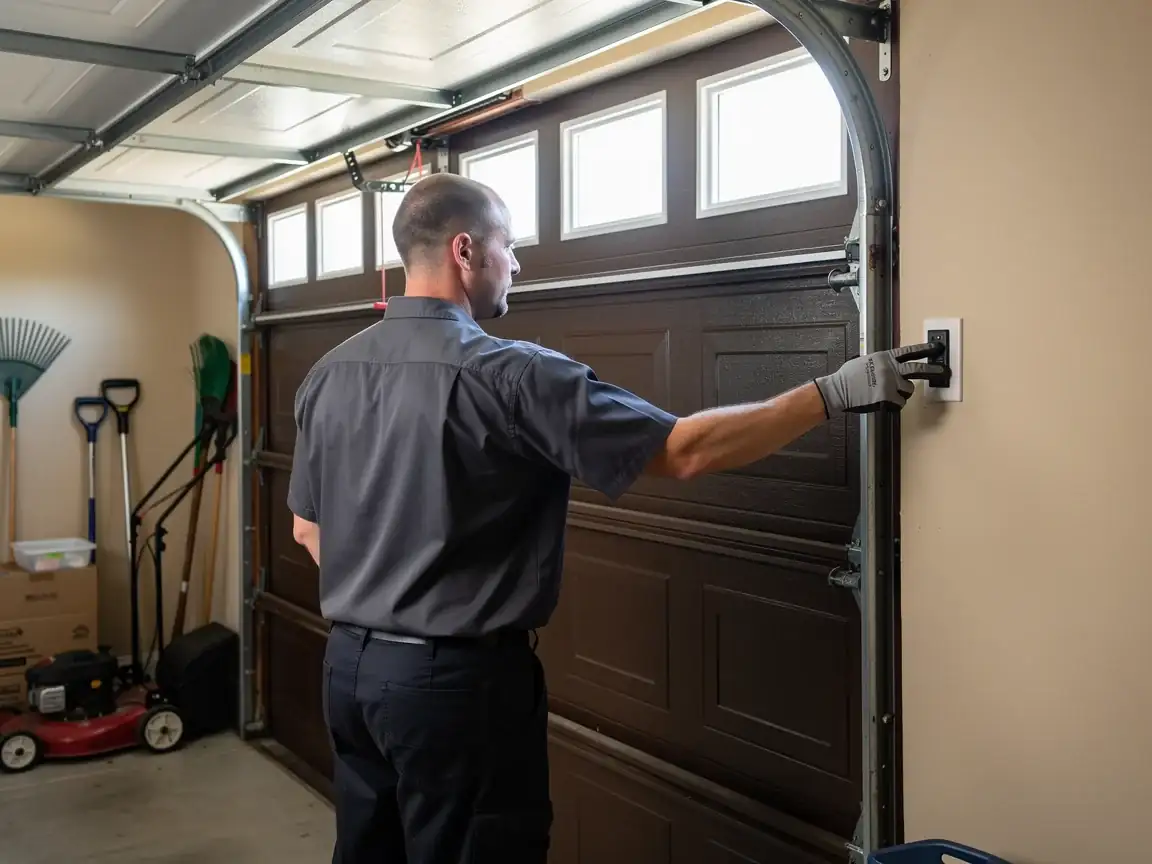
First we test the logic board itself - does it respond to the wall switch but not the remote, or neither? That split tells us whether the fault is the board, the remote's battery and frequency, or the antenna wire that's often pinched near the motor housing on units from this era. If the board reads dead, we check the capacitor before replacing the whole unit; a failed capacitor can look exactly like a dead board but costs far less to fix. Sensor issues get a straightforward realignment and a check of the wiring at the bracket, since two decades of garage door vibration will work a connection loose. We test full open-close cycles with the safety reversal before we call the job done, since that's a code requirement on units from this build period, not an upsell.
What It Costs
We don't have a posted price list for this page, and we're not going to invent one. What we can tell you is that Fairburn's median household income, at $89,276, runs well above the roughly $61,454 median across the broader area we serve, which lines up with what we see on these calls: more owners here choosing a full logic-board replacement with updated rolling-code security rather than patching an old board indefinitely. Both are legitimate repairs - which one makes sense depends on the age and condition of the rest of the unit, and we'll tell you honestly when a capacitor swap is the smarter, cheaper fix.