What Can Go Wrong
The drive from Fayetteville to Fairburn runs about ten miles, putting it in the same range as calls out to Jonesboro or Lovejoy rather than the short seven-mile hop to Irondale or Tyrone. That distance doesn't change what's wrong with the door, but it does mean the truck has to be loaded with the right parts before it leaves, not after a wasted trip back.
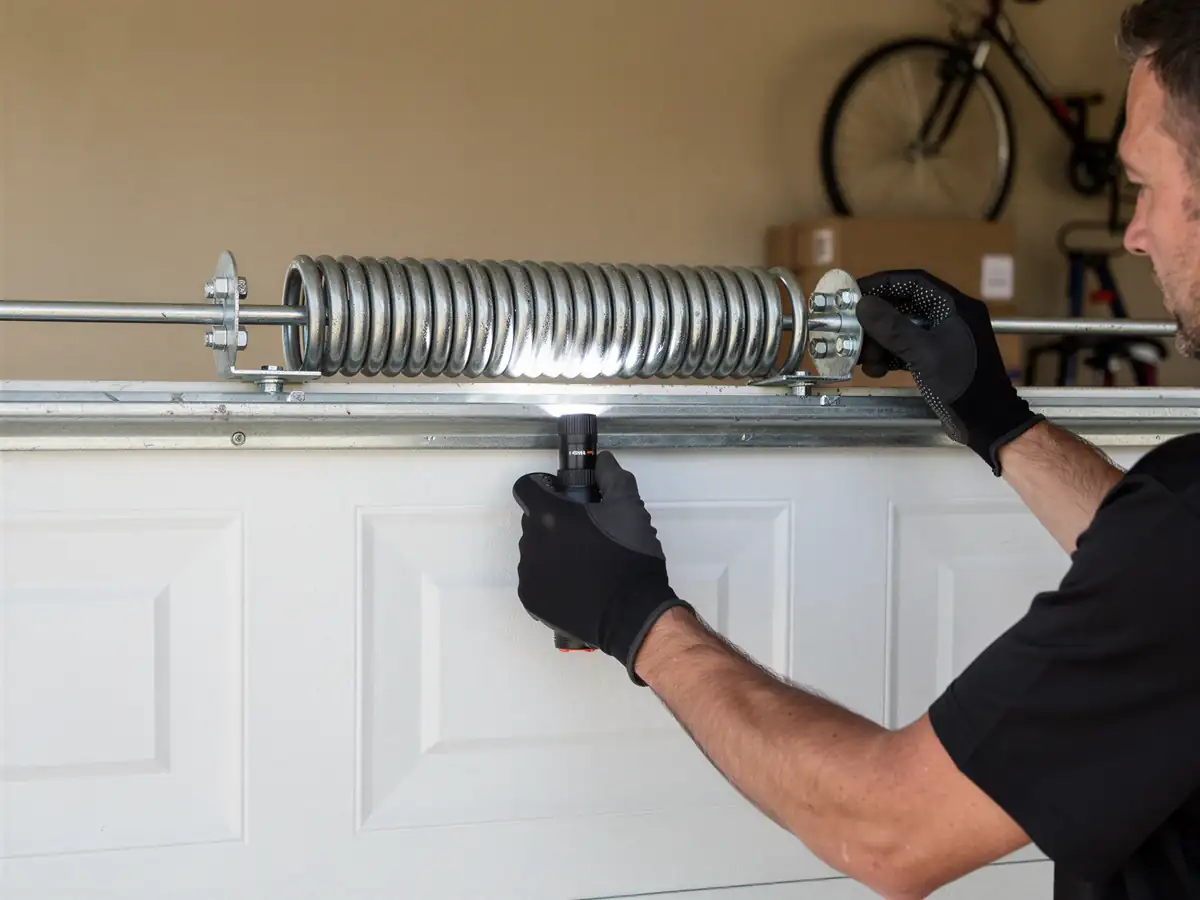
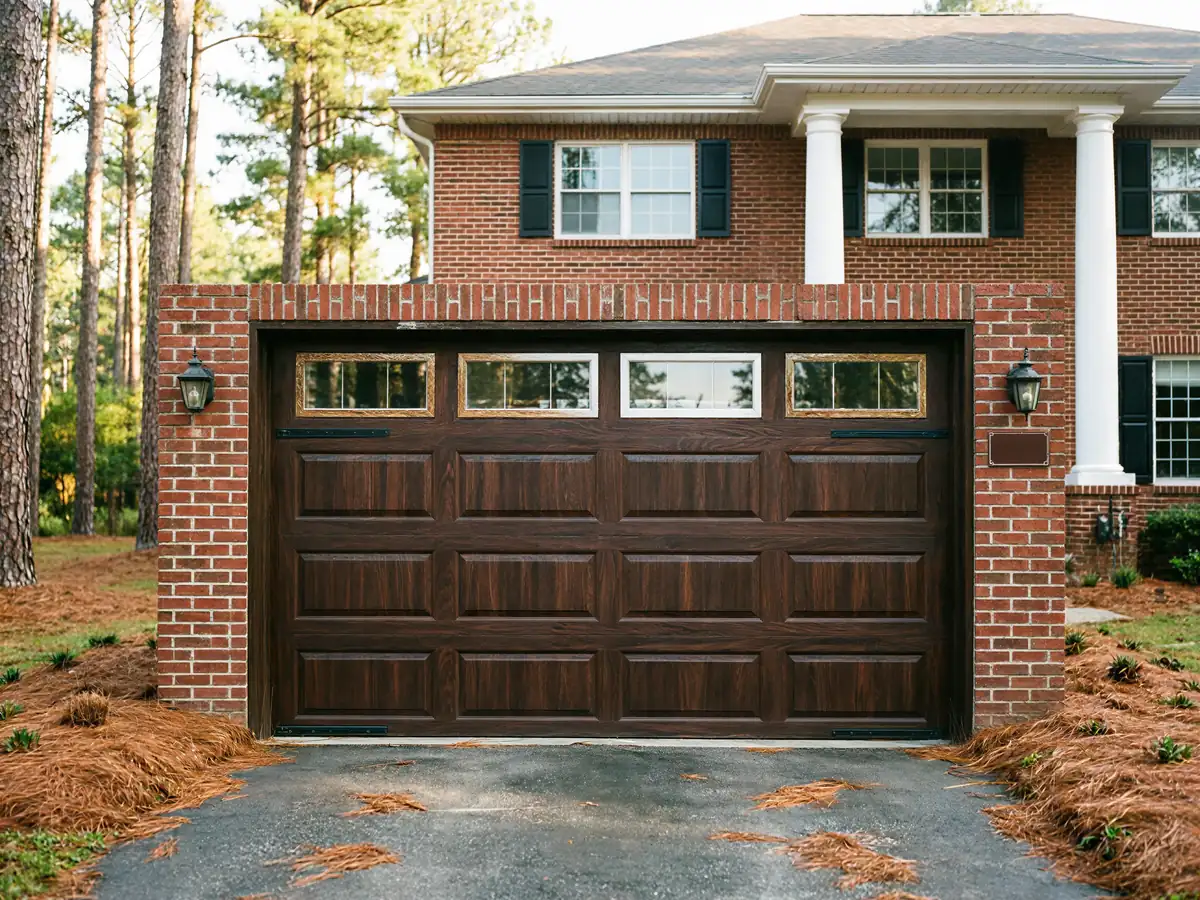
Fairburn's housing stock runs newer than most of the area covered from Fayetteville. The median year built here is 2004, against a median of 1988 across the wider service area. That sixteen-year gap matters more than it sounds. Doors built in the early 2000s are almost always steel or composite sectional panels on torsion springs sized for a heavier door, not the lighter aluminum panels and extension spring setups still common on older houses closer to Fayetteville itself. The common failures here run toward torsion spring fatigue on a door that's now pushing twenty years old, worn nylon rollers, and openers from that production era whose circuit boards and sensors are starting to go.
With 5,813 households in Fairburn, there's a lot of nearly-identical garage door hardware installed within a few years of each other - which also means a lot of it is wearing out at the same time.
How Long It Takes
Since every Fairburn call starts with that ten-mile run from Fayetteville
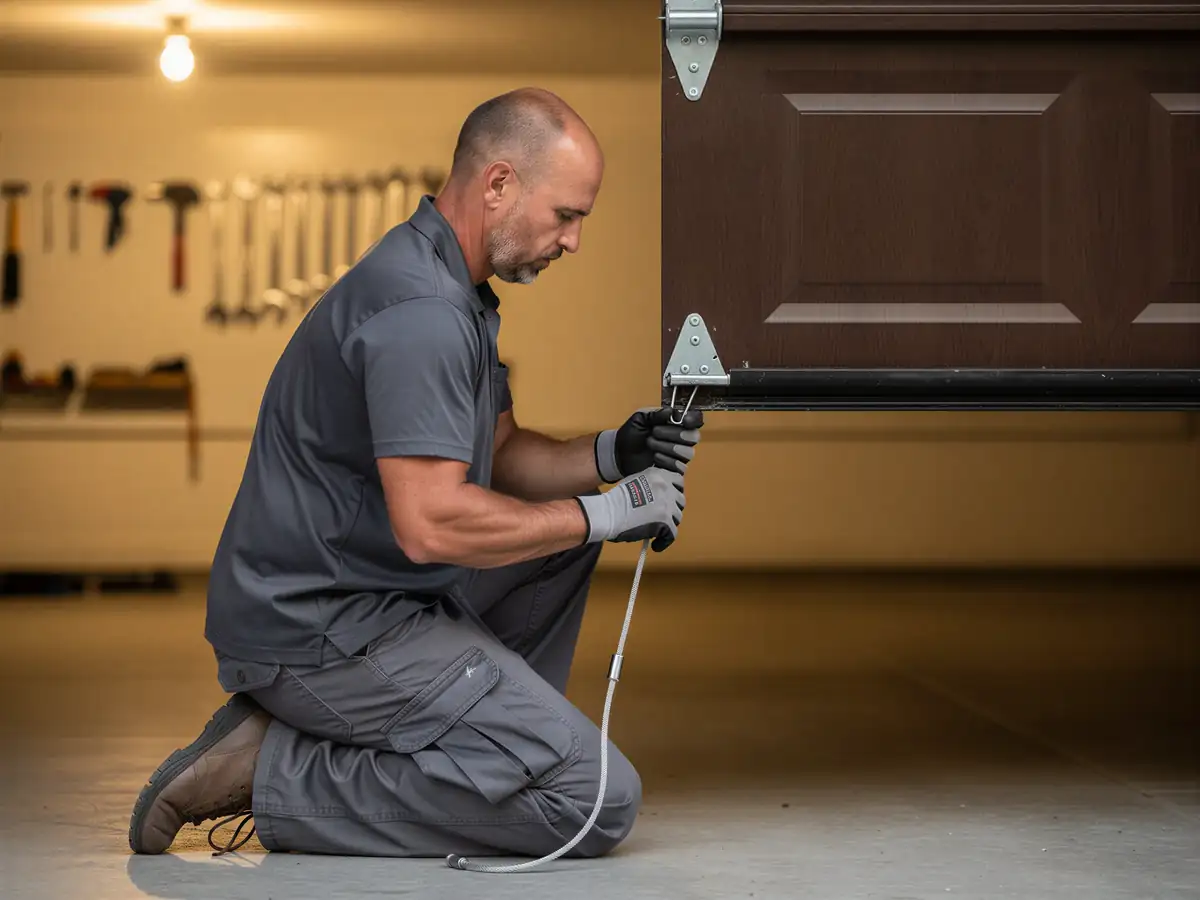
The time on site is usually shorter than the time it takes to get there and back. A torsion spring swap on a standard double door, once the truck is parked, doesn't take long - most of the job is diagnosis and the physical work of releasing tension safely, not waiting around.
What takes longer is anything involving a part that isn't a standard torsion spring or roller set
Fairburn's newer housing stock means openers and track hardware from a narrower build window, which is usually good for parts availability - but an imported or discontinued opener board from that era can still mean a special order rather than something carried on the truck.
We don't quote a fixed response window for Fairburn specifically
Because that depends on where the truck already is that day and what the job in front of it needs. What we can say is that the distance itself doesn't change the repair - it changes when the truck can get there.
Parts We Carry
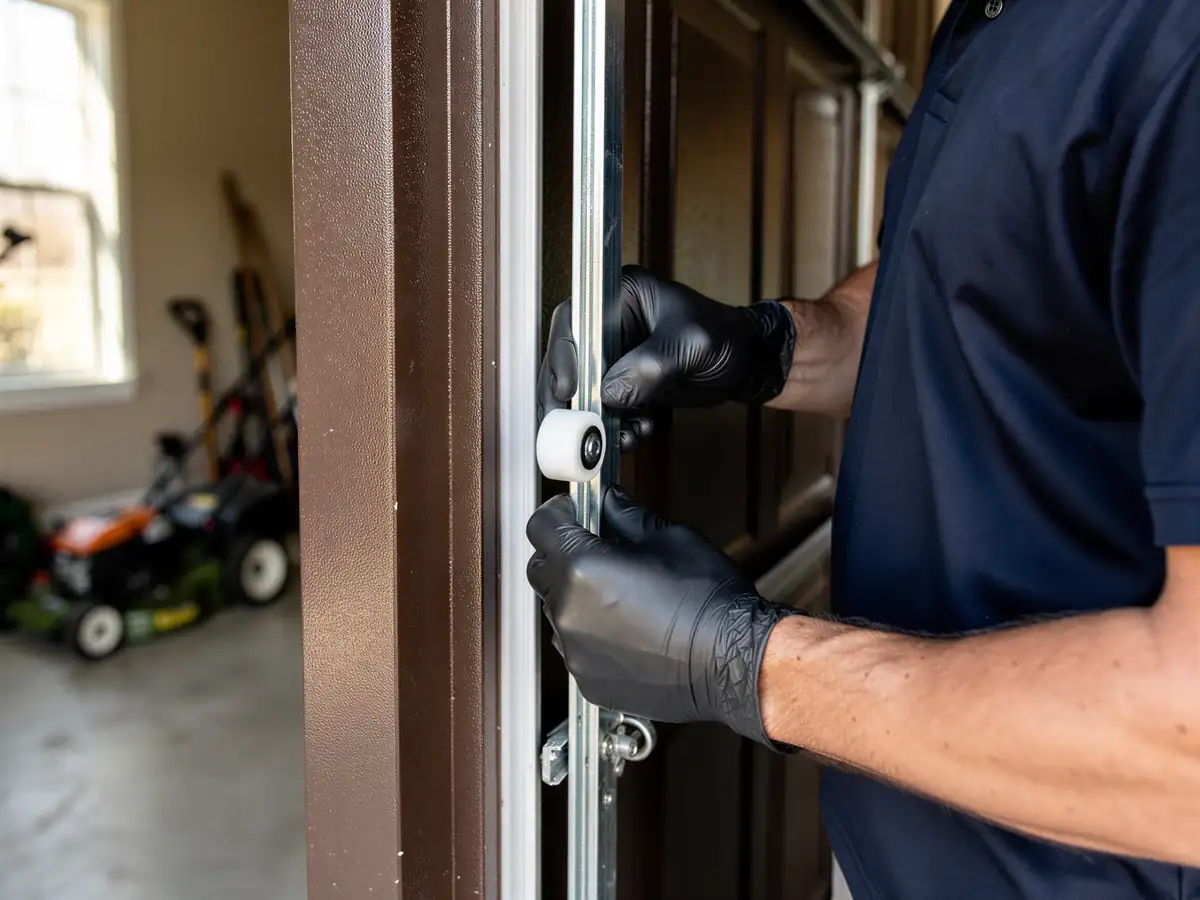
Because Fairburn's housing stock centers on 2004, the truck carries torsion springs sized for the heavier steel and composite sectional doors that era of construction favored, along with steel ball-bearing rollers to replace the nylon ones that tend to crack and chip once they pass the fifteen-to-twenty-year mark.
We also carry standard safety cables, galvanized lift cables, and common opener logic boards and sensor pairs that fit the production run of openers installed through the late 1990s and 2000s - the window that covers most of what's on Fairburn garage doors now.
One honest limit: not every opener model from that era uses a common board. If a house has a less common brand or an opener that was already discontinued when it was installed, that part sometimes has to be special-ordered rather than pulled off the truck, which adds a day or more to the job. We'll tell you up front if that's the case rather than guess.
How We Fix It
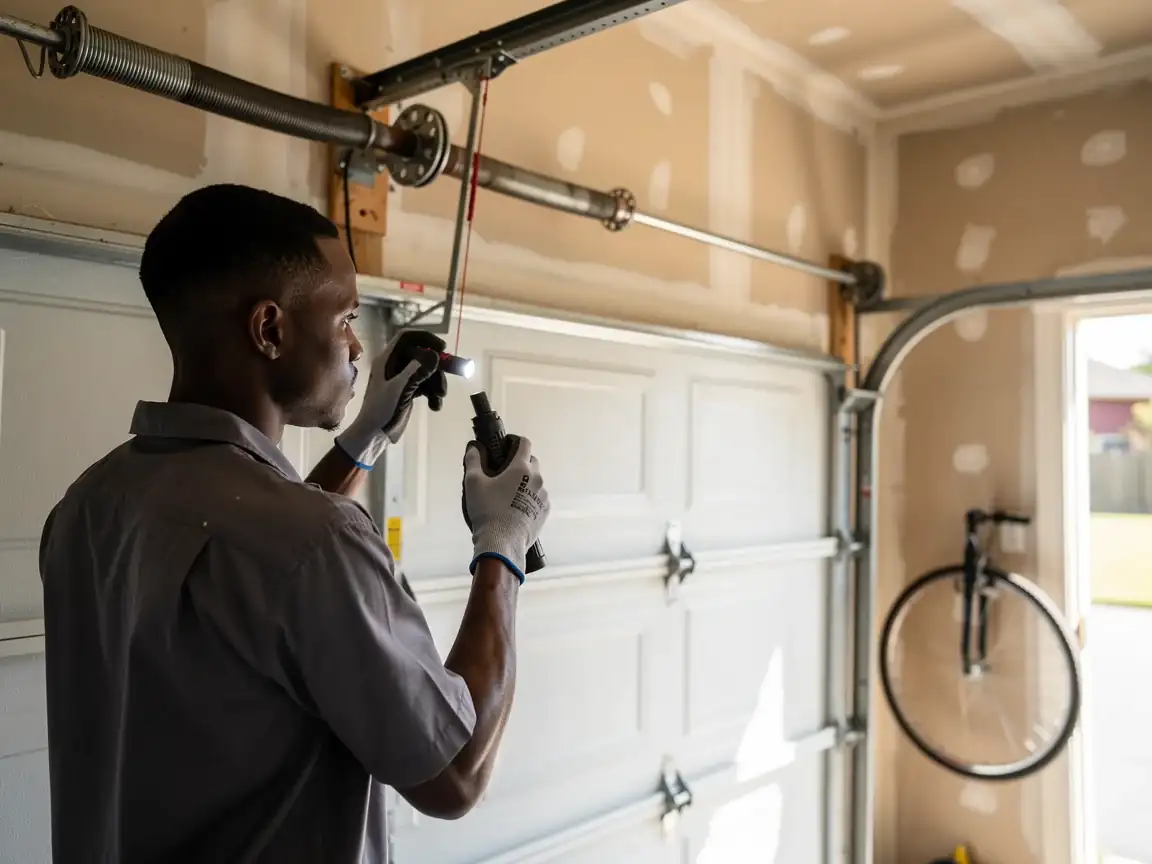
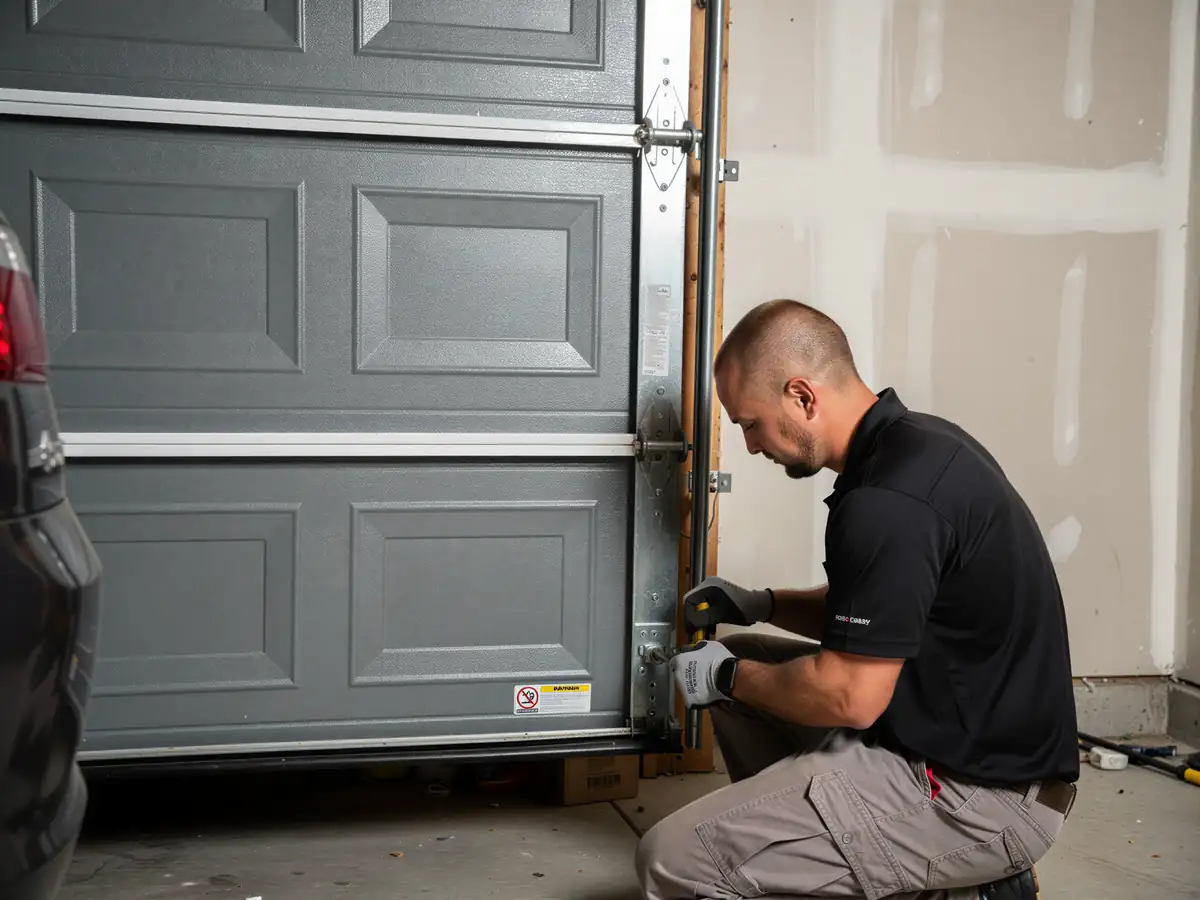
The process starts the same way regardless of the part: we look at the door under load, not just at rest, to see where the strain is actually landing - on the spring, the cable, the track, or the opener. For a Fairburn house built in the 2004 window, that usually means checking torsion spring wind and cable condition first, since that's the hardware doing the heaviest work on a door that size.
If it's a spring, we match wire gauge and wind direction to the door's weight rather than swap in a generic size - a spring that's slightly off takes years off the opener's life by making it do work the spring should be doing. If it's rollers or hinges, we replace in sets rather than one at a time, since a door with one new roller and five old ones still binds.
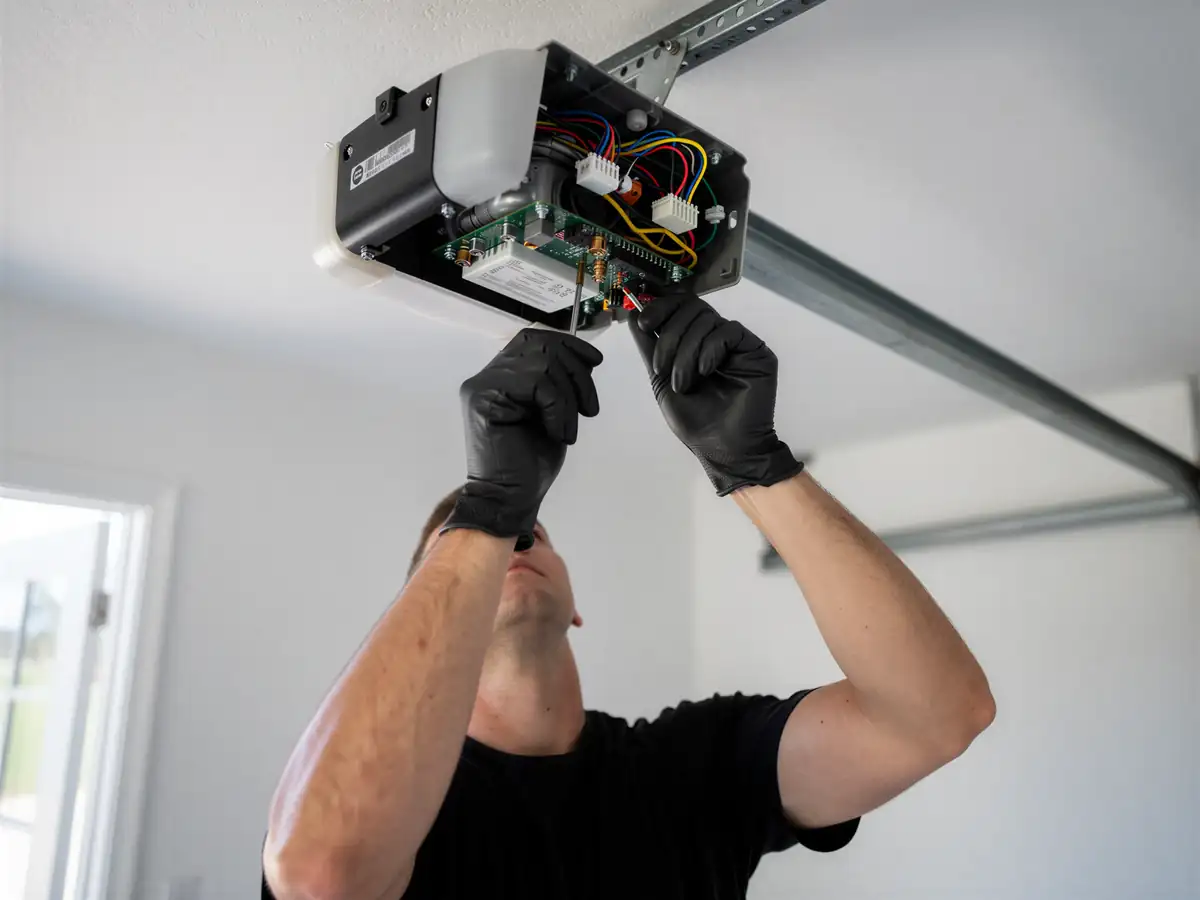
Opener issues get diagnosed separately from the mechanical hardware. A door that opens stiffly by hand but won't open with the remote usually isn't the same problem as a door that won't lift at all - and we don't charge to fix the hardware if the opener was the actual fault.
The Symptom
The most common complaint we hear from Fairburn is a door that's gotten loud
A grinding or popping sound partway through the cycle that wasn't there a year or two ago. On a door from the 2004 build window, that's usually the torsion spring starting to fatigue or the rollers wearing out of round, not the opener.
A second pattern is a door that reverses on its own partway down
Which on houses from this era is almost always a sensor alignment issue or a limit setting that's drifted, rather than anything structural. We check both before touching the spring, since replacing a spring doesn't fix a sensor problem.
Less common, but worth naming honestly
A door that won't move at all with a broken spring is not an emergency in the sense of damage getting worse by waiting a day. It's inconvenient and the car's stuck, but the hardware isn't failing further just sitting there. We'll say that plainly rather than push urgency that isn't real.
What It Costs
We don't publish a flat price for Fairburn because the job in front of us - a single torsion spring versus a full spring-and-cable-and-roller job versus an opener board - changes the number more than the address does. What we can tell you is what drives the cost: whether the part is one we carry on the truck or one we have to order, whether it's a single repair or several worn parts replaced together, and whether the door is a standard double garage size common across the 2004-era houses here or something larger.
Fairburn's median household income runs $89,276, well above the $61,454 median across the rest of the service area, and we've found that homeowners here more often choose to replace a full roller set or cable pair proactively rather than wait for the next part to fail - which can lower the total number of trips over the life of the door, even if any single visit costs more up front.
We'll give you the number for your door before we start, not after.