What Can Go Wrong
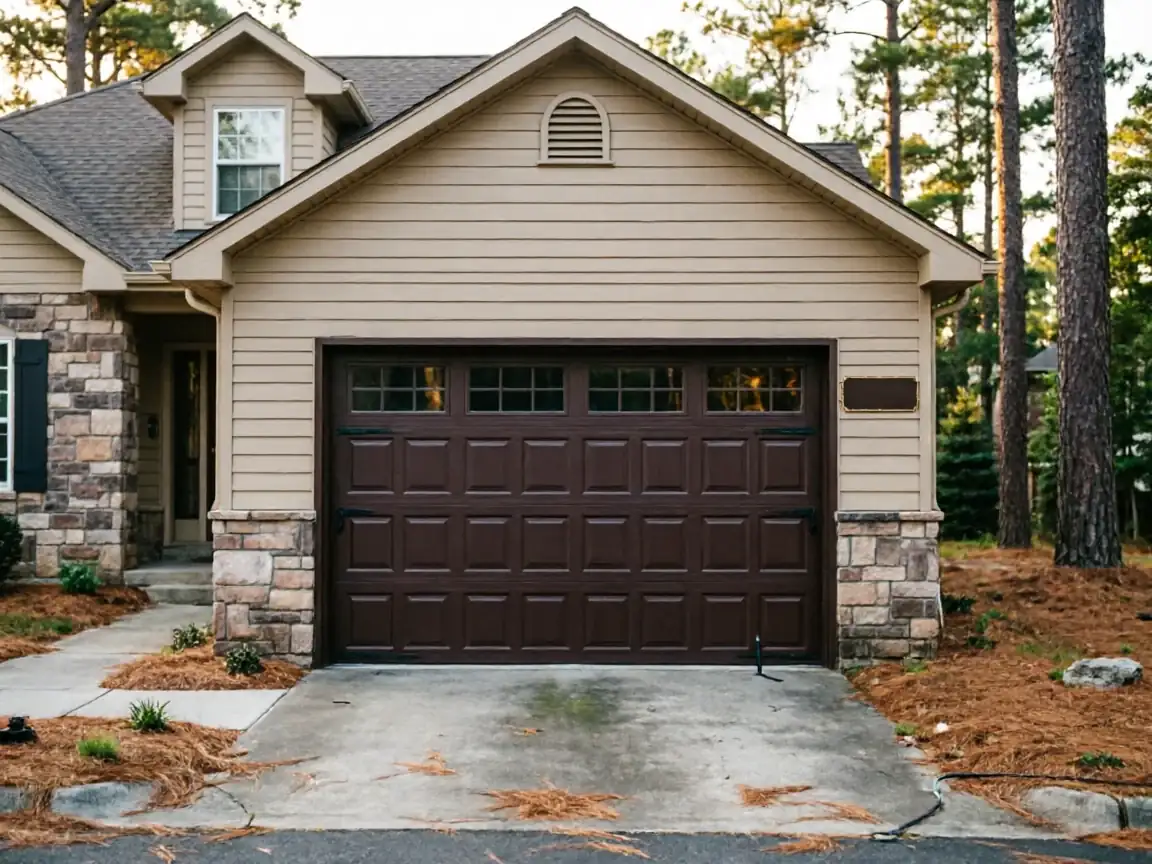
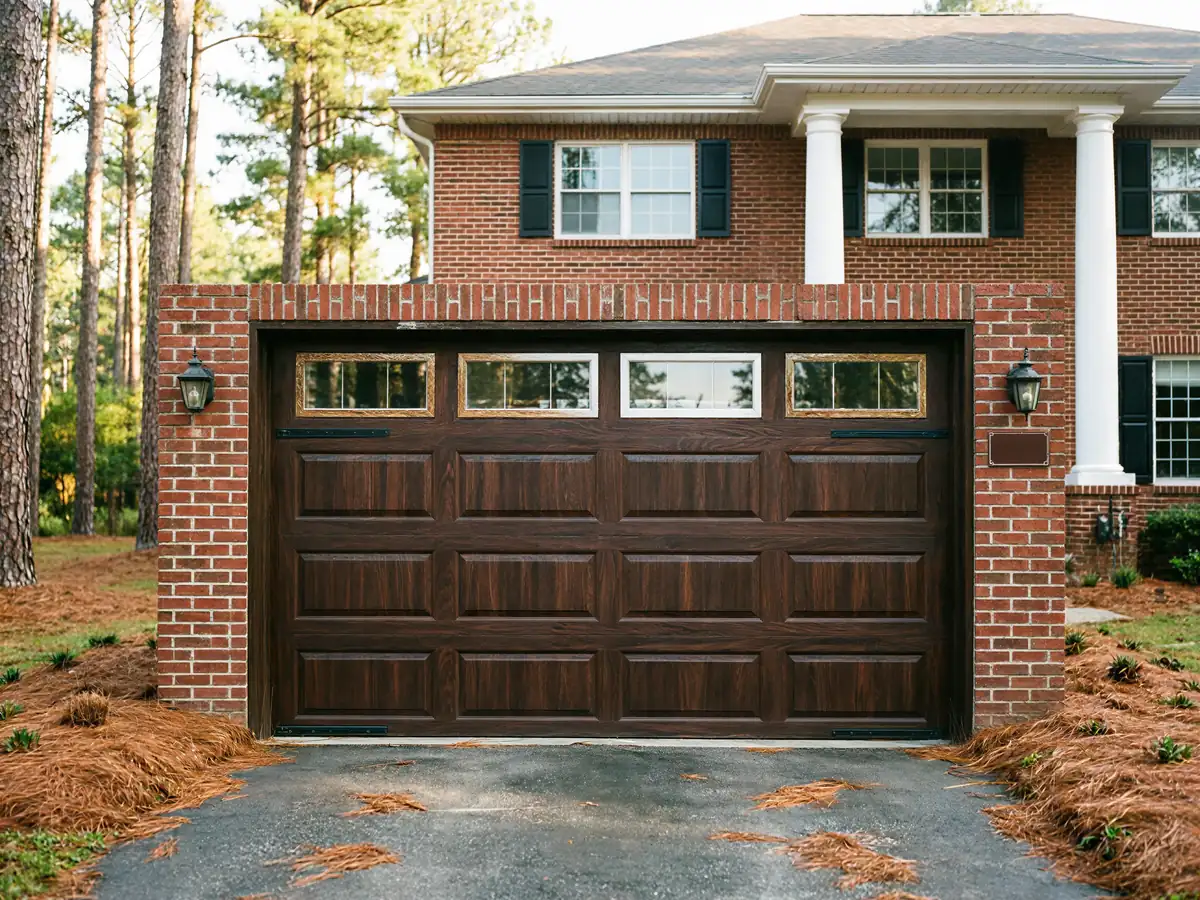
Most houses in Fairburn went up around 2004 - a good two decades newer than the typical home across the rest of our service area, where the median build year sits closer to 1988. That matters here because a huge share of these doors are still running on whatever rollers the builder bolted in back then. Nobody opens up a garage door track to check rollers unless something's already wrong, so a roller that's been spinning on the same stub shaft since 2004 is pushing the edge of its working life without anyone noticing.
Builder-grade doors from that era usually shipped with plain steel rollers or basic 7-ball nylon - not the sealed-bearing kind. Steel rollers wear the track grooves and get loud as they go. Cheap nylon ones develop flat spots or crack outright, especially after years of freeze and thaw. Either way, the roller doesn't fail alone - it drags on the hinge it rides in, and a hinge with an elongated roller hole is a different, pricier repair. Catching the roller before it reaches that point is the whole point of replacing them early rather than waiting for a full seizure.
How Long It Takes
We run this job out of Fayetteville, about 10 miles from Fairburn
So there's drive time built into any visit - we're not based in town and don't pretend otherwise. Once the truck's on site, roller replacement itself is one of the quicker jobs we do: pulling and swapping a full set of rollers on a standard double door is typically under an hour once the door's secured and the track is clear.
- 10 miles
What can stretch the visit is condition, not count
If the original hinges have worn oval from twenty years of a steel roller riding in them, we're also replacing hinges, and that adds time. If the roller problem has already let a panel drop off-track, straightening or re-hanging that panel comes first. We'll always tell you up front if we find something past the roller itself before we start swapping parts, rather than surprise you with it on the invoice.
Parts We Carry
For doors from the Fairburn build era, we stock both nylon and steel roller options, since what's on the door usually dictates what makes sense to put back. Sealed-bearing nylon rollers run quieter and don't wear the track the way bare steel does - a reasonable upgrade on a door that's still structurally sound at twenty years old. Steel rollers with ball bearings are the stronger pick on heavier doors, insulated panels especially, where nylon can flat-spot under the weight over time.
We carry stem lengths and wheel diameters to match standard residential track, since swapping in the wrong stem length is how a roller ends up binding in the track within a year. What we don't stock is the exact builder-spec roller some tract-home doors shipped with in the early 2000s - those were often a cheap, undersized part to begin with, and replacing like-for-like usually isn't the right call anyway.
How We Fix It
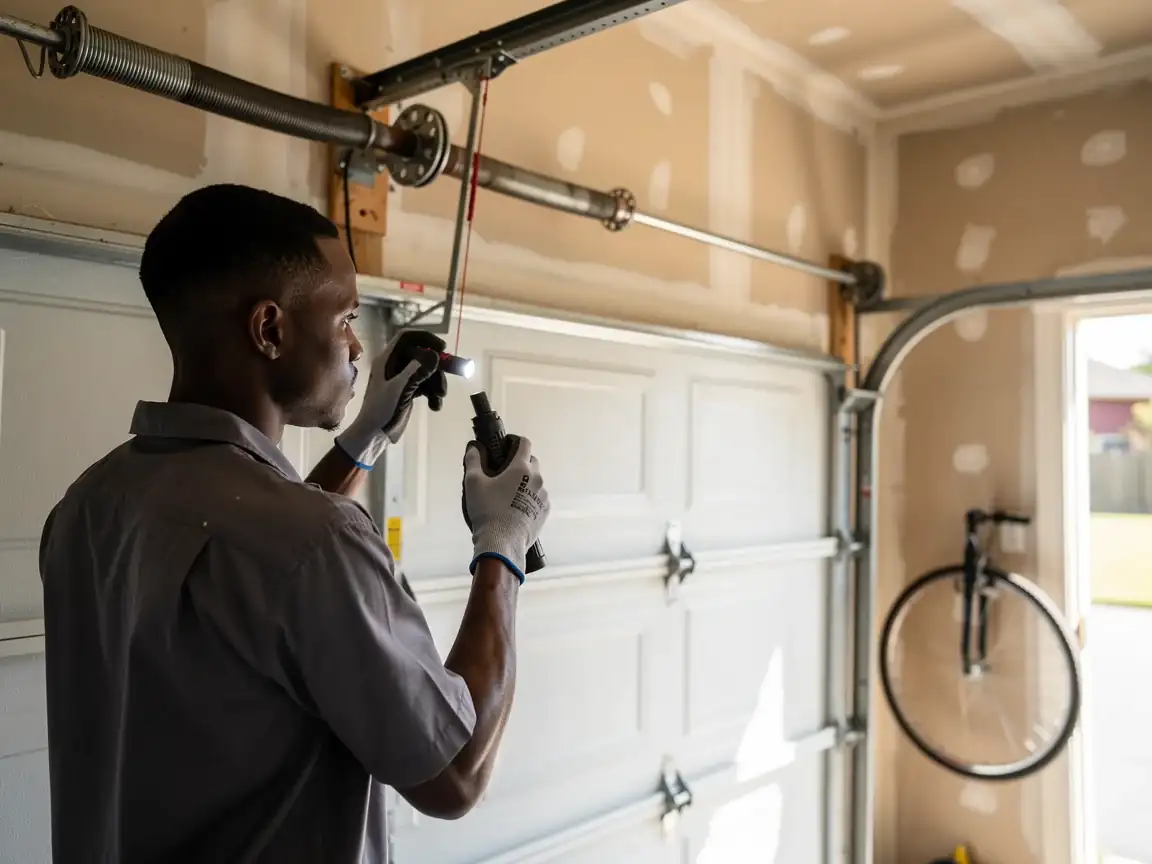
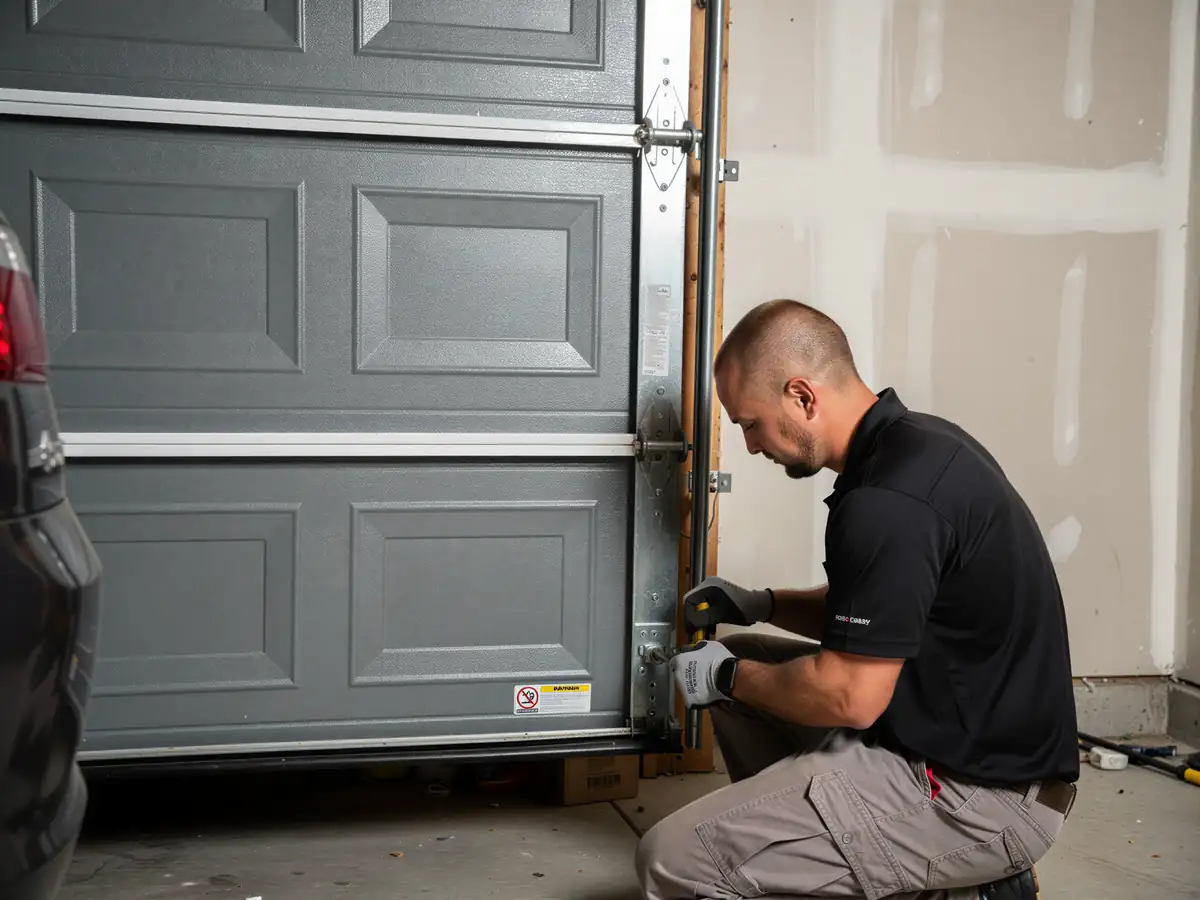
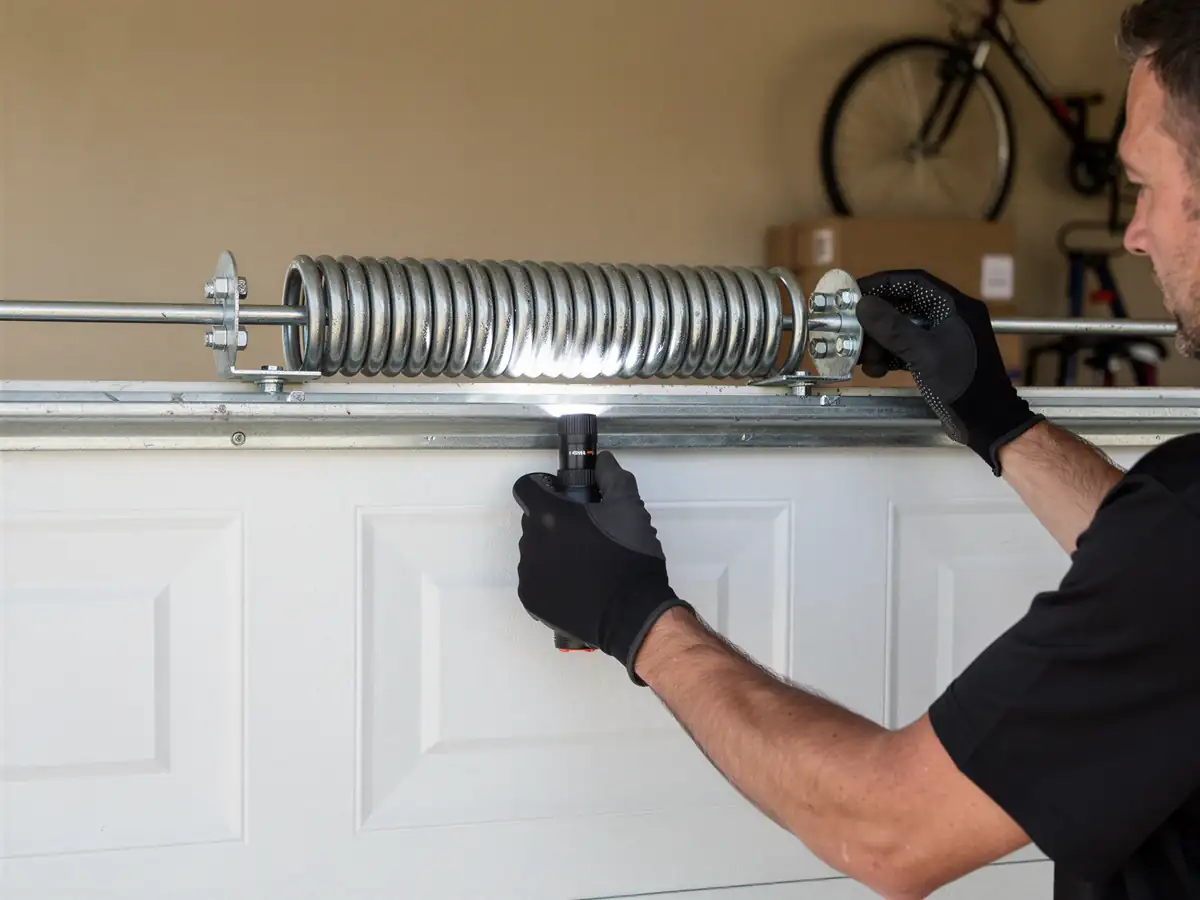
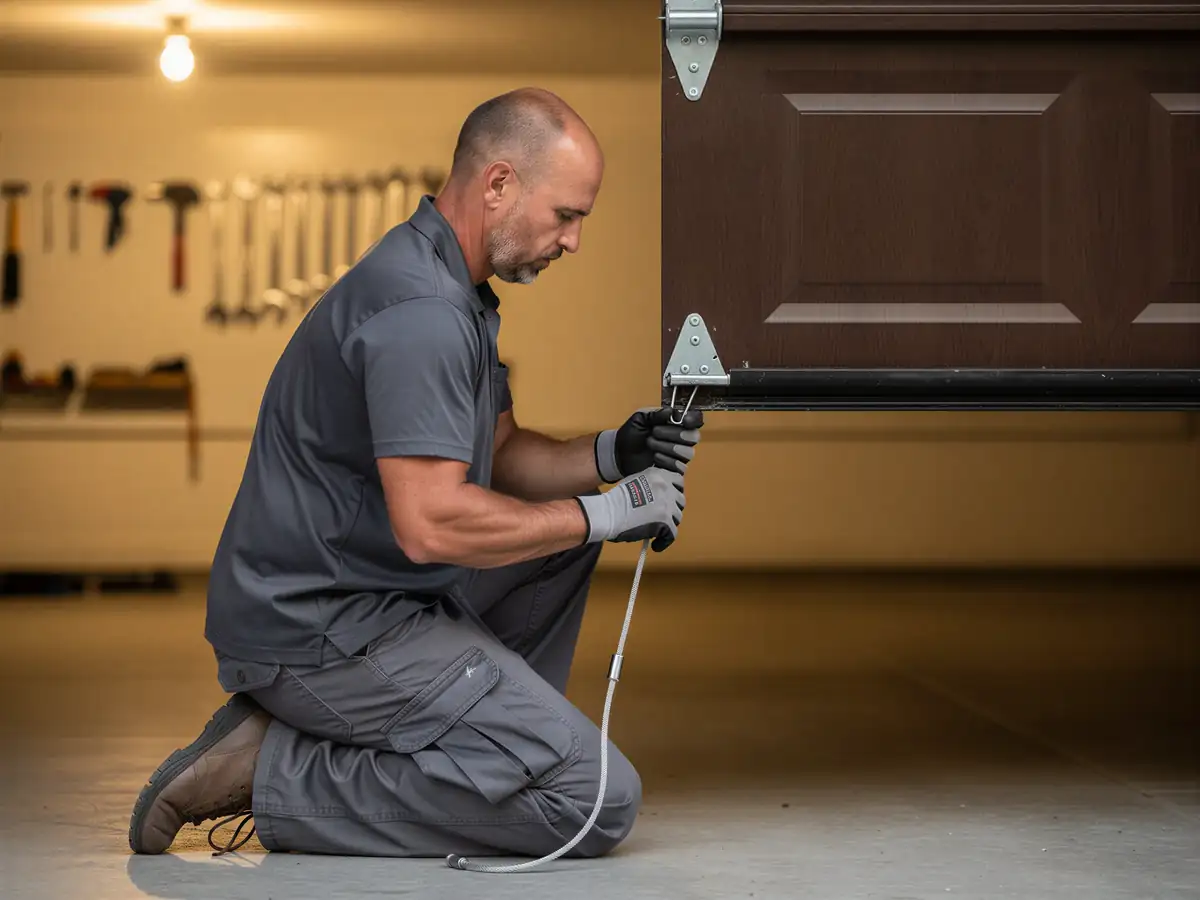
We start by releasing tension safely - rollers never get pulled with the door under spring load, full stop. With the door secured, we walk the track top to bottom checking for wear grooves, rust, or bent sections, since a bad roller sometimes leaves damage behind that needs addressing in the same visit.
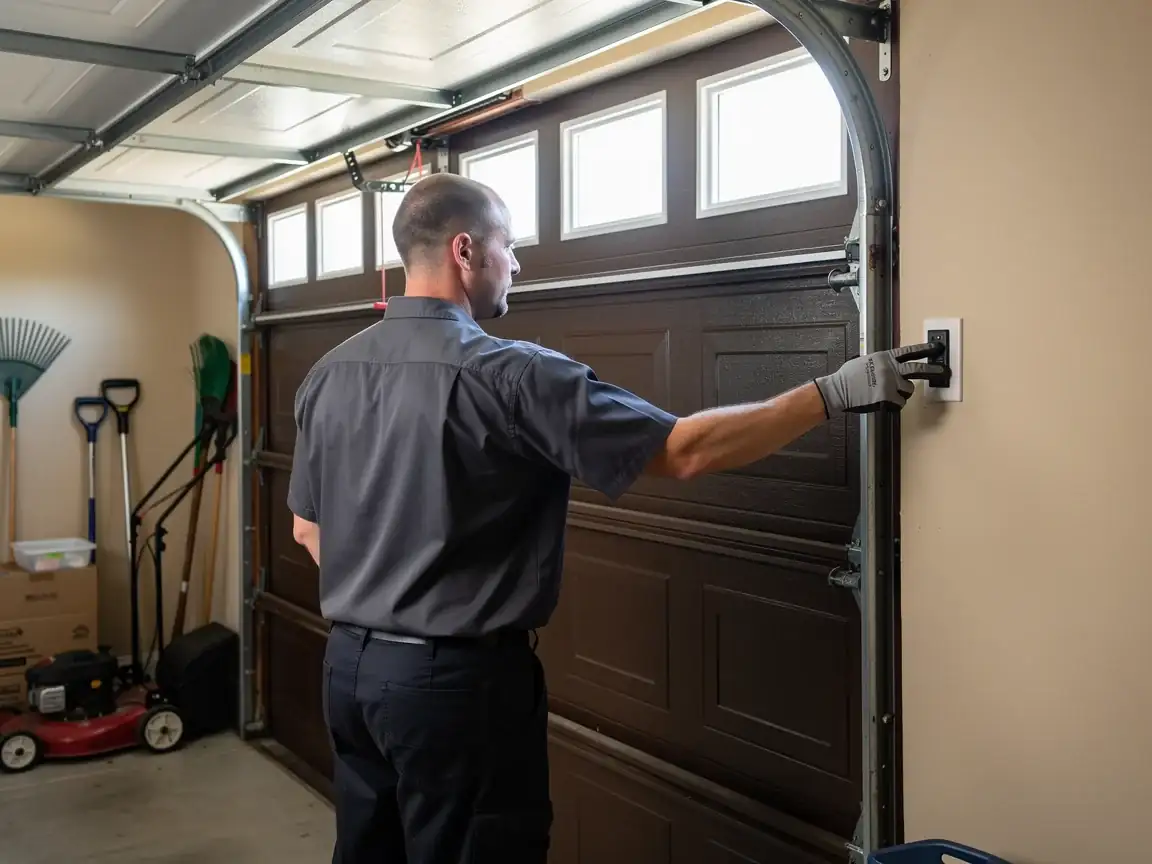
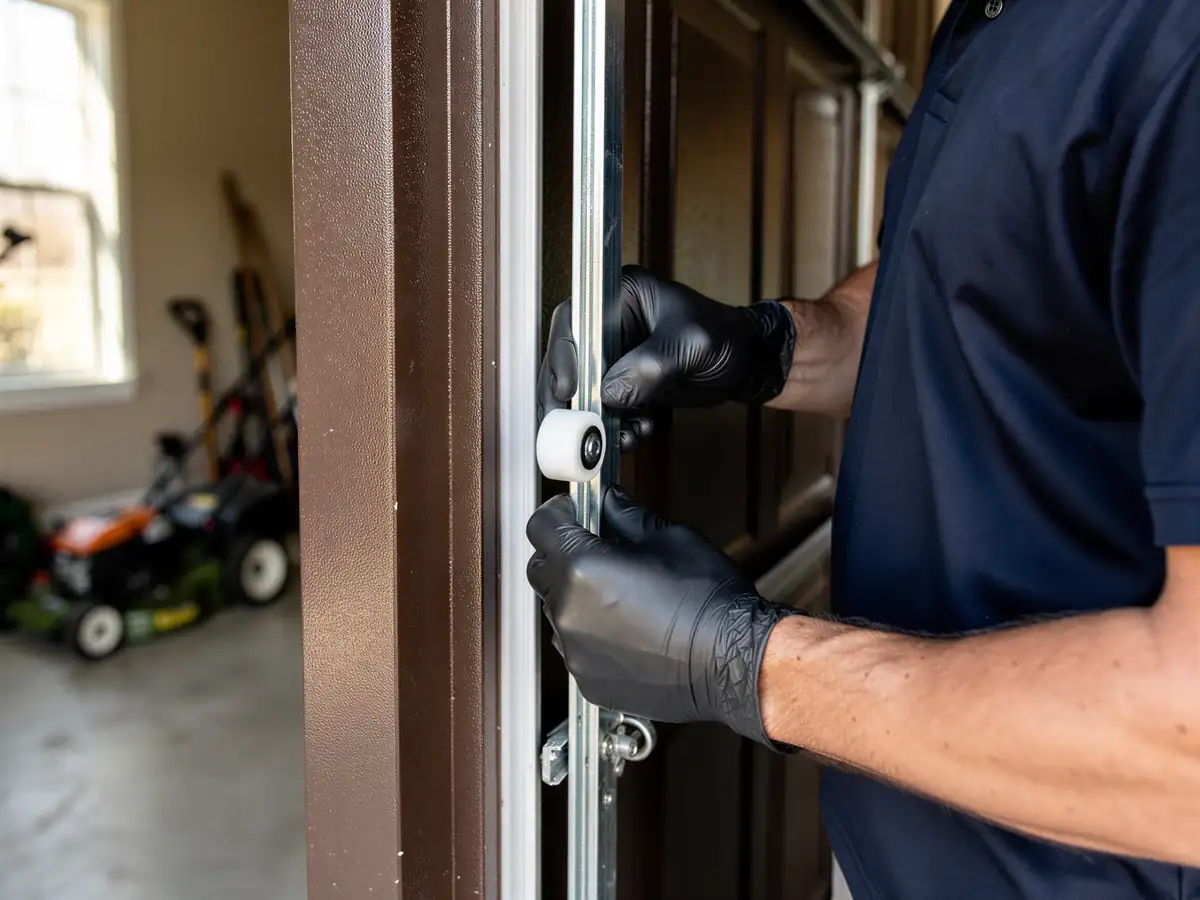
Each roller comes out one at a time so the door stays supported in the track rather than coming loose all at once. We check the hinge each roller sits in while it's out - on a door from Fairburn's 2004-era stock, that hinge has usually never been touched, and if the roller hole has worn oval, we'll flag it for replacement rather than reinstall a new roller into a hinge that will chew through it again. Once the full set is in, we run the door through several open-close cycles under power and by hand, listening for anything still off before we call it done.
The Symptom
The giveaway is almost always sound before it's movement
A worn roller makes a rhythmic grinding or clicking as it turns - one knock per rotation, getting louder as the flat spot or wear deepens. On a door that's run smooth and quiet since 2004, that new noise showing up is usually the roller, not the opener.
You might also see the door hesitate or jerk slightly as it passes the spot where a bad roller catches in the track
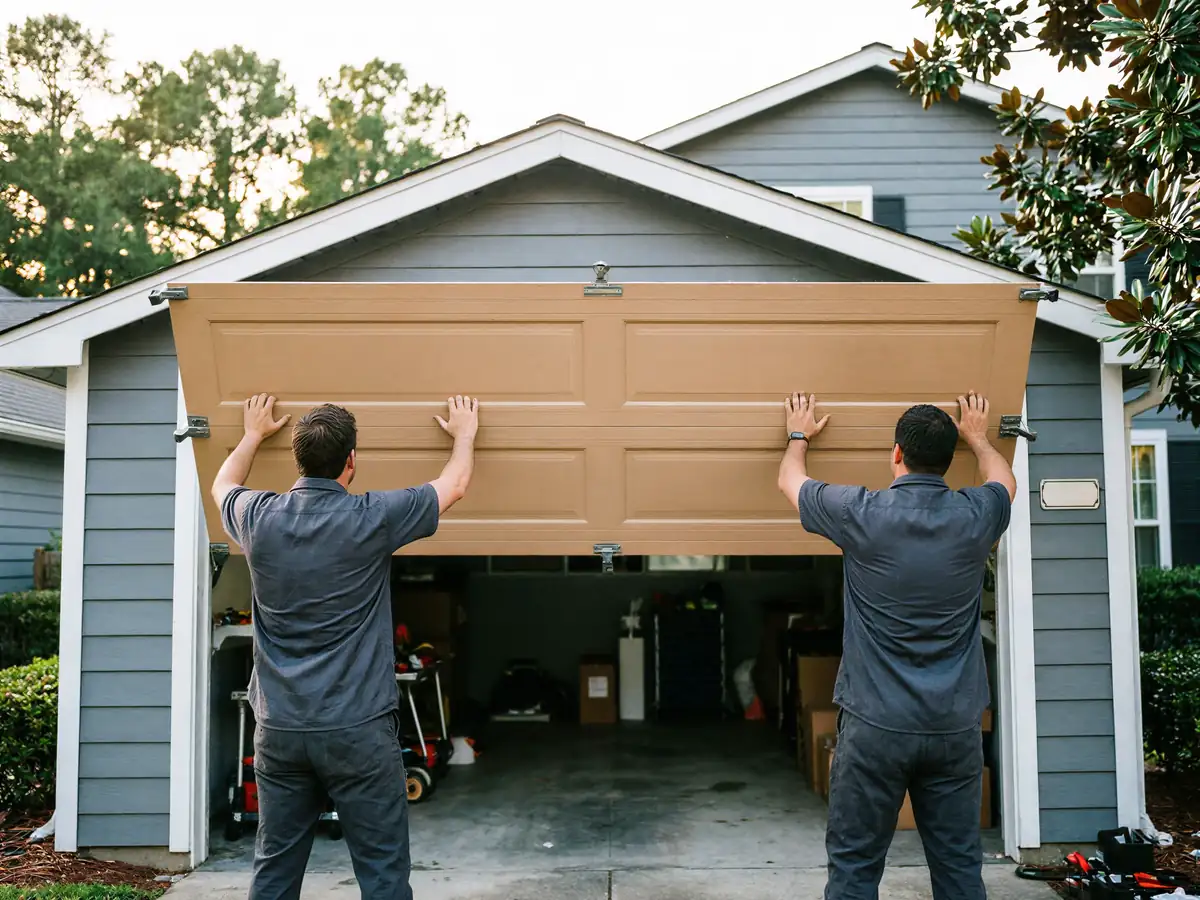
In the worst cases a cracked nylon roller comes apart entirely, and a panel will visibly sag or lean at one corner inside the track. That's not an emergency repair in the sense of danger to anyone, but it does mean the door shouldn't keep cycling until it's looked at - a roller that's already broken apart lets the panel ride unevenly, and that stresses the hinge, the track, and eventually the opener trying to pull it straight.
What It Costs
We don't have a posted price to quote here - cost depends on whether you need a full set of rollers or just a few, and whether nylon or steel makes more sense for your door. What we can tell you is what moves the number: the roller type, whether any hinges need replacing alongside them, and whether the track itself needs straightening from wear the old rollers caused.
One honest note - if your door is already showing track damage or a bent panel from a long-failed roller, sometimes the smarter spend is addressing that first rather than just dropping in new rollers and calling it fixed. We'll tell you straight if that's where your door is at rather than selling you a roller swap that won't hold.