Why This Fails Locally
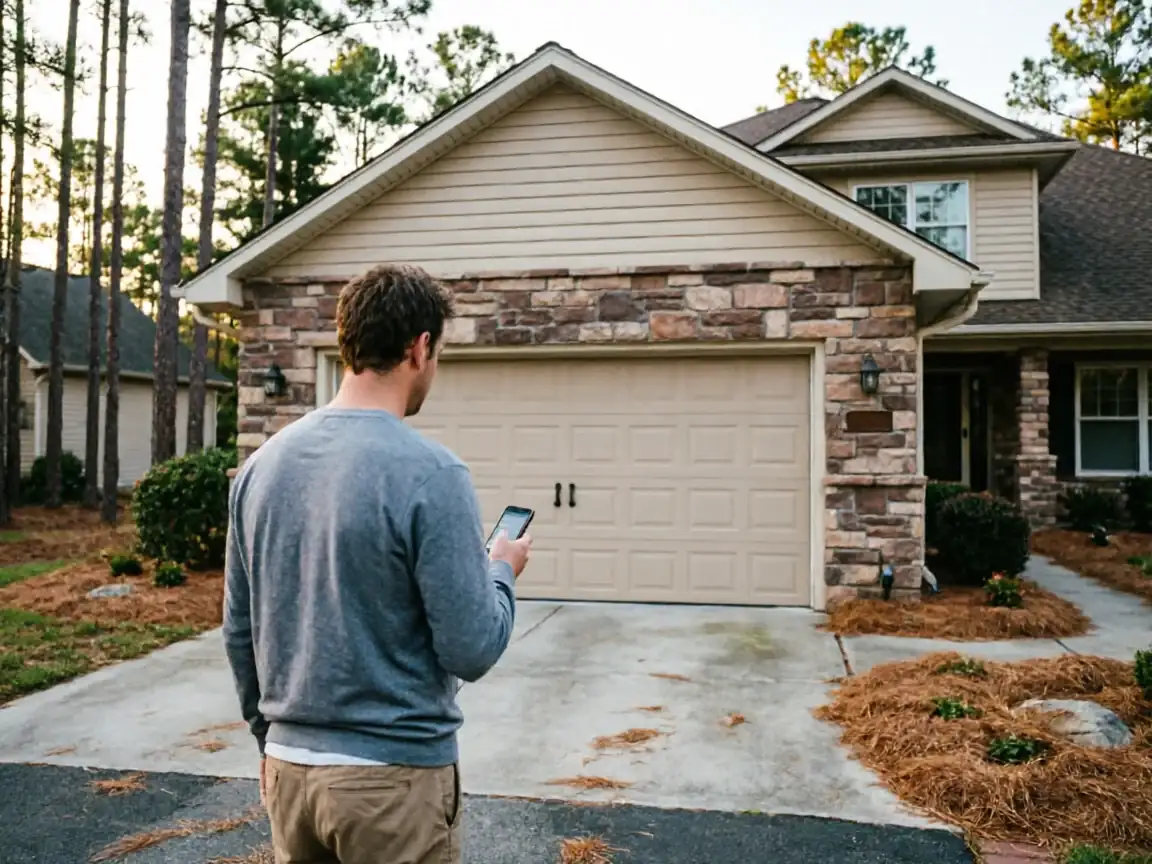
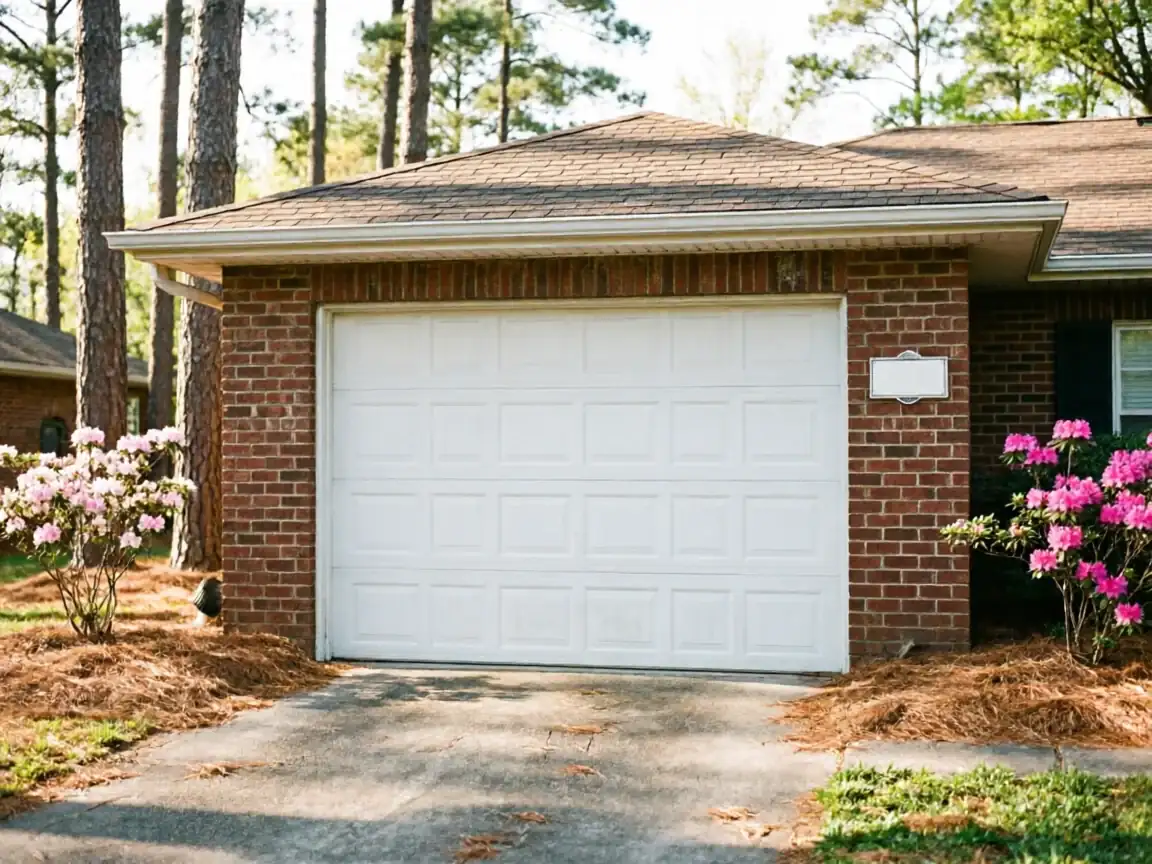
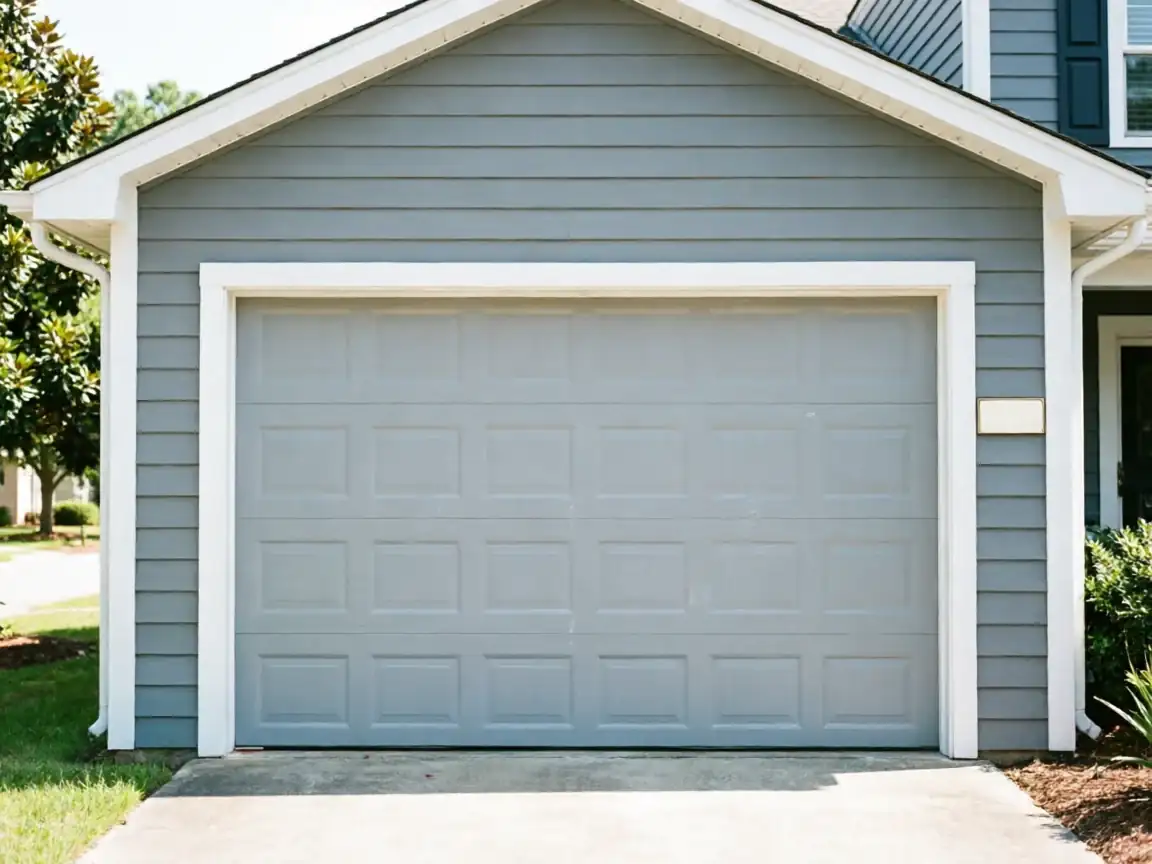
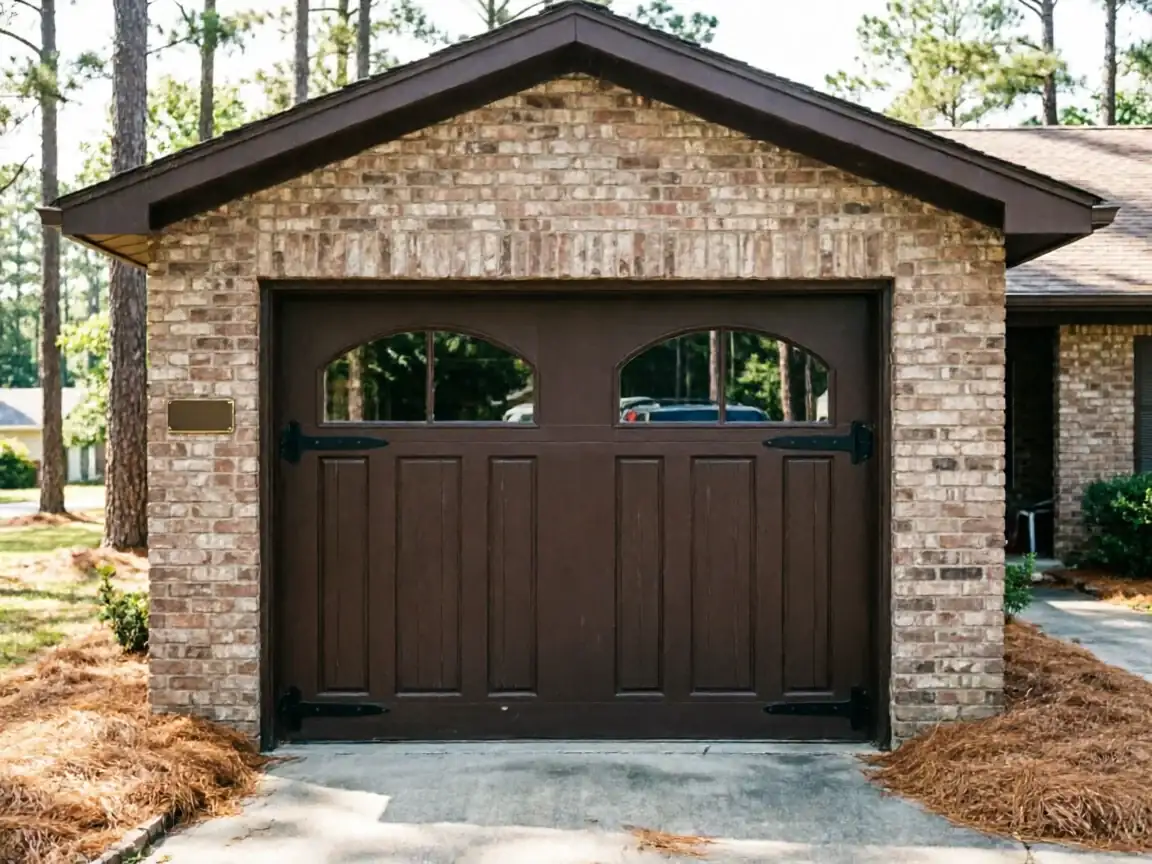
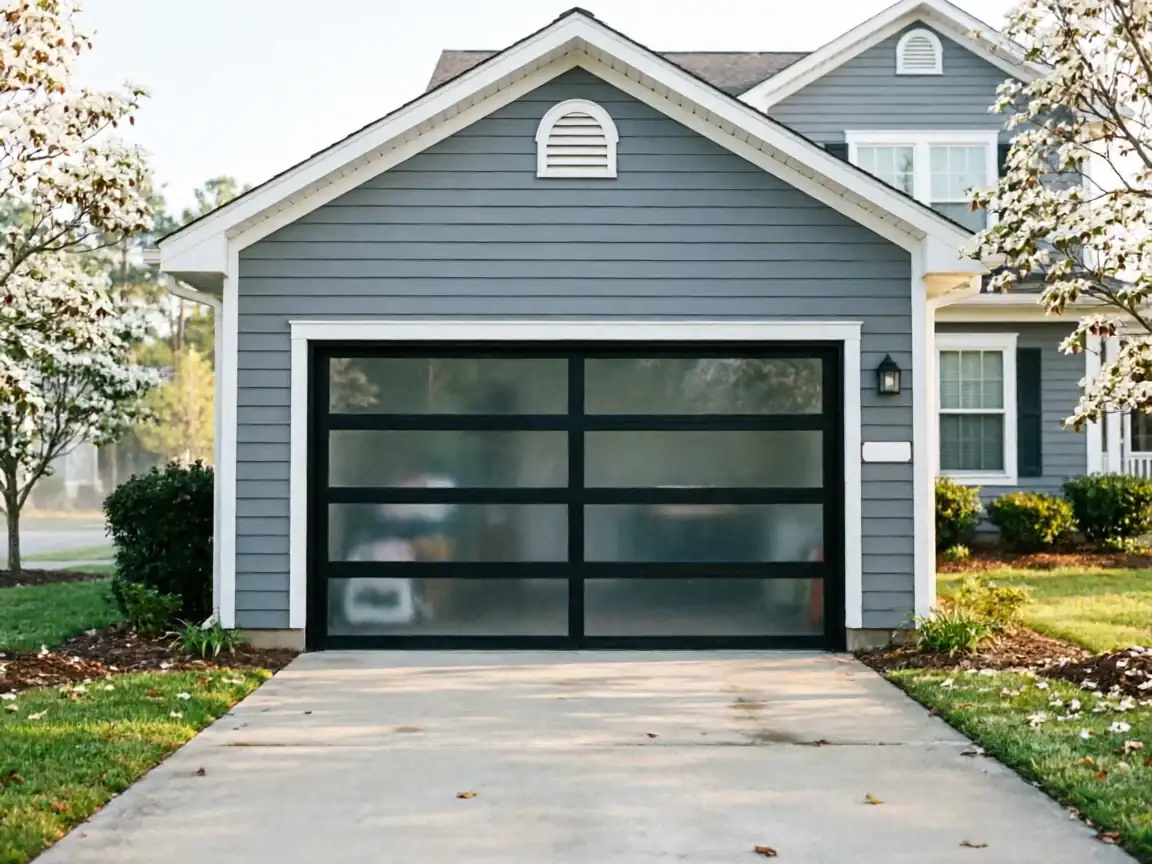
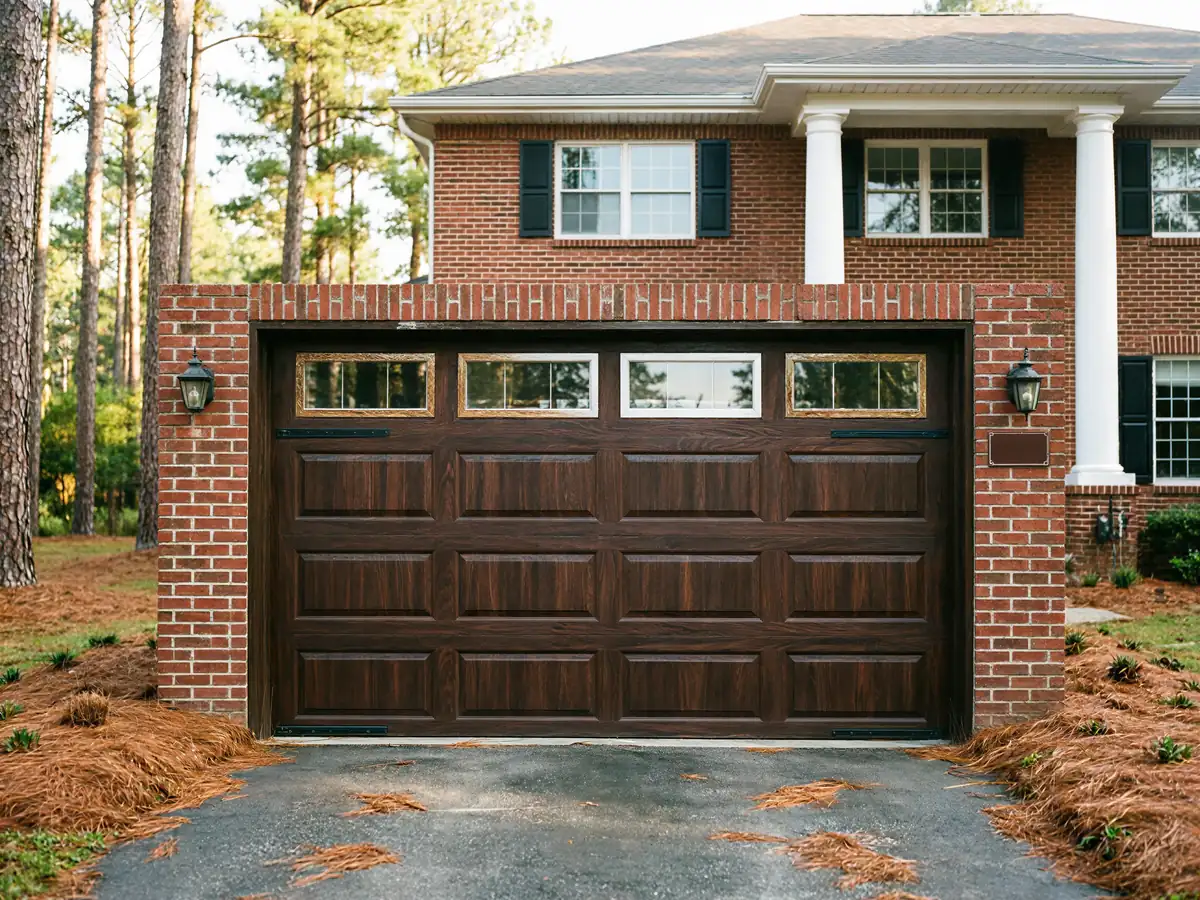
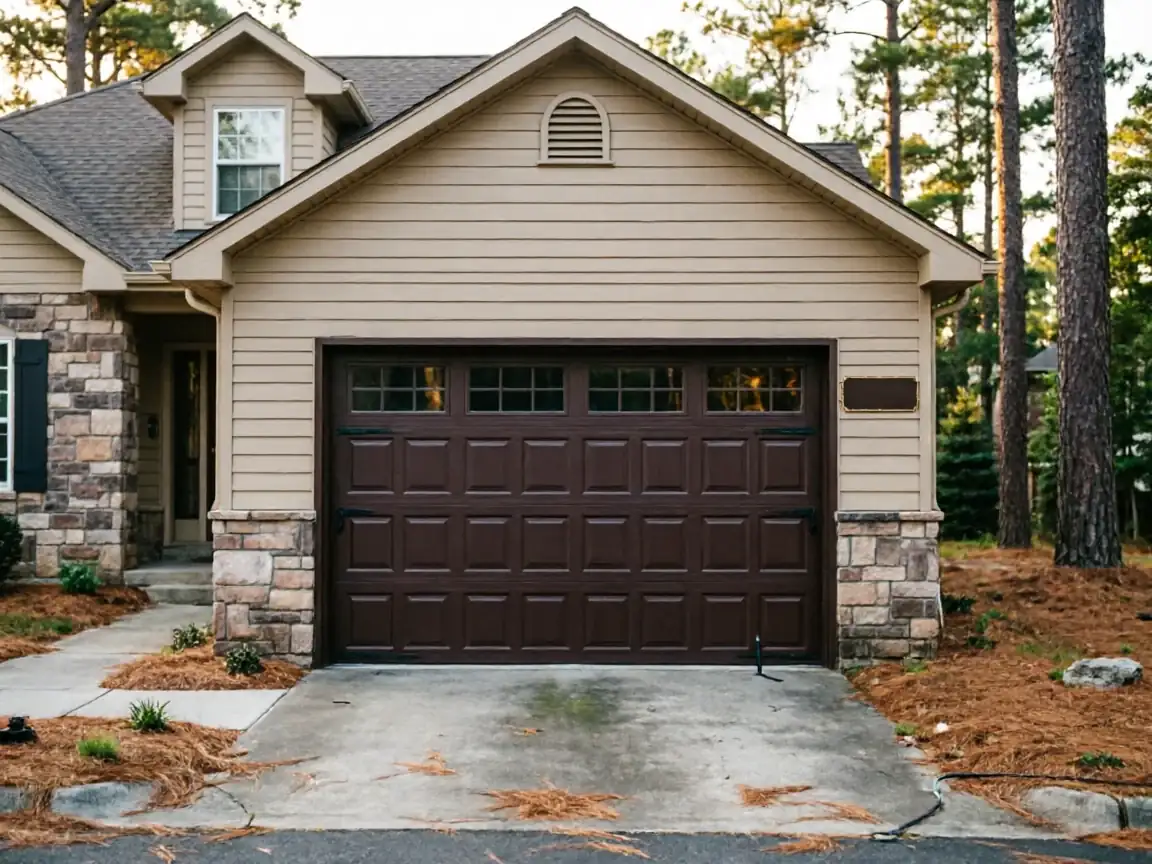
Lovejoy sits about 9 miles from Fayetteville, and the build year here tells a different story than most of the rest of the territory. Across the wider service area the median house went up in 1988, with stock spanning 1961 to 2007. Lovejoy skews to the newer end of that range, with a median build year around 2007. That's not a small gap. A house built in the late '80s often still has its original hardware - a door that's been serviced piecemeal for decades. A house built closer to 2007 almost always went up with a builder-grade steel sectional door on standard-lift torsion springs and a chain-drive or belt-drive opener installed at the same time as the frame.
That matters because builder-grade parts are sized to a spec, not to the house. The springs are often undersized for the door weight once insulation or a second layer gets added later, and the opener's travel limits get set once at installation and rarely touched again. When something fails in a 2007-era Lovejoy house, it's usually that factory-spec mismatch finally catching up, not decades of wear the way it is in the older pockets of the service area.
What It Costs
We don't have a published price list for this page, and we're not going to invent one
What we can tell you: a torsion spring job on a standard double door costs differently than a full opener swap, and the right number depends on spring size, door weight and whether the drum or cable needs replacing too. If you want a number, we can give you one on-site or over the phone once we know what's actually on the door - guessing at a price before seeing the hardware isn't honest service, it's a sales tactic.
One thing worth knowing going in
Newer builder-grade doors in Lovejoy are sometimes cheaper to fix than you'd expect, because the parts are common off-the-shelf sizes rather than the odd legacy hardware you find on older homes elsewhere in the service area. That's one of the few advantages of a 2007 build year.
Parts We Carry
Because Lovejoy's housing stock leans newer, the parts most likely to fail here are the ones that come standard with late-2000s builder packages: 2-inch torsion springs sized for a single-car or double-car steel door, standard 7-foot track sections, nylon rollers, and the lighter-gauge lift cables that pair with those springs. We stock these sizes because they match what's actually on these doors, not because they're universal.
What we don't carry on the truck: parts for older one-piece doors or side-mounted torsion setups, which are more common in the sections of the service area built before 1988. If your Lovejoy house is an exception - an older build with legacy hardware - tell us when you call so we bring the right stock instead of making a second trip.
How We Fix It
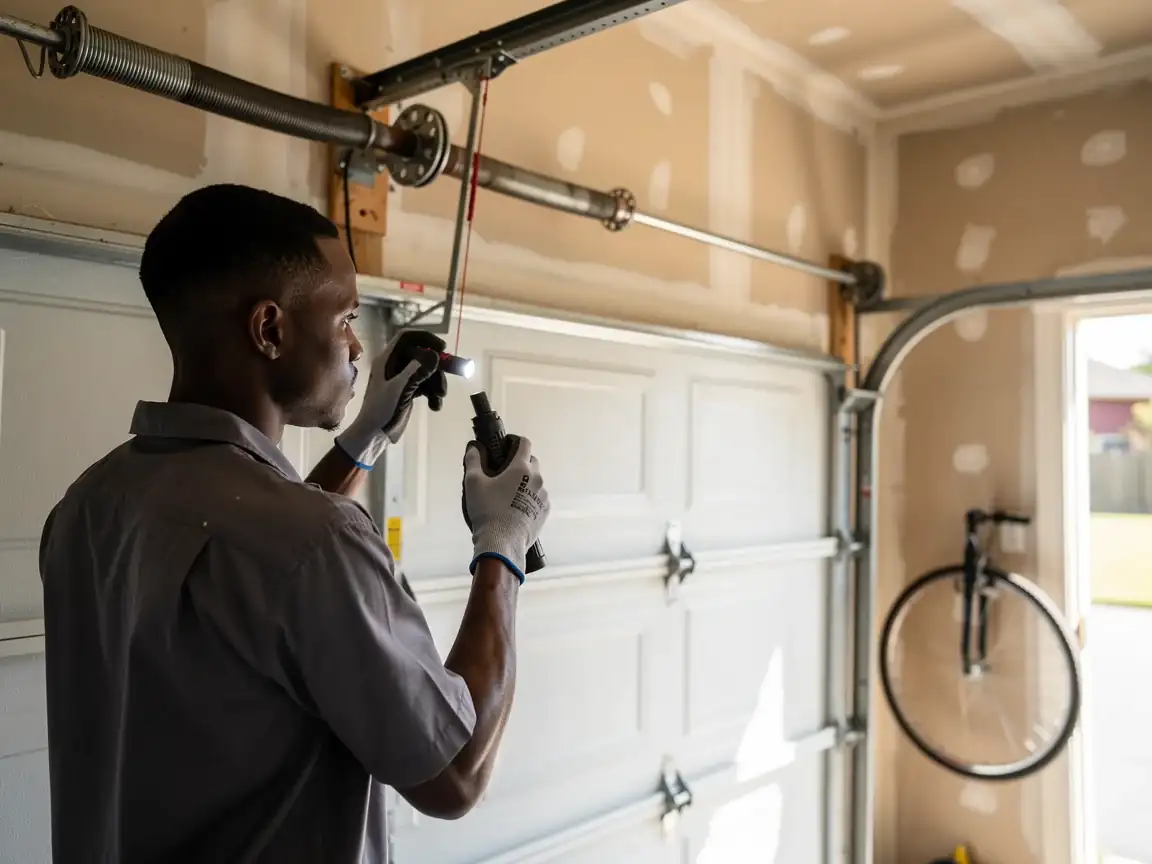
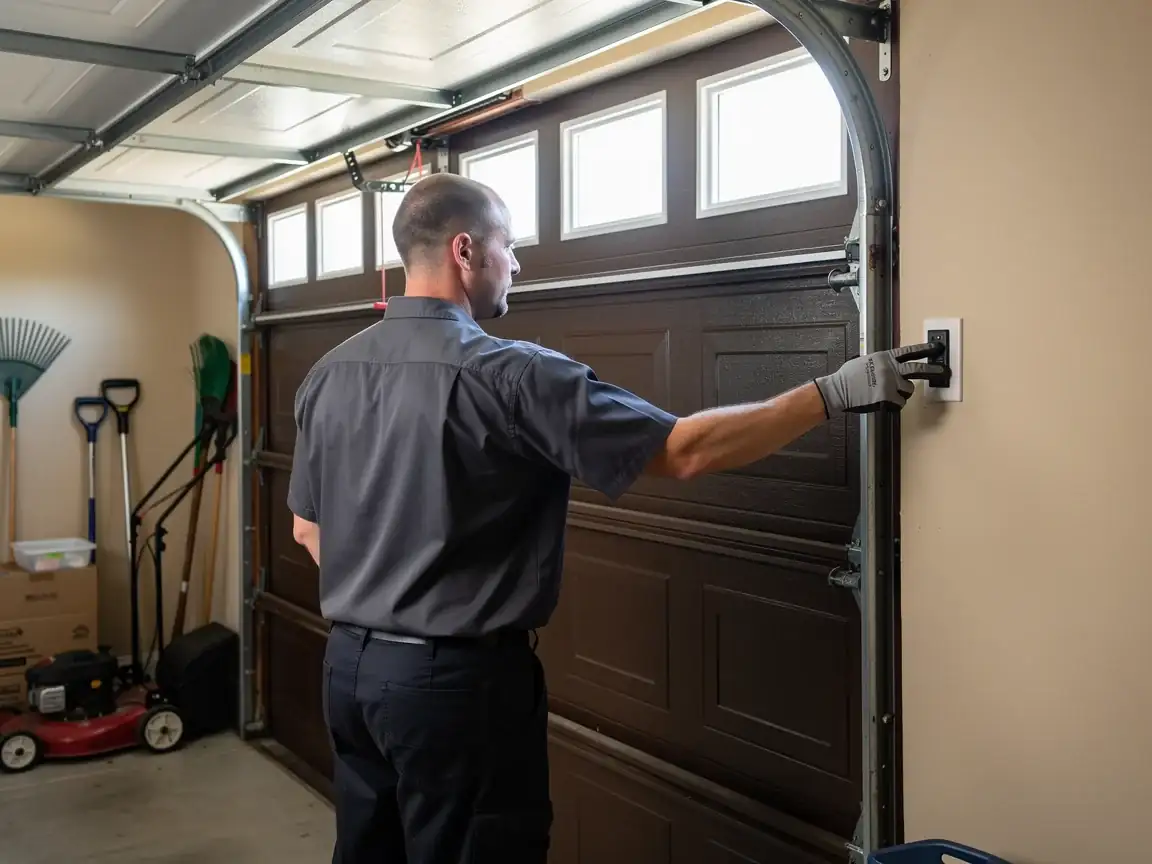
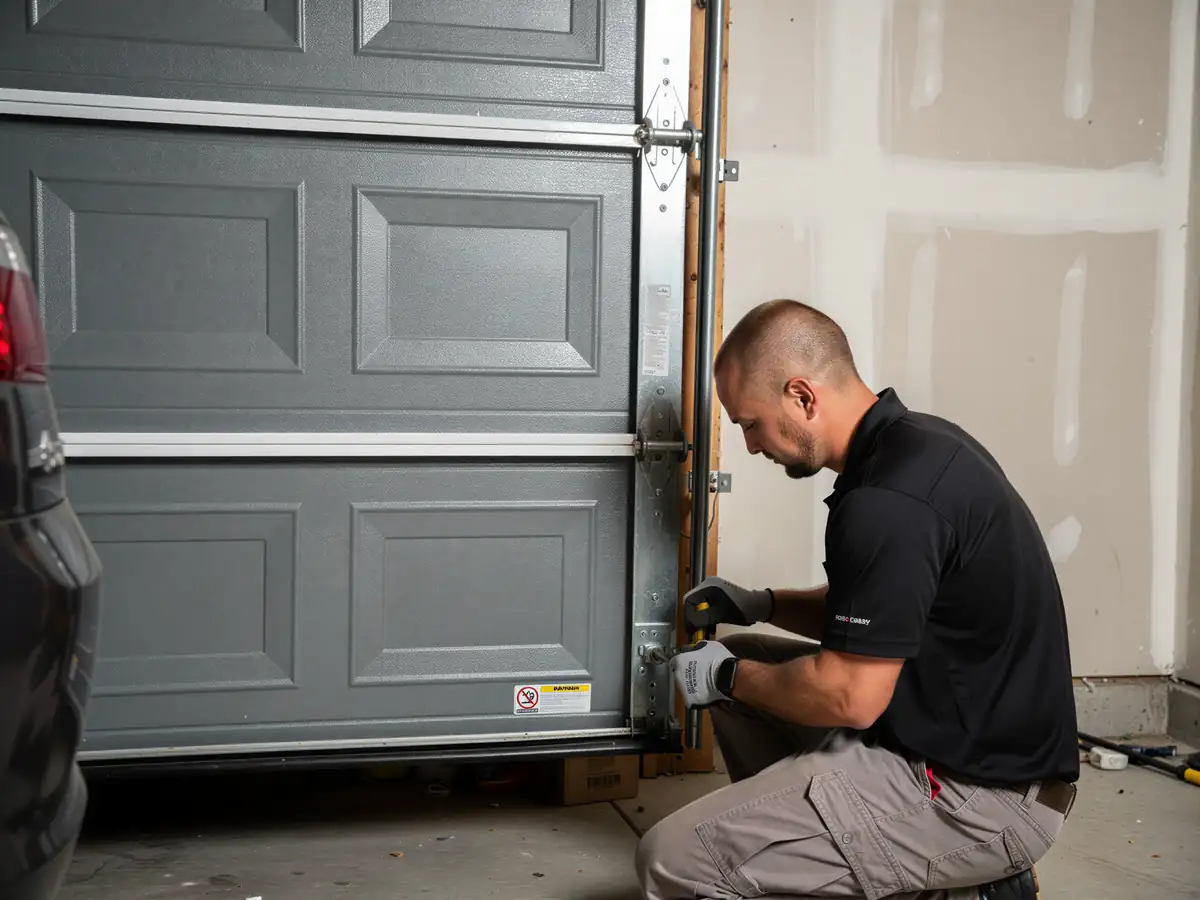
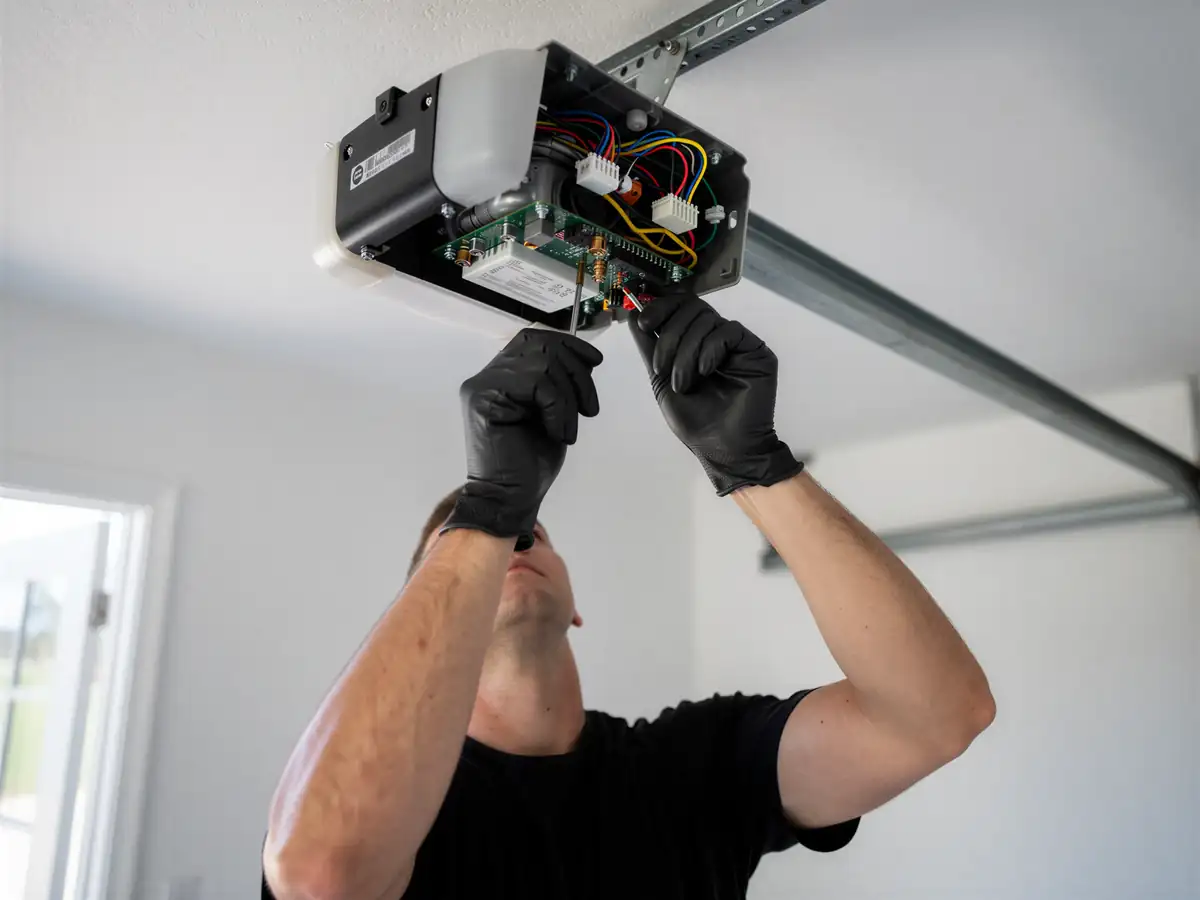
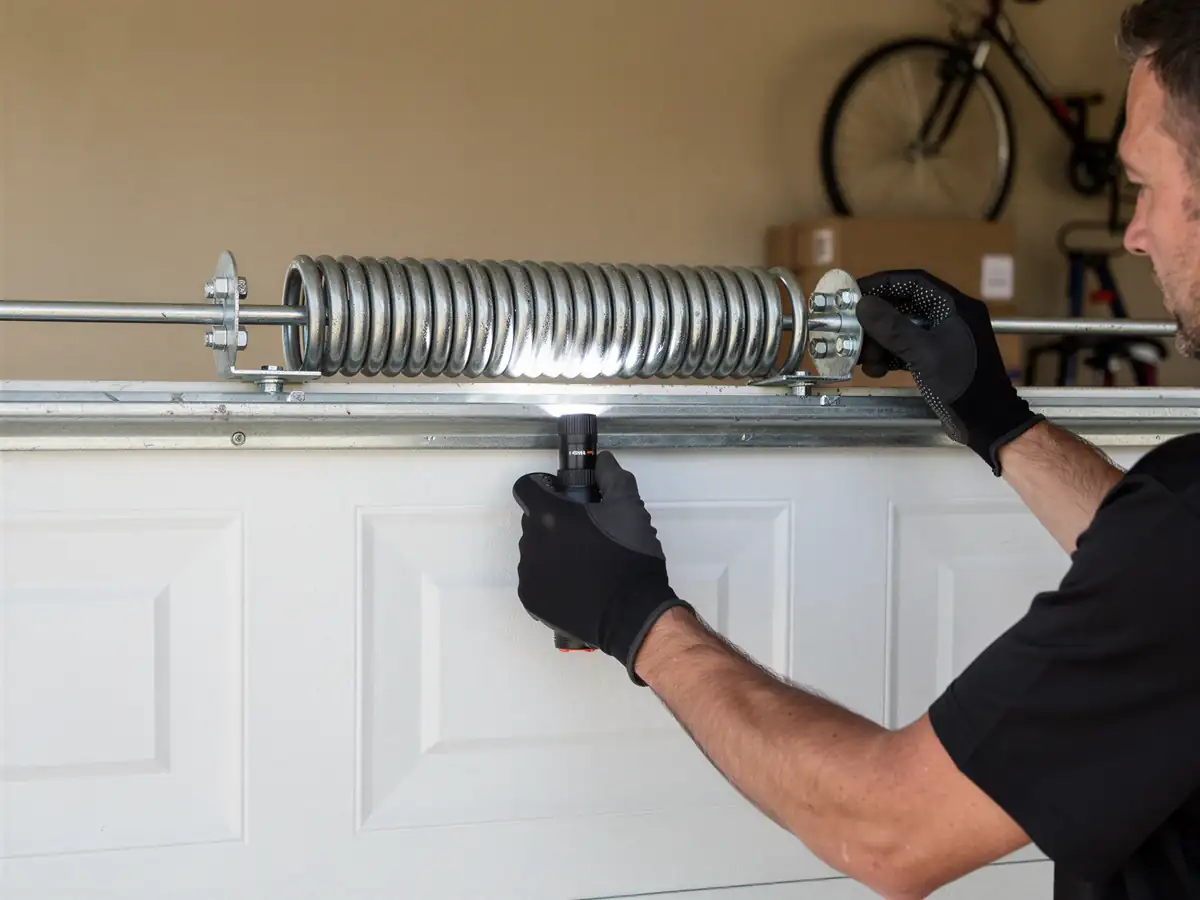
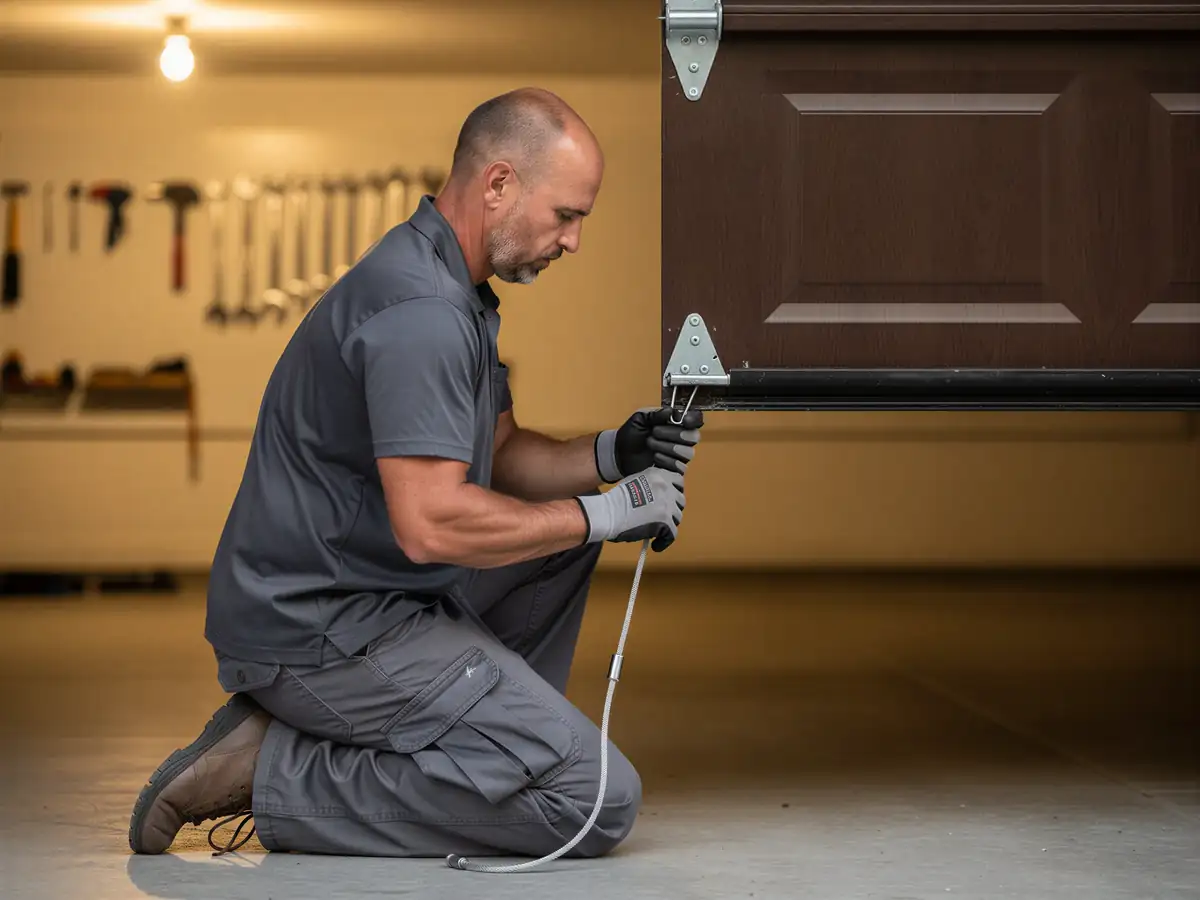
For a spring failure on a 2007-era door, the job is usually straightforward: pull the broken spring, match the new one to the door weight and wind tension (not just swap like-for-like, since builder-grade springs are sometimes undersized to begin with), and check the opener's force and limit settings while we're there. Builder installs often have the opener's auto-reverse force set too high, which is a safety issue we'll flag and adjust even if that's not why you called.
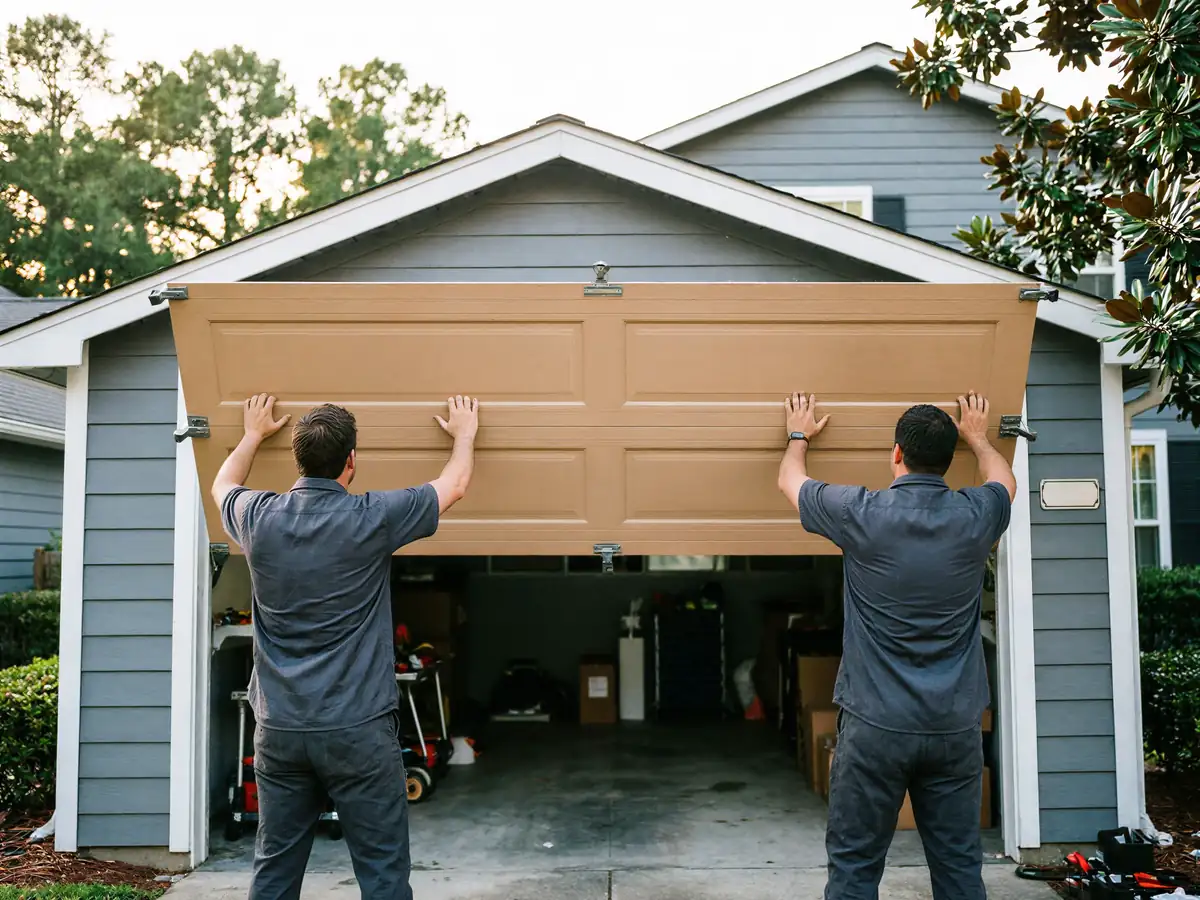
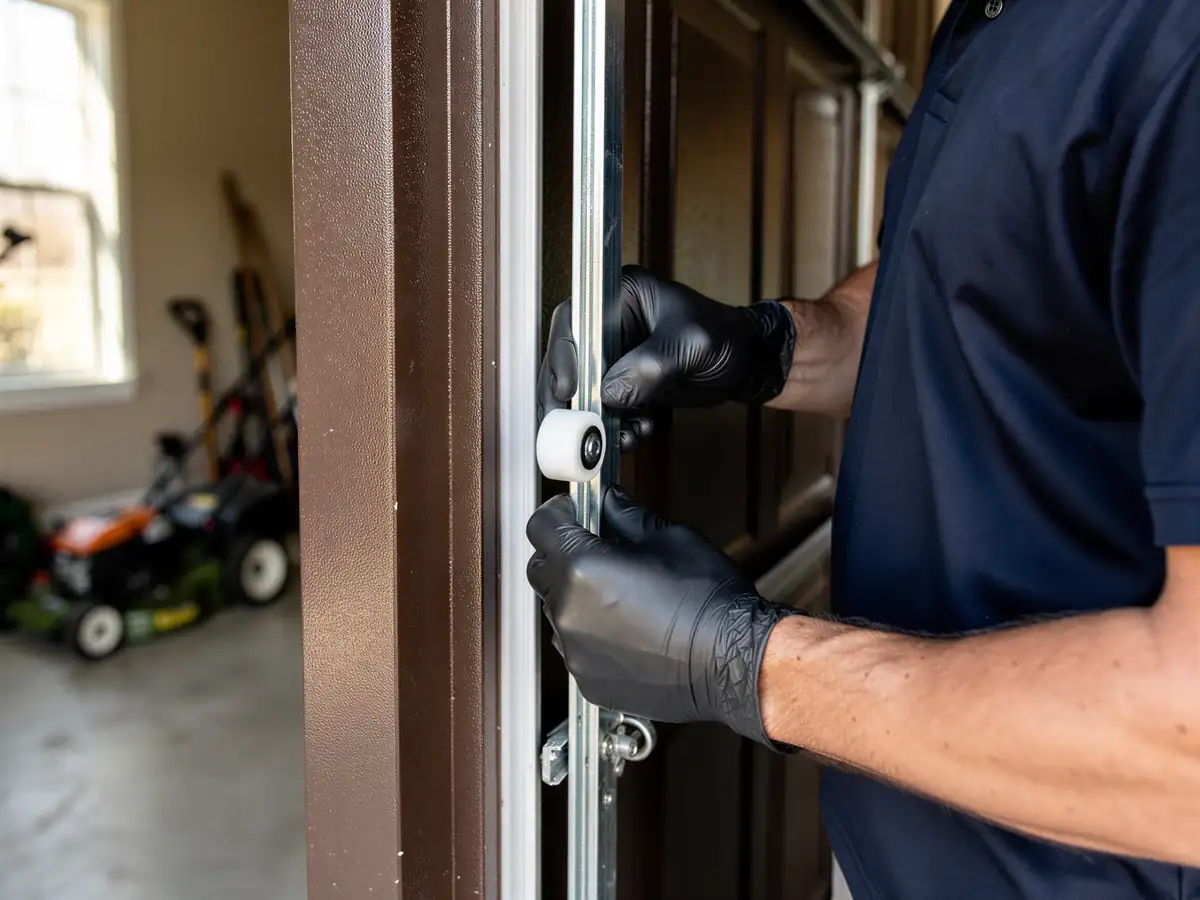
For a track or roller problem, we check whether the track got bent during the original install - not uncommon on tract-built homes where multiple doors go up on the same schedule - before we just swap rollers and call it done. The honest limitation here: if a door's lift cable has jumped the drum and the drum itself is scored, we'd rather replace the drum than file it smooth, even though the smoothing job looks cheaper on paper. A filed drum fails again.
The Symptom
In Lovejoy, the complaint we hear most from newer builds is the door reversing partway up
Or slamming the last few inches down - both symptoms of opener settings that were never recalibrated after the original builder install. A second common one: a door that feels heavy to lift by hand, which on a 2007-spec door usually means the spring was undersized from day one rather than worn out from age.
That's different from what you'd hear from the older sections of the broader service area
Where the complaint is more often a cable that's frayed through after 30-plus years or a one-piece door that's simply reached the end of its hardware's life. If your Lovejoy door is doing something that doesn't match either pattern, say so when you call - it's worth knowing before a truck makes the 9-mile drive out.