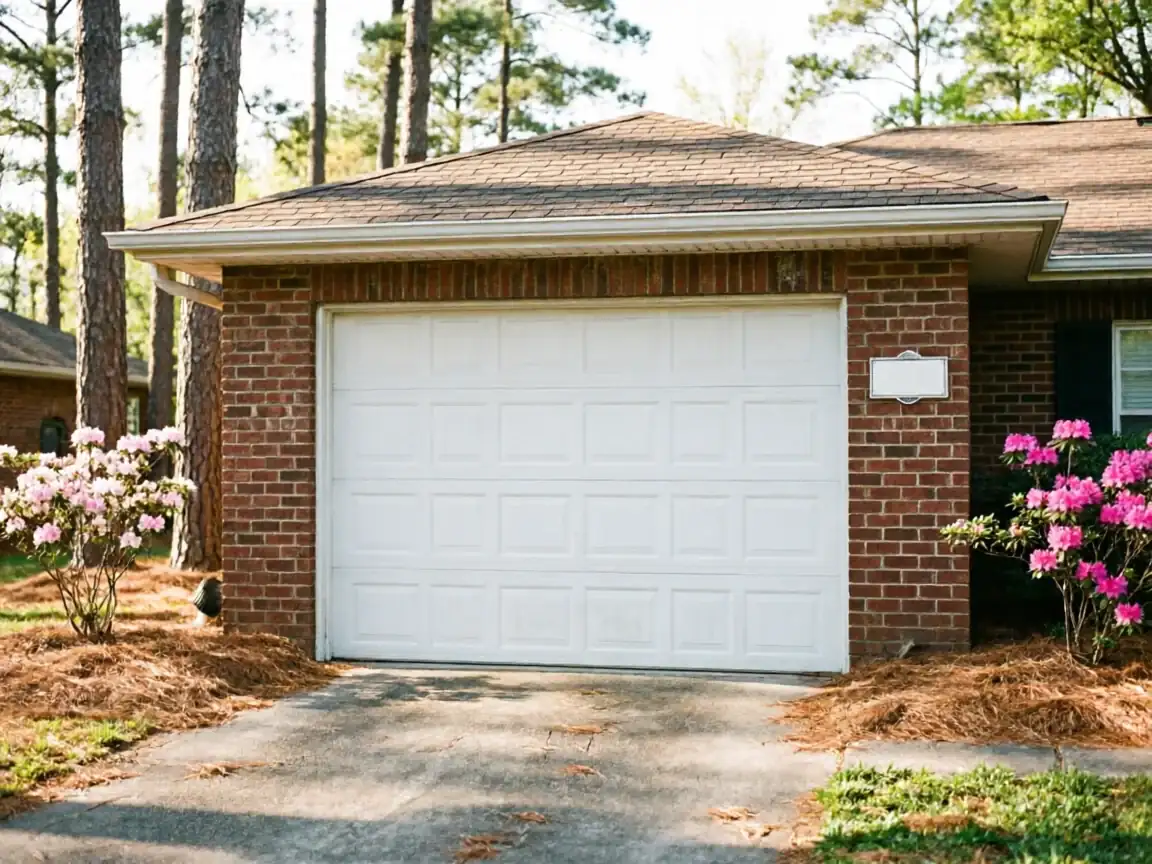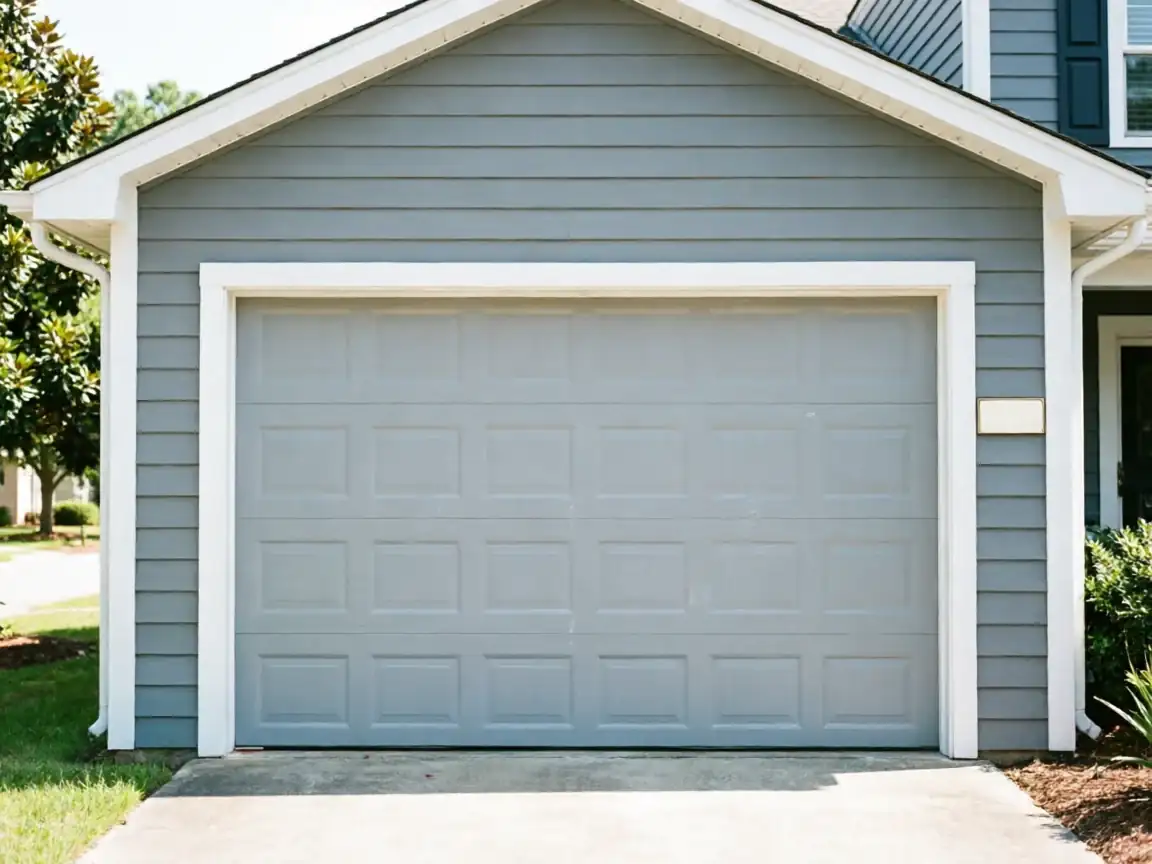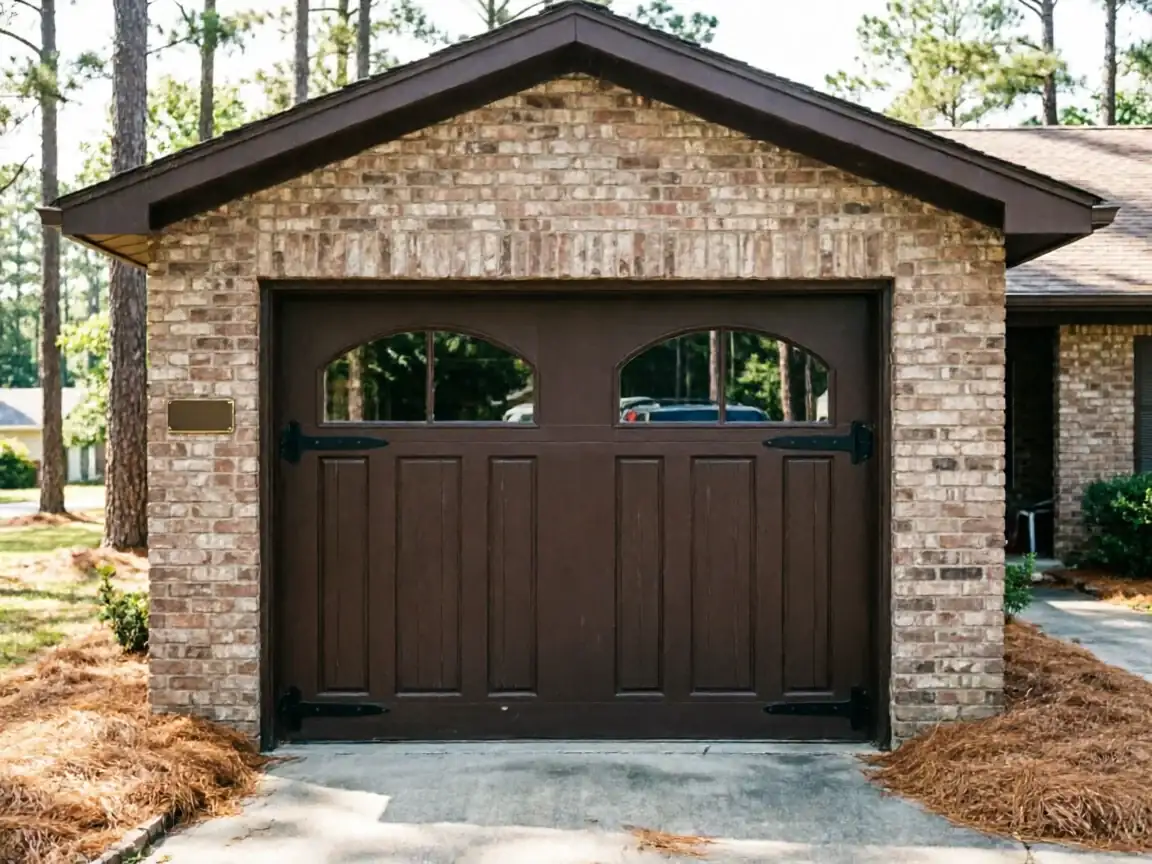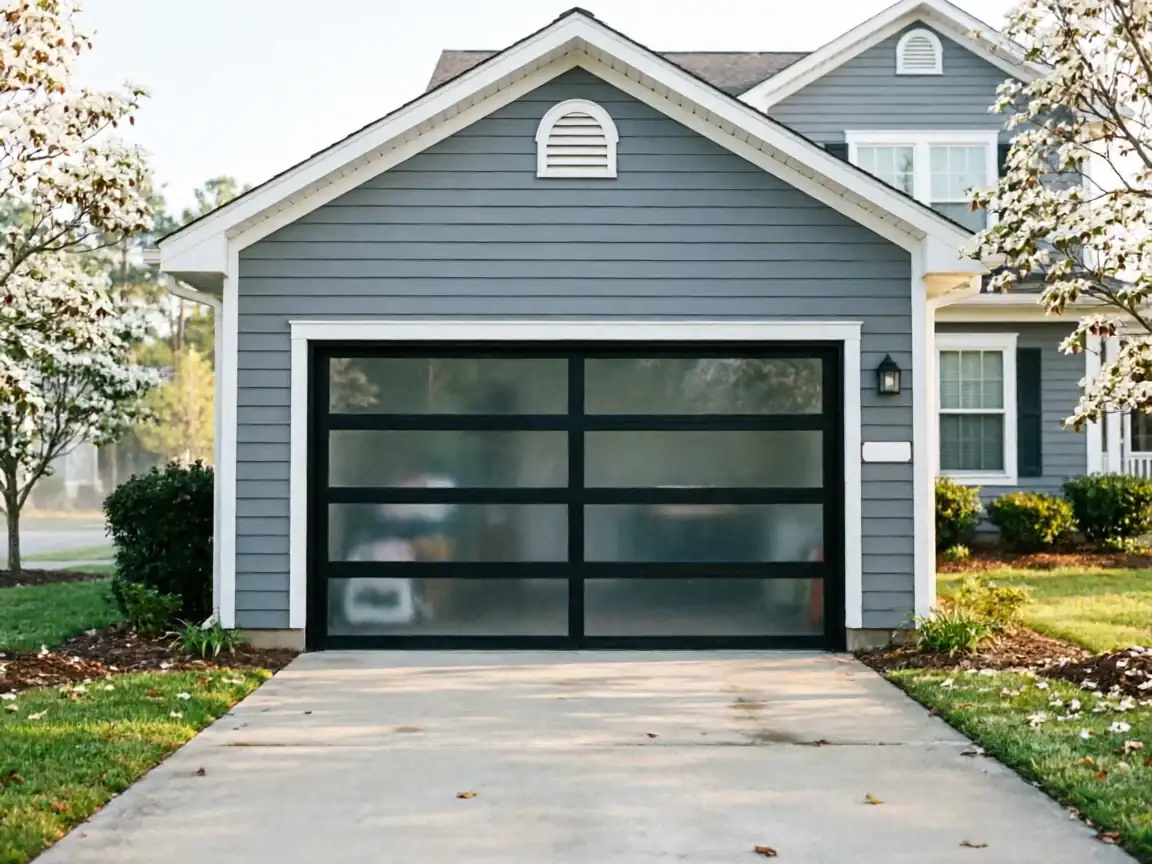
Why This Fails Locally
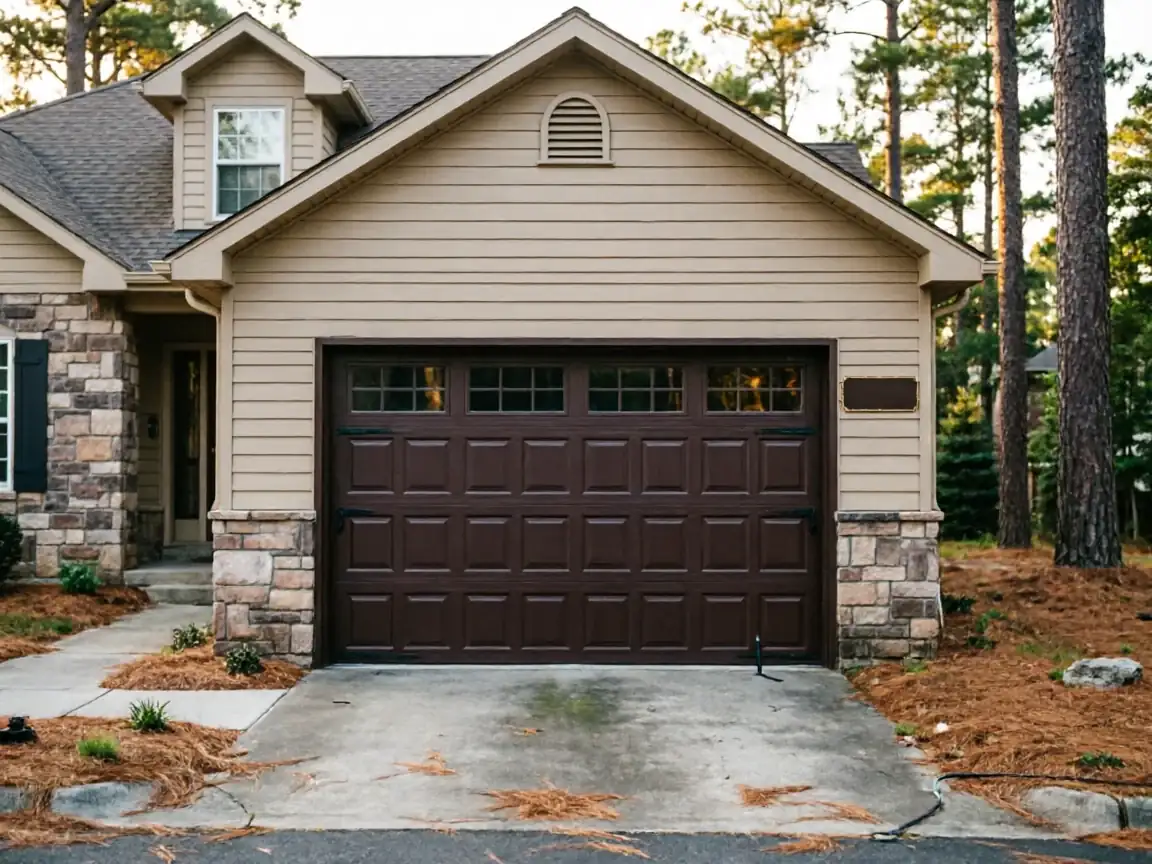
Lovejoy's housing stock runs newer than most of the towns we cover out of Fayetteville - the median build year here lands right around 2007, well past the 1961-2007 range you see across the wider service area. That matters for panels. Houses from this period almost all shipped with steel sectional doors, factory-primed and painted, hung on torsion springs sized to the door's actual weight rather than a one-size approximation. The failure we see most isn't rust-through or warped wood, the stuff you'd find on an older door. It's impact damage - a single dented or bowed panel on an otherwise sound door, usually from a backed-into bumper or a kid's bike pedal catching the bottom section. The rest of the door, opener, track, springs, is usually fine. The fix is swapping the one bad section, not the whole unit, but it only works cleanly if we can match the panel's profile and finish to a door this age, which is a narrower window than matching something from the 1980s.
With 3,270 households in Lovejoy and a median income of $67,872, this is a market where owners tend to fix the one panel rather than replace the whole door, and the age of the stock makes that the right call more often than not.
What It Costs
We don't post a flat number here because panel cost depends on what's actually wrong and what door you have
Section count, width, whether it's insulated, whether the color needs matching on a door that's been sun-faded for over a decade. What we can tell you is how we price the job once we're on site: we look at the damage, confirm the door's track record (any prior repairs, any spring fatigue), and quote the panel swap separately from anything else we find. If the opener or springs need attention too, that's a separate line, not bundled into a vague number.
One honest limit: if more than one section is damaged
Or the frame's racked from the impact, panel replacement stops being the economical choice. At that point we'll tell you straight that a full door replacement costs less over time than patching a door that's already fighting itself.
Parts We Carry
We stock common steel sectional panel profiles that match what went up on doors built from the late 1990s through the mid-2000s, which covers most of what's installed in Lovejoy. For anything outside that window, or a less common brand, we order the matching section rather than guess at a close-enough substitute - a mismatched panel is worse than a dented one, because now the whole door reads as uneven every time you pull into the driveway.
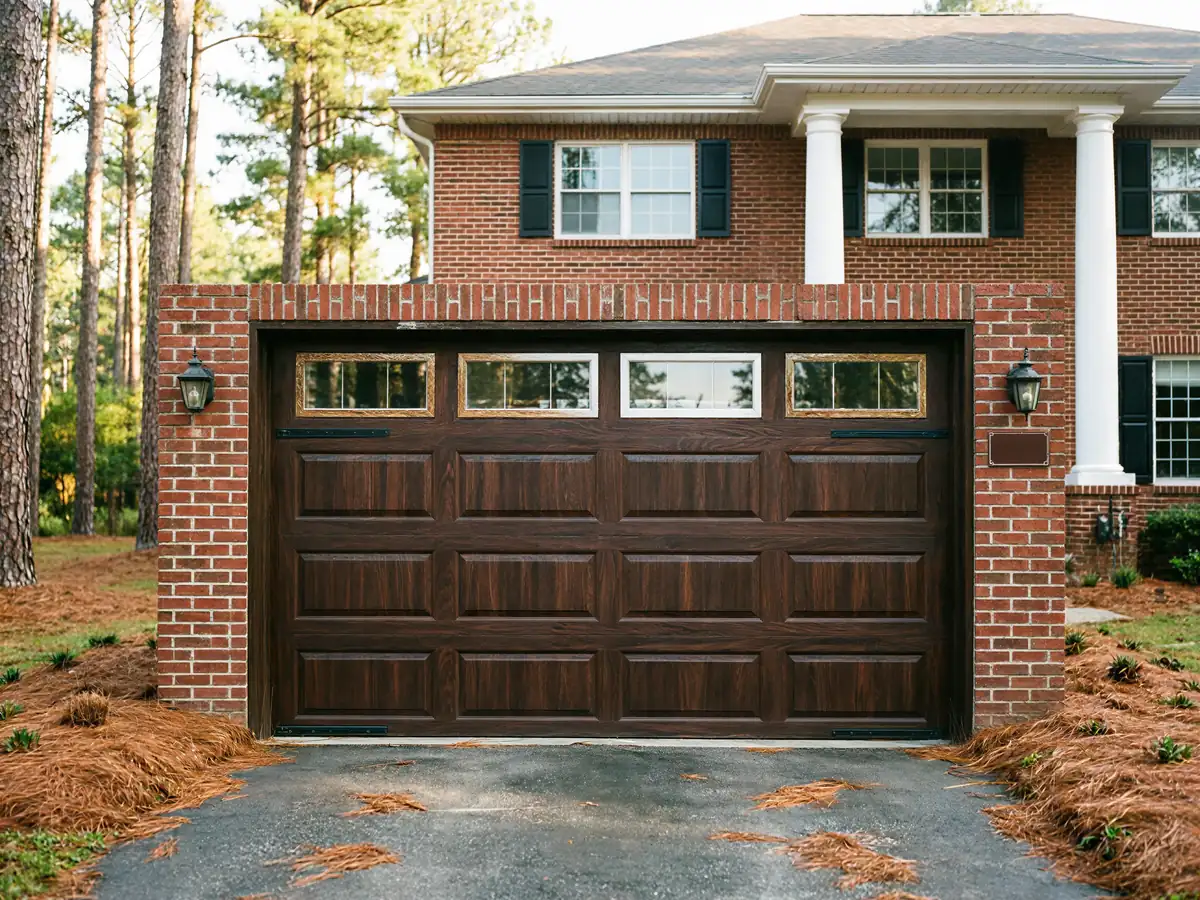
Color and texture matching is the part people underestimate. A panel that's technically the right size but the wrong woodgrain stamp or a slightly off white will stand out more than the dent did. We check the door's existing finish against what's available before we order, and we'll say so if an exact match isn't possible rather than install something that looks wrong and call it done.
How We Fix It
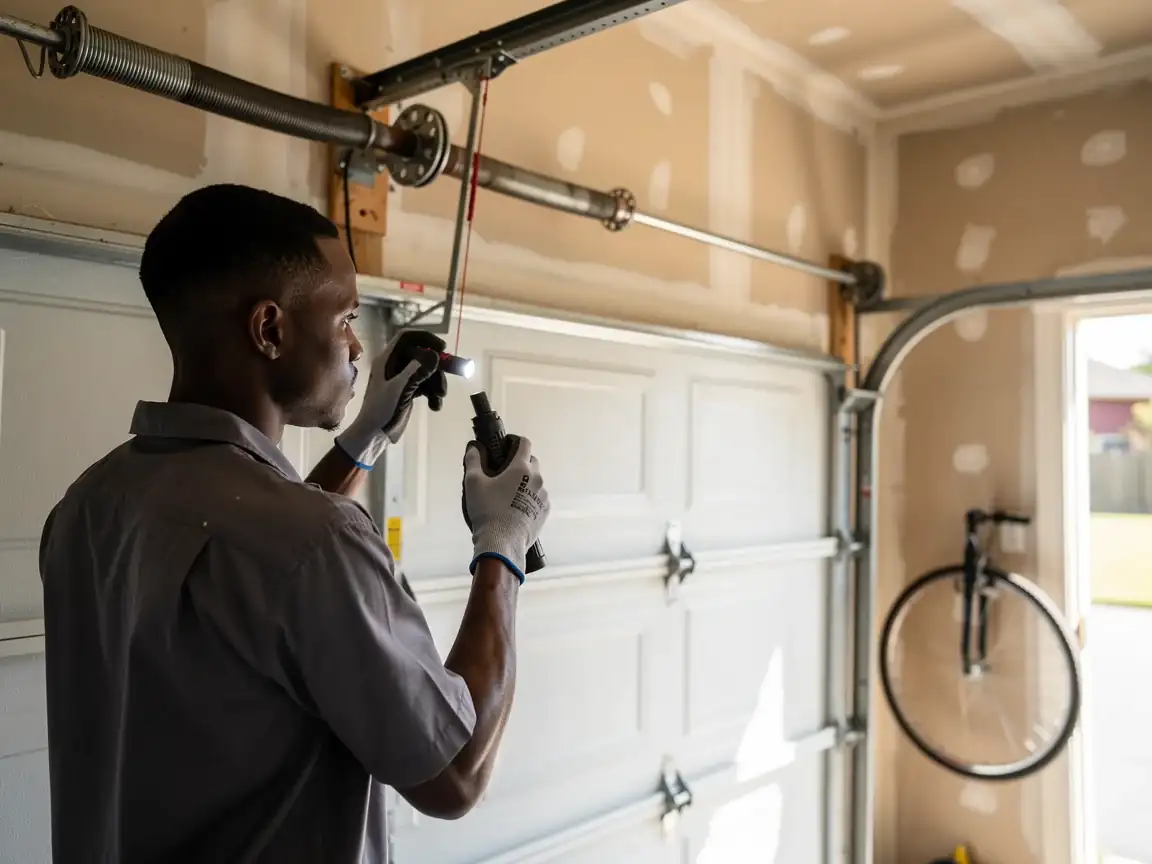
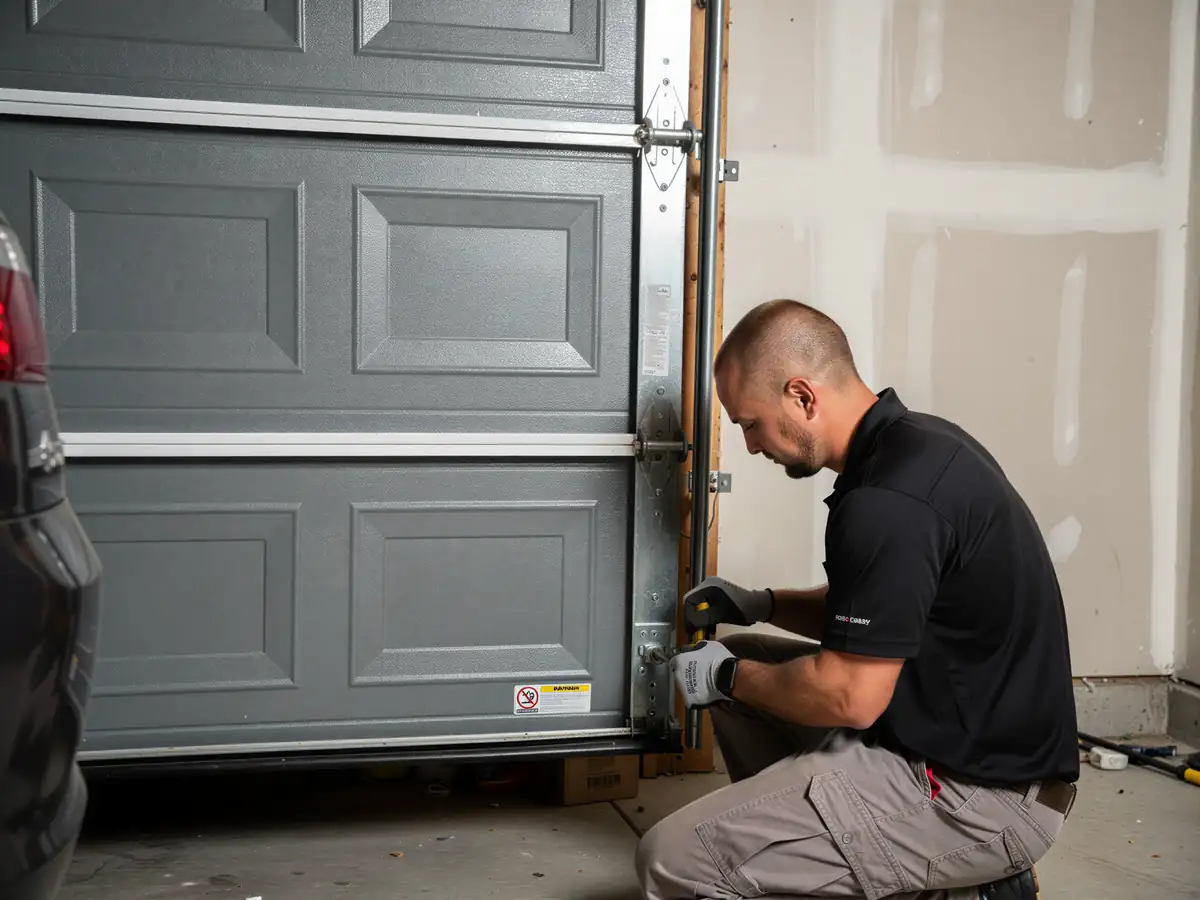
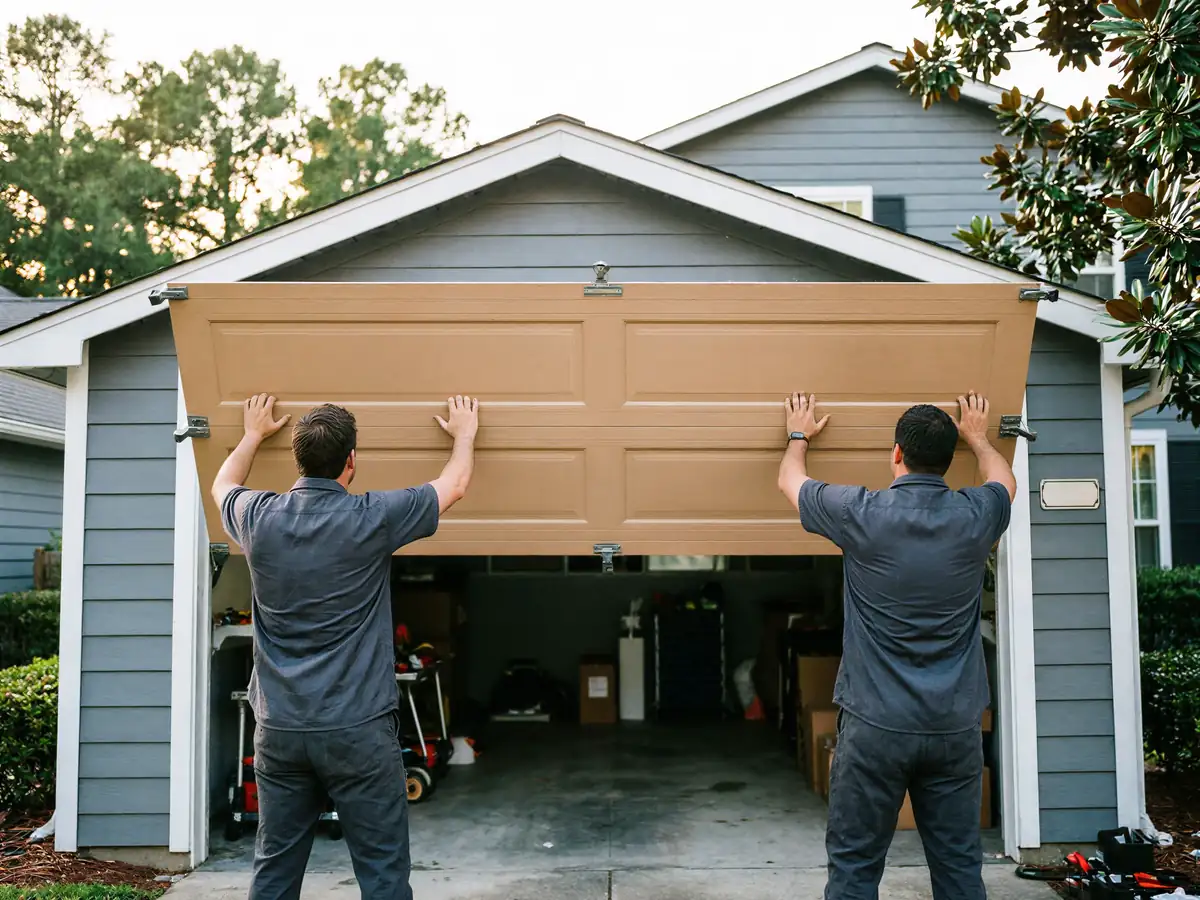
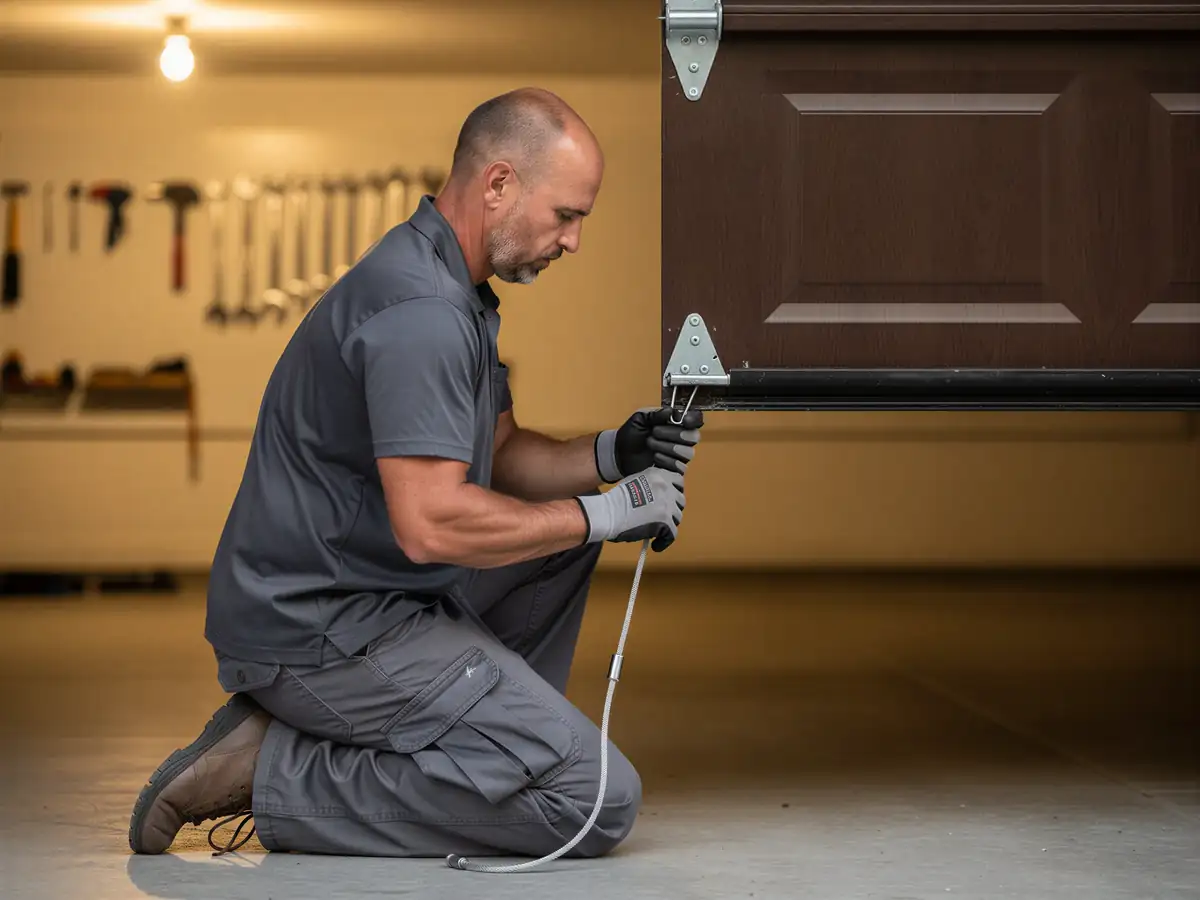
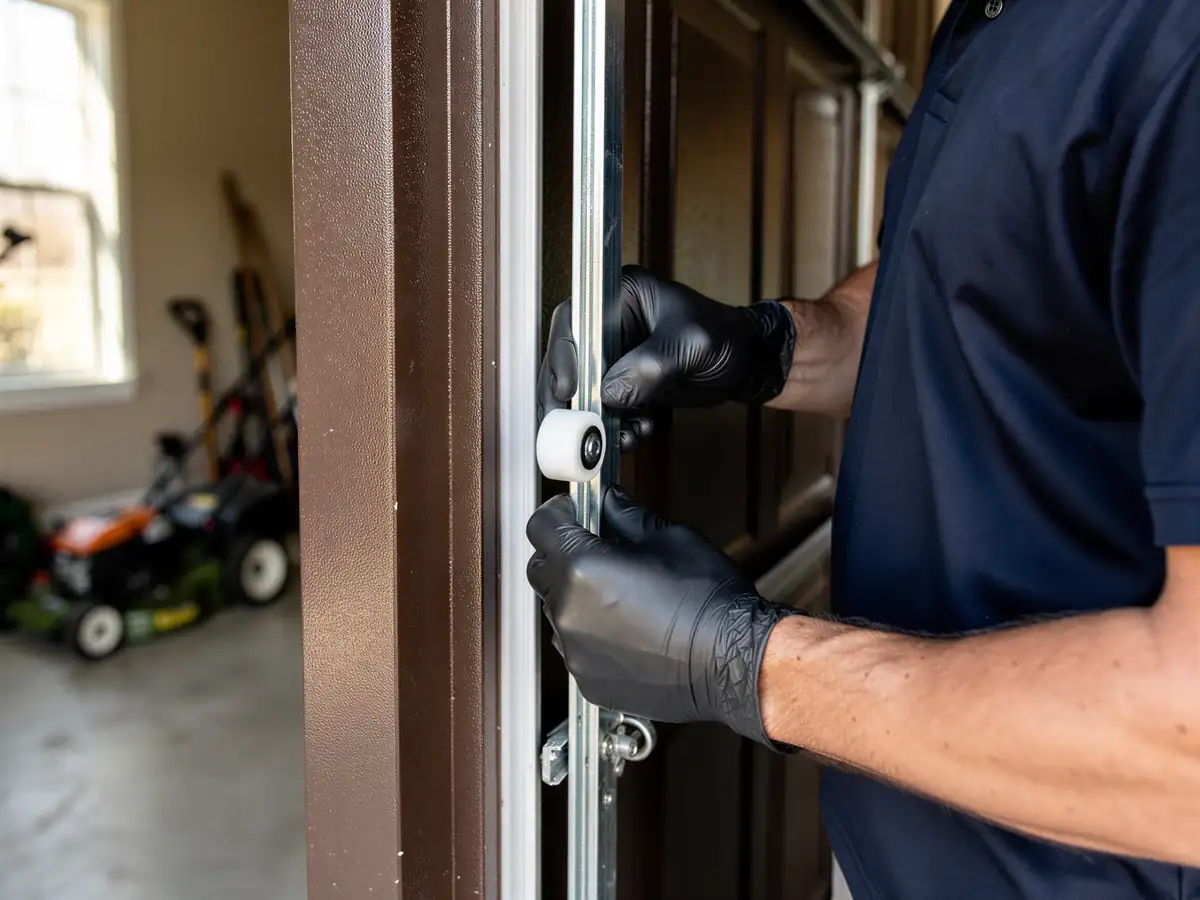
First we confirm the door is structurally sound apart from the damaged section - hinges, rollers, and the track on both sides have to be straight before a new panel will seat right. Then we pull the fasteners holding that section to the ones above and below it, disconnect it from the hinge hardware, and lift it out without disturbing the rest of the door's alignment.
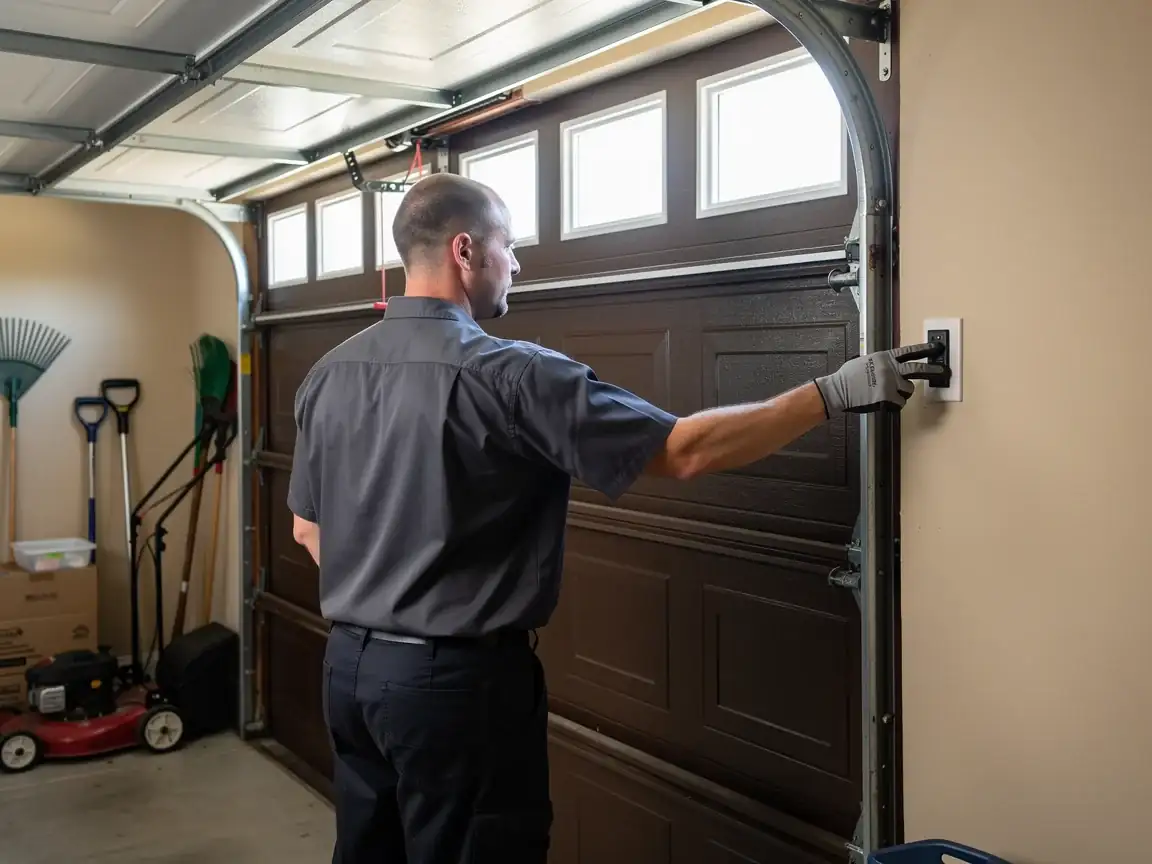
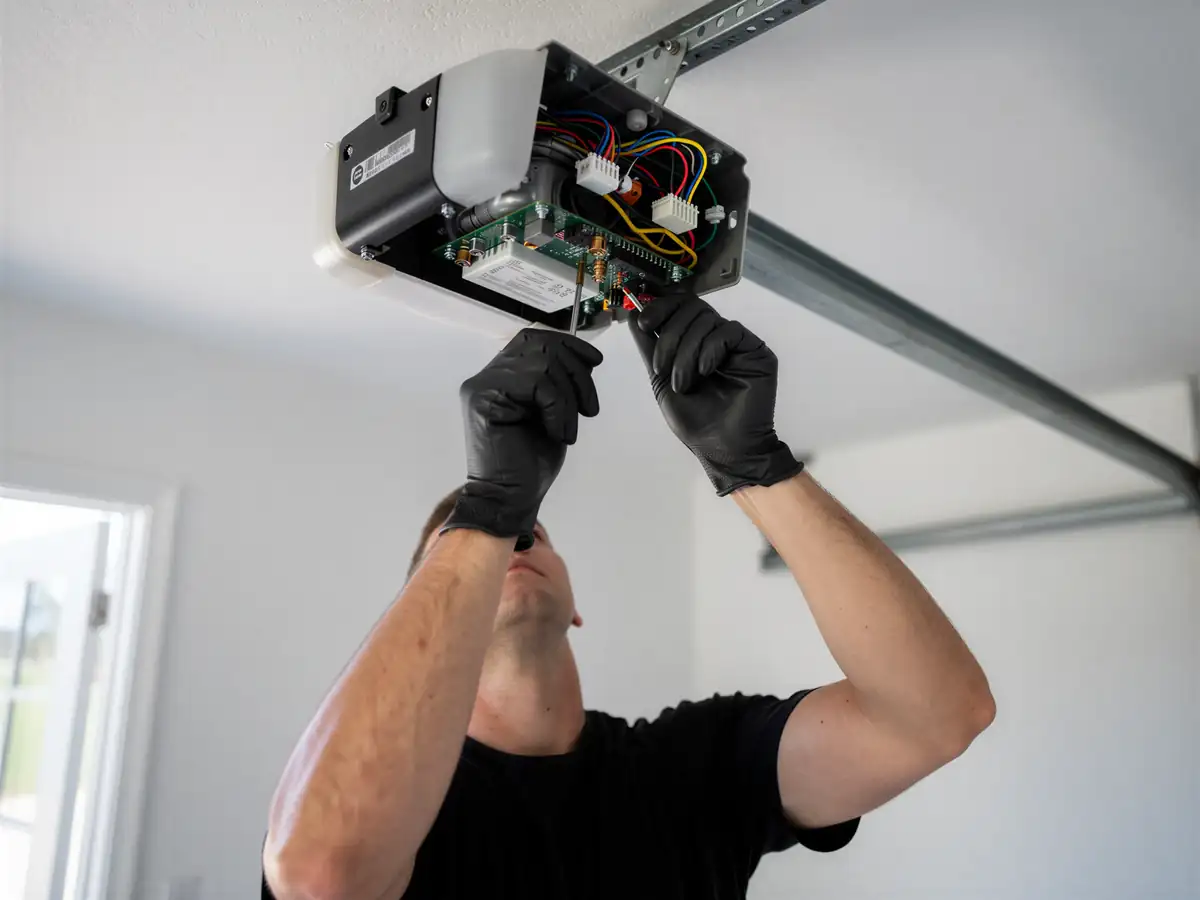
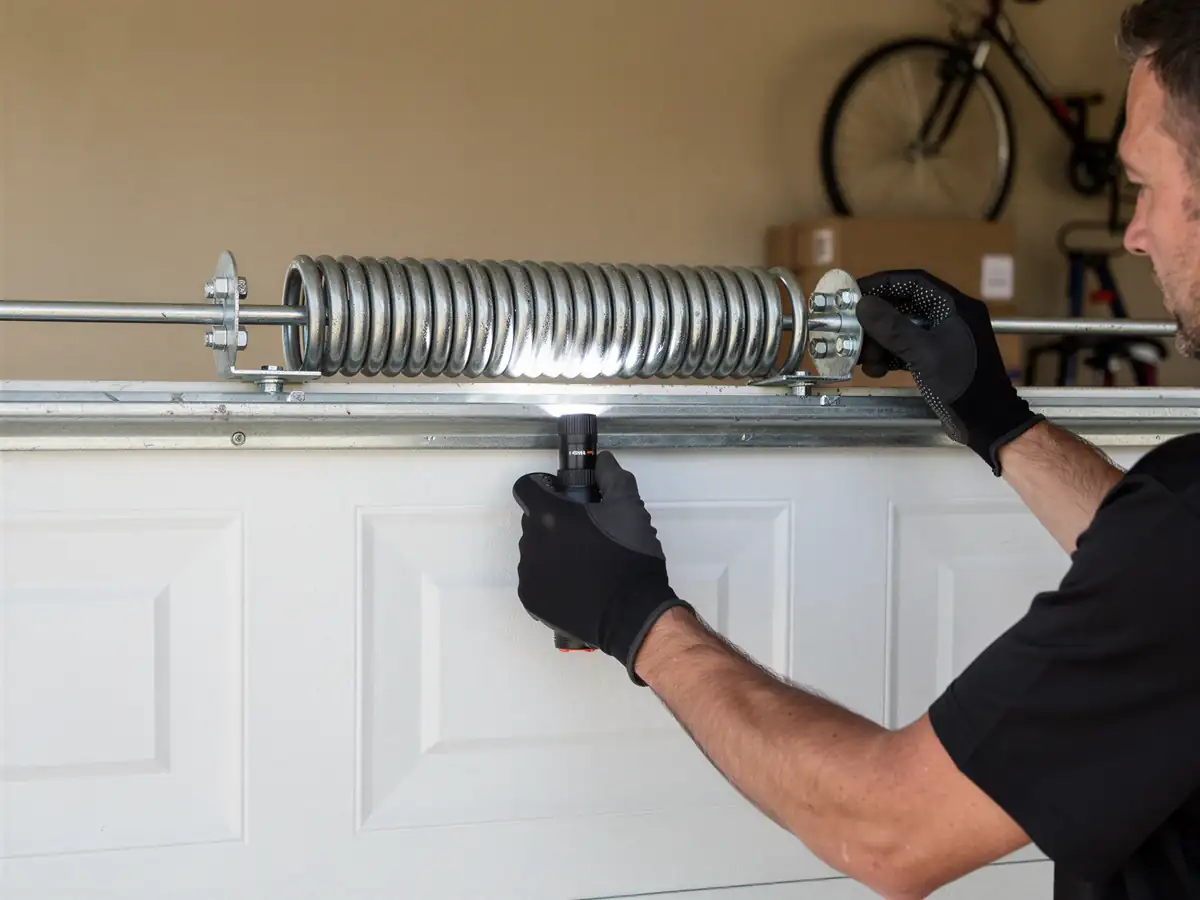
The new panel goes in, gets fitted to the existing hinges and rollers, and we check the whole door's travel before we call the job done - a door that opens fine with one new panel but binds halfway up still has a problem. Given the torsion spring setups standard on doors built in this era, we also check spring tension while we're in there, since a panel swap that throws the door's balance off will shorten the life of everything else on it.
The Symptom
What you're usually looking at is one section of the door
Bottom or second-from-bottom most often, that's visibly bowed, cracked, or dented while the rest of the door still closes flat and tracks straight. The door still opens and closes. The opener doesn't complain. It's purely cosmetic and structural damage confined to one panel - which is exactly the case where a swap makes sense instead of a full replacement.
If you're instead seeing the door drag, bind, or reverse mid-cycle, that's not a panel problem by itself
Something's off with the track or spring balance, and we'd want to look at the whole door, not just the dented section. We travel in for Lovejoy jobs from Fayetteville, about 9 miles out.
- 9 miles